A glass bottle cap liner is the thin sealing disc pressed inside the closure, and it is the single component that decides whether your formula leaks in transit or evaporates on the shelf. Get it wrong and a perfectly good bottle still fails: essential oils wick through a plain foam disc, alcohol attacks a pulp layer, and an induction seal that never bonds is only decoration. This guide explains every common glass bottle cap liner type, the product-to-liner matches that hold, and the checklist our factory runs before a custom order ships.
Quick answer — how to choose a glass bottle cap liner:
- Essential oils, fragrance and alcohol-based formulas → LDPE poly cone (Polyseal) liner, or an oil-resistant induction liner. Foam alone will not hold the aroma.
- Serums, lotions and water-based liquids → 3-ply foam (F217) liner for leak prevention, or an induction liner when you need an airtight, tamper-evident finish.
- Powders, creams and dry products → PS-22 pressure-sensitive liner — the lowest-equipment option.
- Always validate the liner against your real formula, your glass neck finish and your filling line before bulk production.
What Is a Glass Bottle Cap Liner and Why So Many Bottles Leak Without the Right One
A glass bottle cap liner sits between the inside of the closure and the bottle’s land — the flat rim that surrounds the opening. Its job sounds simple: close the gap. In practice, that gap is where most packaging failures start. Sealing happens by compression (a foam or cone gasket is squeezed against the land), by adhesion (a pressure-sensitive liner sticks to the rim), or by heat bonding (an induction liner is fused to the container by an electromagnetic field).
Each mechanism tolerates a different product chemistry, neck finish and evaporation rate. A cap liner that seals water-based lotion perfectly can be destroyed within weeks by a citrus essential oil, and one that holds fragrance vapour can be too thin to compensate for an uneven glass land. That is why the cap liner must be selected as part of the bottle-and-closure system, not added at the last minute.
Closures are no longer a minor line item — the numbers explain the scrutiny:
- 413.03 billion units — projected North America plastic caps and closures market volume in 2026, growing at a 3.41% CAGR to 488.36 billion units by 2031 (Mordor Intelligence).
- 7.82 million tons in 2025 → 9.89 million tons by 2030 — global plastic caps and closures market, a 4.83% CAGR (Mordor Intelligence).
- Within that volume, the cap liner is often the cheapest component and the one most likely to be under-specified.
On the glass side, the cap liner diameter must match the closure and the bottle land exactly. If you buy bottles from one supplier and caps from another, nobody owns the interface — and the leakage complaint lands on your brand. We quote the essential oil bottle, its closure and its cap liner as one matched set for exactly this reason. Our glass bottle neck finish guide explains how thread and land geometry are specified.
Cap Liner Types Compared: PE Foam, Poly Cone, PS-22, Induction and Foil
Most cap liner enquiries we receive collapse into one question: “which liner type do I need?” The table below compares the options that dominate cosmetic, personal-care and fragrance packaging, including the limitations suppliers rarely print in the catalogue.
| Liner type | Construction | Seal quality | Best for | Watch-outs |
|---|---|---|---|---|
| 3-ply foam (F217) | LDPE foam core bonded between two PE films | Compressible seal, not airtight | Cosmetics, personal care, general-purpose liquids | Fair to poor resistance to hydrocarbon solvents |
| PE foam (single or 3-ply) | Compressible polyethylene foam disc | Leak protection only | Water-based products, cost-sensitive projects | Not advised for paints, adhesives or polishes |
| PS-22 pressure-sensitive | Foam liner with an adhesive face that sticks to the land | Adhesive seal, not tamper-evident | Powders, thick liquids, creams | Poor with liquids and oils; 6-month recommended shelf life |
| LDPE poly cone (Polyseal) | Cone-shaped LDPE gasket built into the cap | Wedge seal — tightest option for liquids | Essential oils, harsh chemicals, glass containers | Not generally paired with plastic containers |
| Induction (one-piece / two-piece / vented) | Foil plus heat-seal and backing layers, fused with an induction machine | Airtight, hermetic, tamper-evident | Liquid products that need tamper evidence | Requires induction equipment; container compatibility must be tested |
| Pulp and foil / poly-vinyl | Paperboard laminated to aluminium foil or a vinyl film | Good moisture and odour barrier | Alcohols, oils, ketones, cold-fill products | Foil versions do not suit acids or alkalis |
| Plastisol | Plastic gasket lining a metal cap, activated by heat | Hermetic after hot filling | Preserves, sauces, acid-resistant hot-fill products | Needs high filling temperature to soften and form the seal |
| Teflon PTFE-faced | PTFE film over a base liner | Base seal plus extreme chemical resistance | Volatile solvents, sensitive compounds | Highest liner cost |
Beneath the material choice sit two practical details. First, liner shape affects how easily a consumer opens the pack: tab liners, tri-tab liners and lift ‘n’ peel liners all solve the same problem — a foil seal nobody can grip. Second, the top layer of an induction liner can be printed with a logo or a “sealed for your protection” message, turning a hidden cap liner into a brand touchpoint.
“Pressure-sensitive seals do not create an airtight or tamper-evident seal, but they help prevent leakage.” — COMPAX packaging knowledge base, cap liner guide
Equipment availability matters as much as chemistry. Induction liners are applied after filling with a dedicated sealing machine, and industry guidance flags that the cap liner must suit the container material — some suppliers recommend extra testing before specifying induction seals on glass, because the wrong pairing will not form an airtight seal. If your co-packer has no induction tunnel, a poly cone or F217 foam liner keeps the project realistic.
Which Cap Liner Is Best for Essential Oil, Serum and Perfume Bottles?
Category experience shortens the cap liner decision dramatically, because three product families cover most of the market:
- Essential oils and fragrance concentrates. Low-viscosity, highly aromatic, often alcohol- or terpene-based. The default is an LDPE poly cone liner: it wedges against the glass land, resists stress cracking and forms a strong chemical barrier, and it is the standard closure on glass essential oil bottles. A 3-ply foam liner can be specified for lighter blends, but it will not stop long-term evaporation.
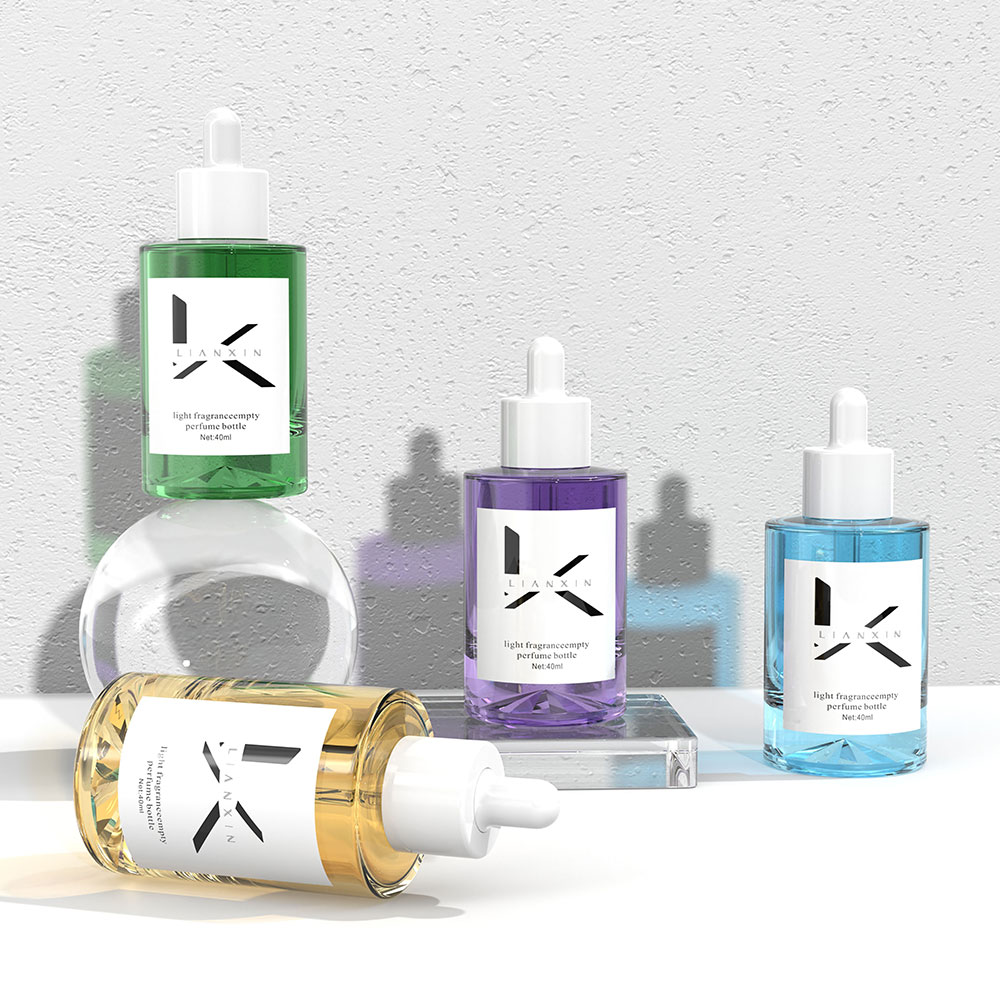
- Serums and treatment liquids. Viscous, aqueous, frequently packaged with a dropper. Here the seal is shared between the dropper plug and the closure, so verify both. Where the cap is a plain screw closure, a 3-ply foam cap liner handles leakage and a printed induction liner delivers the tamper evidence a retail launch needs. Our perfume bottle and essential oil bottle ranges are quoted with closure and cap liner pre-matched.
- Nail polish and solvent-based colour. Sealing is driven mainly by neck-to-brush-cap fit, so a cap liner only enters the specification when the cap carries one — in which case it must be solvent-resistant. Solvent attack is the most common failure mode here, so request a compatibility statement before bulk production for nail polish bottles.
For perfume packs, a crimp pump removes the liner question: the neck is mechanically crimped around the pump, so no liner touches the product. Screw-neck travel sprays and testers are the opposite case, and that is where cap liner selection decides whether a sample survives a handbag.
How to Choose a Cap Liner for Your Glass Bottle: 6-Point Checklist
- Define the formula chemistry. Oil-based, alcohol-based, acidic, alkaline or water-based? Each excludes part of the table above — oil-based products rule out pressure-sensitive liners and uncoated foams, while acids and alkalis rule out standard foil liners.
- Match the cap liner to the closure and neck finish. The cap liner diameter is fixed by the cap, and the cap is fixed by the bottle land. Confirm the land is wide enough for the liner to seat before you commit tooling.
- Set the shelf-life requirement. A 24-month retail shelf life with an aromatic formula needs a barrier liner, not a compressible cushion. Ask what shelf life the proposed cap liner supports.
- Decide whether you need tamper evidence. If yes, induction is the mainstream answer and it must be applied on your filling line — confirm the equipment exists before specifying it.
- Check the filling and capping process. Machine torque, capping speed and whether the line can wipe the land clean all affect seal reliability, particularly for pressure-sensitive liners.
- Confirm consumer experience and decoration. Choose tab, tri-tab or lift ‘n’ peel based on how the product is opened, and use liner printing plus cap decoration such as hot stamping to keep unboxing consistent with your brand.
Cap Liner MOQ, Cost and Lead Time on a Custom Bottle Order
Cap liner MOQ almost never exists in isolation: the liner is supplied inside the closure, so the binding minimum is the cap MOQ. Stock liners in standard neck diameters add only a few days to a cap order, while custom-printed liners require artwork approval and a print setup. Three rules keep this cheap:
- Quote the cap liner as a separate line item. If a supplier cannot state the liner construction and its compatibility, the specification is incomplete.
- Ask for the liner datasheet with the samples. You want the material, thickness and intended chemistry in writing, not an assurance in an email.
- Sample the full assembly. Because a cap liner performs only in combination with the glass land and the closure, a bottle sample without its cap and liner tells you nothing about sealing. See our customization process for how matched-set sampling is handled.
Lead time is governed by the bottle and the cap, not the liner — custom moulds and cap tooling dominate the timeline, and liner choice extends it only when printing is involved.
How to Test Leak-Proof Performance Before Bulk Production
Testing is where cap liner specifications are proven or discarded, and the sequence matters:
- Wipe and seal. A liner only works on a clean land. Industry guidance for pressure-sensitive liners requires the container lip to be wiped clean, the cap screwed fully down, and the product left undisturbed for at least 24 hours so the adhesive can bond.
- Simulate storage conditions. PS-22 liners are typically specified with a 6-month shelf life and require storage between 60°F and 80°F at 40–60% relative humidity with no direct sunlight. If your warehouse does not match those conditions, expect failure sooner than the datasheet suggests.
- Invert and age. Fill, seal and store samples upside down at elevated temperature for the length of your intended shelf life. Any weeping at the thread line points to the liner, the torque or the land geometry.
- Ship-test the case. Bottles can pass an inversion test and still leak when a pallet flexes in transit. Where leakage is critical, combine transit simulation with a post-shipment inspection under an AQL sampling plan, as described in our glass bottle quality control guide.
Get Your Bottle, Cap and Cap Liner Specified as One System
Most leakage disputes are not bottle defects — they are interface defects. The bottle, closure, cap liner and filling process must be specified by someone who owns the whole assembly. We manufacture custom glass bottles for perfume, essential oil, nail polish and skincare lines, and we quote closure and cap liner with every bottle so the seal is engineered rather than assumed.
Send us your formula type, target volume and neck finish, and we will return a matched bottle-cap-liner recommendation with samples.