The soda lime vs borosilicate glass decision is the very first material choice on almost every packaging brief we receive — and for the large majority of perfume, skincare and essential oil bottles, soda lime glass is the correct answer. It accounts for roughly 90% of all glass manufactured worldwide, carries the lowest material cost, and accepts every decorative finish in a custom glass bottle factory’s toolkit. Borosilicate glass justifies its higher price only in specific situations: chemically aggressive formulas, hot-fill or sterilisation cycles, and bottles that must survive rapid temperature changes. This guide compares the two materials across composition, thermal shock, chemical resistance, cost, MOQ and decoration compatibility, so you can specify the right glass on your next purchase order.
Quick answer: Choose soda lime glass for standard perfume, lotion, serum, nail polish and essential oil bottles — it is the industry default, the most economical option, and it works with frosting, color spraying, hot stamping and electroplating. Switch to borosilicate glass only when your formula is highly alkaline or solvent-heavy, when the filling line runs above 40 °C, or when the bottle is marketed as heat-resistant, sterilisable or refillable premium glassware.
Rule of thumb: if your product is a normal cosmetic or fragrance liquid stored at room temperature, soda lime glass gives you 95% of the performance at a fraction of the tooling and unit cost.
Glass packaging at a glance
- ~90% of the glass produced worldwide is soda lime glass.
- USD 73.75 billion (2026) → USD 114.40 billion (2035) — forecast growth of the global glass packaging market at roughly 5% CAGR (Towards Packaging, 2026).
- 3.3 × 10⁻⁶ K-1 thermal expansion for borosilicate glass versus 9 ppm/K for soda lime container glass.
- 170 °C vs 40 °C — the temperature differential each glass can absorb before fracturing.
What Are the Main Glass Types Used for Cosmetic Bottles?
Before comparing soda lime and borosilicate, it helps to know the full menu a glass bottle manufacturer works with. Industrial references such as Thomasnet group most bottles into three families — soda lime glass, treated (chemically strengthened or tempered) soda lime glass, and borosilicate glass — with decorative crystal or leaded glass and opal glass completing the picture for prestige packaging.
Soda lime glass is made from silica sand fluxed with soda (sodium oxide) and stabilised with lime (calcium oxide). A typical container glass batch is composed of roughly 74% silica, 13% sodium oxide, 10.5% calcium oxide and 1.3% aluminium oxide. That chemistry produces a hard, clear, chemically stable and highly workable material that can be re-softened many times during production — which is exactly why it dominates everything from beverage bottles to custom perfume bottles and nail polish bottles.
Treated soda lime glass takes the same base material and strengthens it, either through controlled thermal tempering or a chemical ion-exchange process. The result is higher impact resistance and better thermal shock tolerance without changing the base composition — useful for heavier bottles or rough transit conditions.
Borosilicate glass replaces much of the soda and lime with boron trioxide (a minimum of about 5%, typically 12–13% in low-expansion grades such as laboratory glass). Low-expansion borosilicate is approximately 80% silica, 13% boric oxide, 4% sodium or potassium oxide and 2–3% aluminium oxide. The boron is what delivers the material’s signature properties: very low thermal expansion, high chemical durability and excellent clarity that holds up over thousands of washing cycles.
Opal and colored glass are not separate chemistries so much as variations in the batch: opal glass uses fluorides and phosphates to create an opaque white body, while amber, blue and green tones come from iron oxide, cobalt and chromium. Around 90% of all glass made today is still soda lime, so when a supplier quotes “glass” without qualification, soda lime is almost always what is meant.
Soda Lime vs Borosilicate Glass: The Key Differences
The table below summarises the soda lime vs borosilicate glass differences using published glass specifications. Every figure here is a material property, not a marketing claim — which is why the comparison is stable across suppliers.
| Property | Soda Lime Glass | Borosilicate Glass |
|---|---|---|
| Main constituents | Silica + soda + lime | Silica + boron trioxide |
| Thermal expansion (CTE) | ~9 × 10⁻⁶ K-1 | ~3.3 × 10⁻⁶ K-1 |
| Temperature differential before fracture | ~40 °C (100 °F) | ~170 °C (330 °F) |
| Chemical resistance | Moderate — can leach with acids, alkalis, solvents | High — resists acids, alkalis and solvents |
| Melting temperature | ~1,400–1,600 °C | ~1,600–1,700 °C |
| Density | ~2.52 g/cm3 | ~2.23 g/cm3 |
| Surface hardness | Mohs ~6, softer and easier to cut | Harder, more scratch resistant |
| Relative cost | Lowest; high-volume mould production | Higher; often tube-drawn, higher melting energy |
| Best fit for cosmetics | Perfume, lotion, serum, gel polish, body oil, diffuser | Actives-heavy serums, aromatherapy, refillable premium lines |
“Borosilicate glass … can withstand temperature differentials of about 330 °F (170 °C) without fracturing, whereas soda–lime glass can withstand only about a 100 °F (40 °C) change in temperature.” — Wikipedia, Borosilicate glass
The practical translation for packaging buyers is simple. Thermal shock matters if your product is hot-filled, steam-cleaned, transported through extreme climates or refilled in a dishwasher — scenarios where soda lime needs a thicker wall or a tempered treatment and borosilicate sails through. Chemical resistance matters most for concentrated essential oils, alcohol-rich fragrances and high-pH actives, where glass surfaces can release trace alkali ions over long storage. Industrial glass suppliers such as DWK Life Sciences note that soda lime is “more prone to corrosion or leaching when exposed to aggressive acids, alkalis, or solvents”, which is why borosilicate dominates laboratory and pharmaceutical packaging.
What does not change is appearance. Clear soda lime and clear borosilicate bottles are visually almost identical at retail, and both can be frosted, colored, screen printed or metallised. The difference is in the specification sheet, not on the shelf.
Which Glass Is Best for Perfume and Essential Oil Bottles?
For the overwhelming majority of fragrance and aromatherapy projects, soda lime glass wins on economics and supply chain depth. Perfume formulas are typically 60–90% ethanol with fragrance oils; in properly annealed, high-quality soda lime glass with a hydrolytic class suited to the application, storage stability is excellent for the standard three-year shelf life. Because tooling and moulds are shared across thousands of stock shapes, you get lower MOQs, faster sampling and a far wider choice of caps, pumps, crimp collars and droppers that fit standard neck finishes.
Borosilicate becomes the better option in three specific aromatherapy and skincare cases:
- Aggressive actives: high-concentration essential oil blends, acidic vitamin C serums and solvent-based formulas where long-term alkali leaching is a real risk.
- Refillable and sterilisable lines: bottles marketed for repeated washing, hot-water rinsing or autoclave cycles, where soda lime is likely to craze or crack.
- Clinical or “clean beauty” positioning: where borosilicate’s pharmaceutical pedigree (Type I glass for injectables) is itself part of the brand story.
One caveat that catches many brands: borosilicate is not automatically more impact resistant. Its lower density (about 2.23 g/cm3 versus 2.52 g/cm3) and brittleness under sharp impact mean drop performance has to be validated — which is why we recommend the same transit testing protocol regardless of glass type. If your priority is surviving e-commerce parcel handling, a thicker soda lime wall or a tempered body is often the smarter spend than switching material.
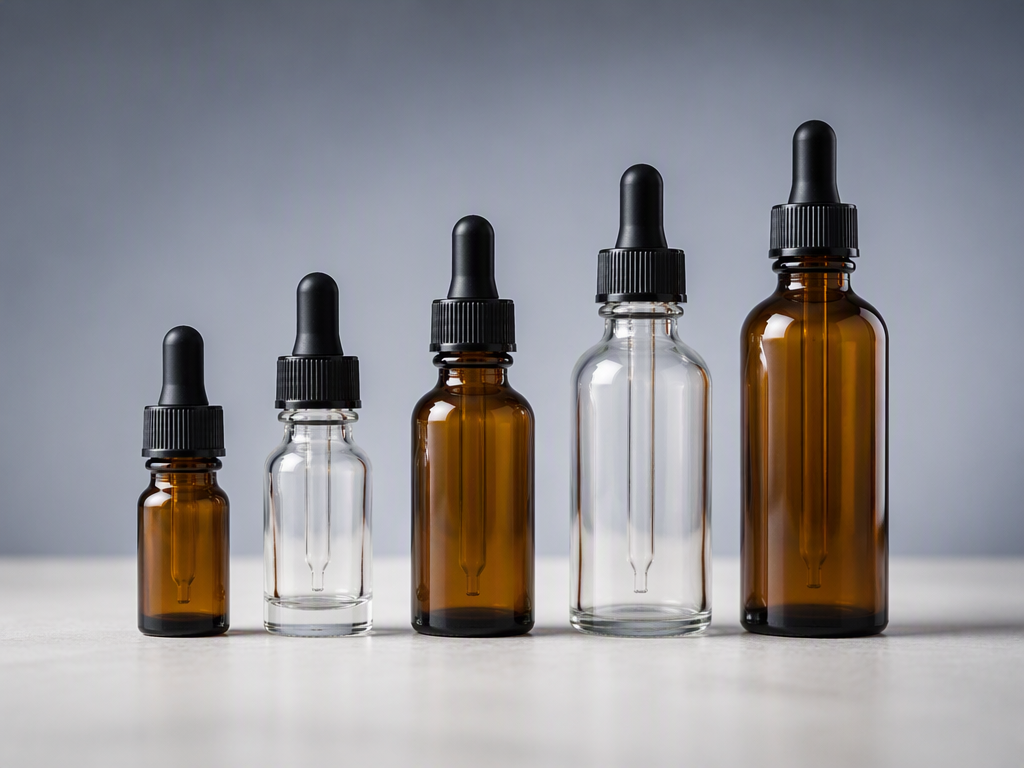
For a standard essential oil bottle range in 5 ml, 10 ml, 15 ml or 30 ml, the sober answer is soda lime plus amber coloring for UV protection, a tight-tolerance neck finish and a good liner in the dropper cap. Reserve borosilicate for the hero SKU where the material choice is a genuine technical need.
Is Soda Lime Glass Safe for Cosmetics? Cost, Compliance and MOQ
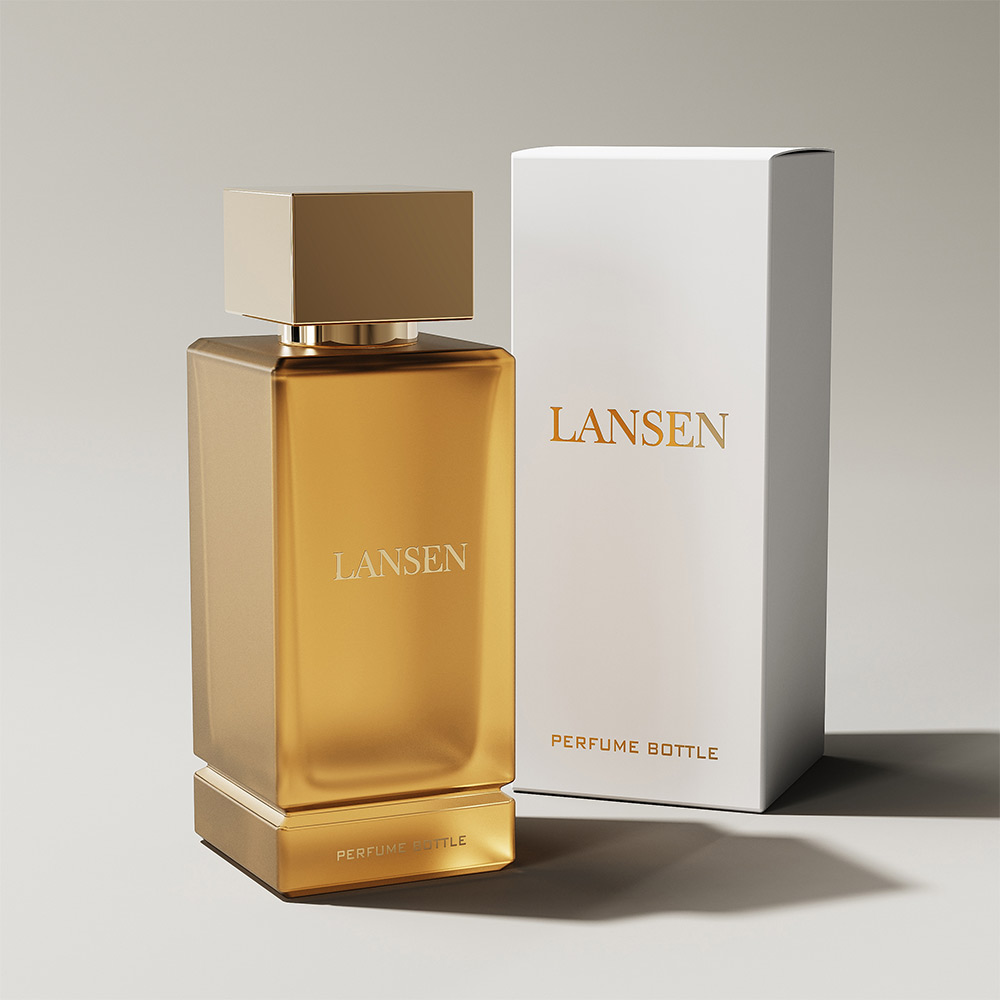
Yes. Soda lime glass is the material used for the overwhelming majority of food, beverage and cosmetic containers worldwide, and it is fully accepted by cosmetic regulators when the correct grade and quality controls are applied. What matters is not the family name but three things: annealing quality (residual stress causes cracks and breakage), hydrolytic resistance (measured against ISO 719/720 type tests), and dimensional consistency at the neck finish so the closure seals properly.
Commercially, the gap between the two materials is significant, and it is not only the glass itself. Borosilicate melts at roughly 1,600–1,700 °C versus 1,400–1,600 °C for soda lime, uses more furnace energy, is frequently produced from drawn tube rather than press-and-blow moulds, and has a much smaller share of the world’s mould inventory. Expect a higher unit price, longer lead times on new shapes and fewer compatible stock closures.
Budget tip: the fastest way to protect your margin is not to downgrade the glass, but to use a stock soda lime mould and spend the savings on decoration. Custom color spraying, hot stamping, electroplating or laser engraving usually changes the perceived value far more than the base glass chemistry — and it does not trigger a mould cost.
On MOQ, soda lime is the friendlier route for growing brands: shared stock moulds mean you can often start with a much smaller first order than a fully bespoke borosilicate shape, which may require dedicated tube sizes and higher minimum runs. Before you commit, ask your supplier four questions: which mould will be used, what the annealing and inspection standard is, what the closure tolerance is on the neck finish, and whether the quoted price is FOB or DDP for your destination.
How to Specify the Right Glass for Your Bottle Project
Use this checklist in your next supplier conversation or RFQ. It turns the soda lime vs borosilicate glass decision into a short, evidence-based specification rather than a preference.
- Define the formula. Alcohol content, pH and essential oil concentration. Above roughly 20% aggressive solvent or an alkaline pH, run compatibility samples before choosing soda lime.
- Define the filling and cleaning process. Any step above 40 °C — hot fill, steam rinse, tunnel wash — points towards treated soda lime or borosilicate.
- Define the distribution route. Air freight, ocean container, or e-commerce parcels each call for different wall thickness and drop-test evidence.
- Choose the decoration before the material. Decoration often drives the material decision, not the other way round.
- Lock the neck finish first. The neck finish determines which pumps, sprayers, droppers and caps are available — and therefore how much of your design is actually manufacturable.
- Request a specification sheet and samples. Weight, capacity, wall thickness tolerance, annealing standard and the inspection protocol should all be documented before the PO is signed.
If you are planning a full range rather than a single bottle, it is worth building the range around two or three shared neck finishes. That single decision reduces closure inventory, simplifies filling-line changeovers and usually cuts total packaging cost by more than any material downgrade ever would.
Still undecided between the two materials for your formula? Send us your product type, volume, filling temperature and target market — our engineering team will recommend the glass type and share a specification sheet with samples.
Our team manufactures custom glass bottles for perfume, skincare, essential oil, nail polish and home fragrance brands worldwide — from perfume bottle shapes and closure matching to decoration and packaging. Share your brief and we will come back with a material recommendation, a decoration option sheet and an indicative price within one business day.