A glass bottle manufacturer should be judged on five things before you pay a tooling deposit: forming capability and real production capacity, a documented quality system, certificates that match your target market, transparent MOQ and lead-time terms, and a sample approval process that locks your specification in writing. Unit price alone tells you almost nothing about whether your bottles will seal, ship, and pass a customs or retailer check — and the fastest way to lose a launch window is to discover a supplier’s bottleneck after the deposit is paid.
The short answer: what to verify before you order
- Capability — which forming process the factory uses, and whether annealing and inspection can keep pace with moulding output.
- Quality system — incoming material checks, in-process weight and wall-thickness control, annealing stress testing, and a defined AQL defect limit.
- Compliance — ISO 9001 plus market-specific documents (FDA food-contact, REACH, RoHS, EU packaging rules), with valid dates and scope.
- Commercials — MOQ, lead time, mould cost, decoration setup fees, and who owns the mould.
- Samples — a signed first-article sample and a written spec sheet before mass production.

Why Choosing the Right Glass Bottle Manufacturer Decides Your Launch
Demand for glass is not slowing down. The global glass packaging market is projected to grow from USD 62.8 billion in 2025 to USD 97.5 billion by 2035, a compound annual growth rate of 4.5%, according to Future Market Insights. China is expanding faster than any major market at 6.1% CAGR, ahead of India (5.6%), Germany (5.2%) and the United States (3.8%). Glass also holds roughly 6–7% of the personal care and cosmetics packaging market, where it signals premium positioning for fragrance and skincare.
That growth is the reason a glass bottle manufacturer’s quality system matters more than it did five years ago. A dimensional deviation in the bottle neck can break the fit between bottle and pump, causing leakage in transit or on the shelf. Bubbles, stones or scratches read to consumers as a premium-brand failure. Uneven wall thickness creates stress points that crack during filling. None of these problems appear on a quotation — they only appear in a batch. Knowing how to verify a glass bottle supplier is therefore a purchasing skill, not a technical one.
For brands developing custom perfume bottles, essential oil bottles or nail polish bottle packaging, the glass bottle manufacturer you choose also determines which customization options are even possible: frosted finishes, spraying, hot stamping and metallized looks all require in-house or tightly controlled post-processing.
Manufacturing Capability: Forming Process, Capacity and Bottleneck Stages
Ask which forming process the glass bottle manufacturer will use for your bottle, because each one suits a different shape. Press-and-blow is common for wide-mouth jars and heavier cosmetic containers; blow-and-blow is used for narrow-neck bottles such as fragrance and dropper formats; press moulding suits specific thick-wall structures. The process choice determines achievable wall-thickness tolerance and surface uniformity, so a glass bottle manufacturer that answers “any process” without asking about your neck finish is not engineering your project.
| What to ask | Why it matters |
|---|---|
| Which forming process, and why this one? | Drives dimensional consistency and wall-thickness tolerance |
| Automated or semi-automatic moulding lines? | Automated lines reduce batch-to-batch variation |
| Capacity of annealing, inspection and decoration? | A fast moulding line behind a slow annealing line still delays you |
| Current capacity utilisation rate? | Sustained rates above 85% make new orders prone to slipping |
| Does the glass bottle manufacturer support new mould development? | Decides whether a custom shape is feasible at all |
Also ask the glass bottle manufacturer for historical shipment data rather than a theoretical annual output figure. Capacity is only credible when it is tied to bottleneck stages — annealing, visual inspection, and downstream decoration such as frosted glass bottle finishes or electroplated coatings. A factory can mould 500,000 bottles a month and still miss your date if its coating line runs at a fraction of that speed.
Quality System: Inspection Standards, Annealing and AQL Defect Limits
A working quality system at a glass bottle manufacturer covers three checkpoints, and you should be able to see records for all three.
- Incoming material inspection — glass composition determines chemical resistance, thermal shock resistance and colour uniformity. Ask for retained material certificates.
- In-process control — bottle weight, wall thickness and dimensional accuracy monitored during production; visual screening for bubbles, stones, scratches and inclusions; a polariscope to verify annealing effectiveness and remove internal stress.
- Finished product testing — calibrated measurement against your technical drawing, full visual inspection under standard lighting, thermal shock testing, and drop testing to simulate logistics handling.
Then agree on the sampling standard in writing. Reputable suppliers apply ISO 2859-1 AQL sampling plans and record a maximum acceptable defect level per batch. Without a defined AQL, “we inspect everything” is unverifiable, and a 2% defect rate can quietly become your returns problem. Ask the glass bottle manufacturer for the inspection log, the test report, and the certificate of conformity for each batch — organised by batch number, not produced on request. Every batch should also leave a retained sample, which is what makes traceability possible if a complaint appears six months later.

Certifications and Compliance: What to Ask For in Writing
Compliance documentation is where a cheap glass bottle manufacturer fails quietly. Choosing a custom glass bottle manufacturer for decorated formats raises the bar further. Before ordering, collect:
- ISO 9001 — a quality management certificate with a current validity date and a scope that actually covers glass bottle production.
- FDA food-contact documentation — relevant for bottles and jars that may hold formulations classified as cosmetic-food-contact in the US.
- REACH and RoHS statements — EU chemical and heavy-metal restrictions, including SVHC declarations for coatings, inks and metallized finishes.
- EU packaging and recyclability rules — including PPWR-aligned documentation if you sell into the European Union.
Two practical tests separate real certificates from decoration. First, check the certificate’s scope line and expiry date rather than its logo. Second, ask which specific decoration processes the certificate covers: a clear glass bottle is easy to certify, whereas hot stamping foils and colour spraying introduce inks and coatings that must satisfy migration and SVHC limits. If a glass bottle manufacturer cannot state which coatings it applies and where those coatings are tested, the compliance claim is marketing.
MOQ, Lead Time and Price Transparency: The Numbers to Compare
Compare glass bottle manufacturers on total landed cost and timeline, never on bottle price alone. Glass bottle MOQ and lead-time terms must be confirmed in writing, not inferred from a quotation. The benchmarks below reflect published procurement guidance across glass packaging suppliers and are the ranges worth asking any candidate to confirm in writing.
| Item | Typical benchmark | Watch for |
|---|---|---|
| MOQ, existing mould | 5,000–30,000 units | Varies sharply by SKU and colour |
| MOQ, new mould or decorated | Higher thresholds | Often quoted only after tooling is discussed |
| Lead time, no decoration | 21–35 days after confirmation | Peak season extends this |
| Lead time, new custom mould | 30–60 days | Mould making plus production combined |
| Decoration add-on | +10–15 days | Per decoration type, not per order |
| Custom mould cost | USD 5,000–30,000 | Confirm mould ownership and storage |
| Custom sample fee | USD 50–200, excluding freight | Should be credited against a bulk order |
A professional quotation itemises the bottle base price, mould cost, decoration setup fees, export packaging, pallets, freight and insurance, and states how long the price holds. Two questions expose weak quotations quickly: does the price include mould ownership, and what happens to the mould if you move production later? Get both answers before any payment.
Samples and First-Article Approval: Verify Before You Commit
Sampling is the cheapest risk control in the whole project. Suppliers typically work through four sample stages: a material sample to confirm glass composition, colour and surface finish; a prototype to validate a new bottle shape; a pre-production sample that represents the actual mass-production standard; and a first-article sample approved immediately before the run begins.
Evaluate each sample against your drawing and against five physical checks: dimensional accuracy, appearance and colour against your reference, bottle weight consistency across units, sealing performance between bottle, cap and pump, and the quality of decoration such as printing or hot stamping. Sample turnaround speed is itself a signal — a factory that takes weeks to send a stock sample will not move quickly when a mould needs correcting. Where a new shape is involved, expect a custom sample fee in the USD 50–200 range plus freight, and confirm in advance whether it is credited back on the bulk order.

How to Run a Factory Audit — On-Site or Remote
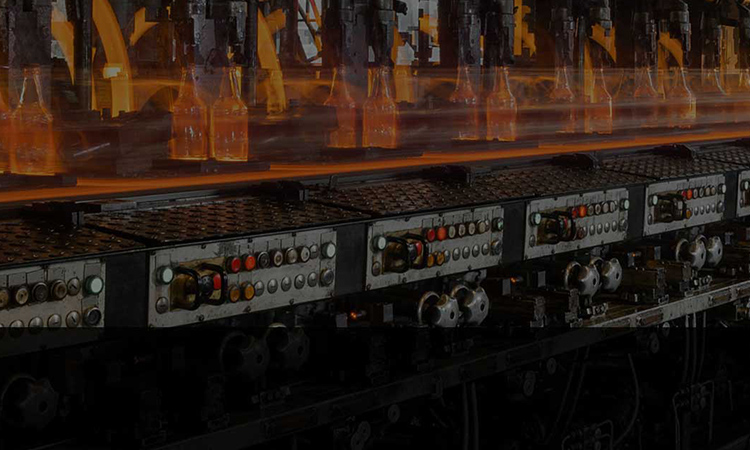
A glass bottle factory audit matters most when it happens before the deposit. If a visit is possible, audit the glass bottle manufacturer’s site across six areas: raw material storage, the moulding workshop, annealing and finishing, the quality inspection zone, finished goods storage and logistics, and the quality documentation archive. Record findings and track corrective actions; the audit report should be the formal basis for approving the supplier. If travel is not practical, request a live video walkthrough of the production and control stages, and ask for third-party client references you can contact directly.
Finally, assess the softer signals that predict long-term reliability: how fast technical questions get answered, whether the supplier supplies technical data sheets and test certificates without prompting, and who handles complaints and post-issue reviews. Then stress-test the plan — what happens if capacity tightens, raw material prices move, or packaging regulations change in your market? Suppliers who manage batch consistency through a mature quality system, monitor utilisation to protect delivery dates, and hold alternative raw material sources are the ones worth a multi-year relationship.
The 10-Point Glass Bottle Supplier Checklist
Use this checklist when you compare glass bottle manufacturers, and ask for a written answer on every point rather than a verbal assurance.
- Confirm the forming process matches your bottle geometry and neck finish.
- Verify real capacity, including annealing and inspection bottleneck stages.
- Review the quality system: incoming, in-process and finished-product testing.
- Agree an AQL sampling standard in writing, per batch.
- Collect valid ISO 9001, FDA, REACH and RoHS documentation, with scopes and dates.
- Confirm which decoration processes the compliance documents actually cover.
- Get itemised pricing: base bottle, mould, setup fees, packaging, freight, insurance.
- Lock MOQ, lead time and peak-season expectations into the purchase order.
- Approve a first-article sample and attach the spec sheet to the order.
- Run an on-site or remote audit and keep the report on file.
Bottom line: a glass bottle manufacturer competes on consistency, not on a single unit price. Verify capability, quality system, compliance and timeline in that order — then the price comparison becomes meaningful instead of misleading.
Need a supplier that can document all of the above? Lianxin Bottle is a custom glass bottle manufacturer with in-house moulding, decoration and batch-level inspection records, and we are happy to walk brand teams through quality reports, capacity data and samples during supplier evaluation.