Key takeaways
- Glass bottle quality control is lot-based sampling, not 100% inspection: each production lot is accepted or rejected against an AQL taken from ISO 2859-1.
- Critical defects (sharp edges, finish failures) are always AQL 0; major defects usually run 1.0–2.5; minor cosmetic defects 2.5–4.0.
- About 80% of rejected glass bottle shipments trace back to three causes: wall thickness inconsistency, neck finish dimension errors and stress cracks.
- Put AQL levels, defect definitions and test methods in the purchase order before production starts — verbal specs are the single most common source of quality disputes.
Glass bottle quality control is a sampling-based acceptance process. Instead of checking every unit, you pull a statistically determined sample from each production lot and accept or reject the whole lot against an AQL (Acceptable Quality Limit) defined in ISO 2859-1. For a typical cosmetic order — a 50ml custom perfume bottle, a 30ml essential oil bottle with a dropper, or a 15ml nail polish bottle — that means AQL 0 for critical defects, 1.0–2.5 for major defects and 2.5–4.0 for minor cosmetic defects. This guide covers how the sampling tables work, what to inspect on a glass container, and how to make those requirements enforceable in the purchase order.
How AQL inspection works for a glass bottle order
AQL stands for Acceptable Quality Limit (previously “Acceptable Quality Level”). ISO 2859-1 defines it as the maximum percent defective that can be considered satisfactory as a process average — in other words, the highest defect rate you are willing to accept in a lot. It is a risk-management tool, not a quality target.
“Critical defects are safety or compliance failures — AQL for critical defects is typically 0.”
— QIMA, Acceptable Quality Limit (AQL)
Reading a sampling plan takes four steps:
- Lot size — the number of bottles in one production run of one SKU, for example 5,000 pieces of a 100ml glass bottle.
- Inspection level — ISO 2859-1 defines General Levels I, II and III. Level II is the default for packaging inspection; Level I uses roughly 40% of the Level II sample size and Level III roughly 160%.
- Sample size code letter — cross-referencing lot size and inspection level gives a letter. A lot of 3,201–10,000 units at Level II gives code letter L; a lot of 150–280 units gives code letter G.
- Accept and reject numbers (Ac/Re) — code letter L means 200 units sampled. At AQL 2.5, Ac = 10 and Re = 11: ten or fewer defective units pass the lot, eleven or more reject it.
AQL numbers that matter for a glass bottle order
- 5,000 bottles at General Inspection Level II → code letter L → 200 units to inspect
- AQL 2.5 → accept if ≤10 defective units, reject if 11
- AQL 1.0 → the usual setting for higher-risk or luxury packaging
- AQL 0 → critical defects: no statistical acceptance, no concession
- ~40% / 100% / 160% → relative sample size at General Levels I / II / III
- 0.2% → a 5,000-bottle lot with 10 defectives can still pass AQL 2.5
That last figure is the counter-intuitive part of sampling inspection, and it is why AQL levels always have to be paired with a written defect classification.
Critical, major and minor: classifying glass bottle defects
Sampling only becomes objective when every inspector scores the same bottle the same way, which is why glass bottle quality control starts with a written defect classification. ASTM E2234 defines critical defects as those that would likely result in hazardous or unsafe conditions for the user, and ISO 9001-based quality management practice requires the classification to be documented in your supplier agreement rather than agreed verbally.
| Class | Definition | Typical AQL | Glass bottle examples |
|---|---|---|---|
| Critical | Safety or legal hazard | 0 | Sharp broken edge at the neck finish; prohibited substances under REACH or FDA rules |
| Major | Function failure or significant loss of value | 1.0–2.5 | Hole through the wall causing leakage; pump that does not dispense; cap that cannot be tightened; decoration misaligned by more than 3mm; colour more than Delta E 5.0 from target |
| Minor | Cosmetic only, no functional impact | 2.5–4.0 | Fine scratches visible only on close inspection; slight haze on the shoulder; a 1–2mm text misprint |
The 5-point glass bottle quality control checklist
Visual checks catch obvious chips and cracks but miss the defects that actually sink shipments: around 80% of rejected glass bottle lots trace back to wall thickness inconsistency, finish dimension errors and stress cracks. Build your checklist around these five areas, and write the testing method next to each one.
1. Wall thickness and glass distribution
Standard wall thickness tolerance for a moulded glass bottle is typically ±0.3mm to ±0.5mm depending on bottle size, but distribution matters as much as the average. A bottle can look perfectly round and clear while one side is 30% thinner — invisible to the eye, and a guaranteed weak point under pressure or thermal shock. Require thickness measurements at four to six points around the circumference, and ask for sectioned (cut-open) samples on every new mould run.
2. Neck finish dimensions and closure fit
The finish is where your pump, sprayer or dropper screws on, and it is the defect buyers overlook most. A variance of even 0.2mm can cause leaking, cross-threading or capping-line jams at scale. Go/no-go gauges are the industry-standard tool because they check finish diameters against tolerance limits in seconds; a supplier who cannot present these gauges on request is a red flag. Spray- and pump-fitted containers are the most finish-sensitive category, so add a functional test: assemble bottle, closure and liner, run at least five full dispensing cycles, then a 24-hour inversion leak test.
3. Surface defects: bubbles, blisters and bird swings
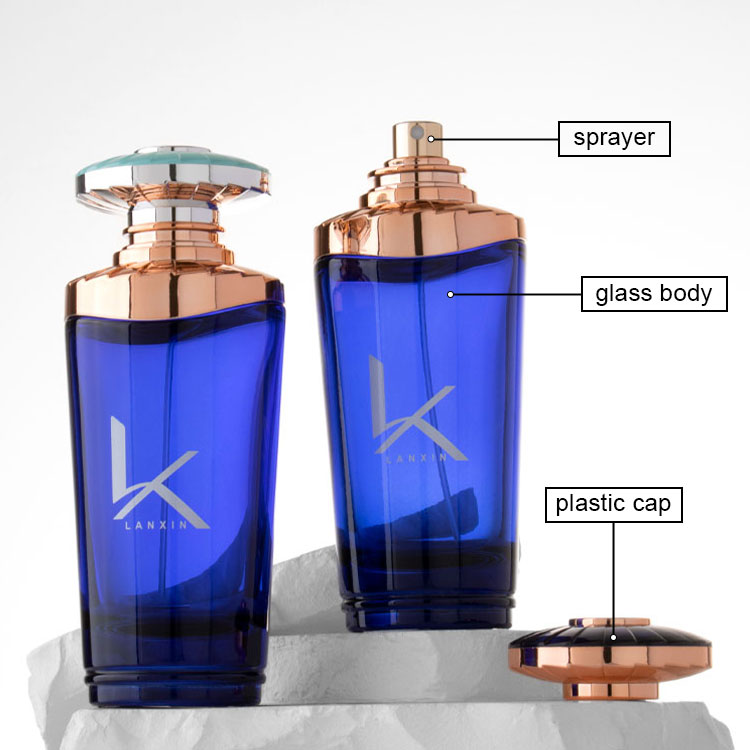
Not every bubble is cosmetic. A “bird swing” or glass string is a thin filament stretched across the inside of the bottle; it can break off and contaminate your product, or act as a fracture point. Backlight every sample batch, and reject visible seed bubbles larger than 1mm in the body wall, especially near the base and shoulder where stress concentrates. For coloured and frosted glass bottles, check tint and haze consistency batch to batch as well: inconsistent dosing shows up as visible striping or a patchy matte finish.
4. Stress cracks and thermal shock
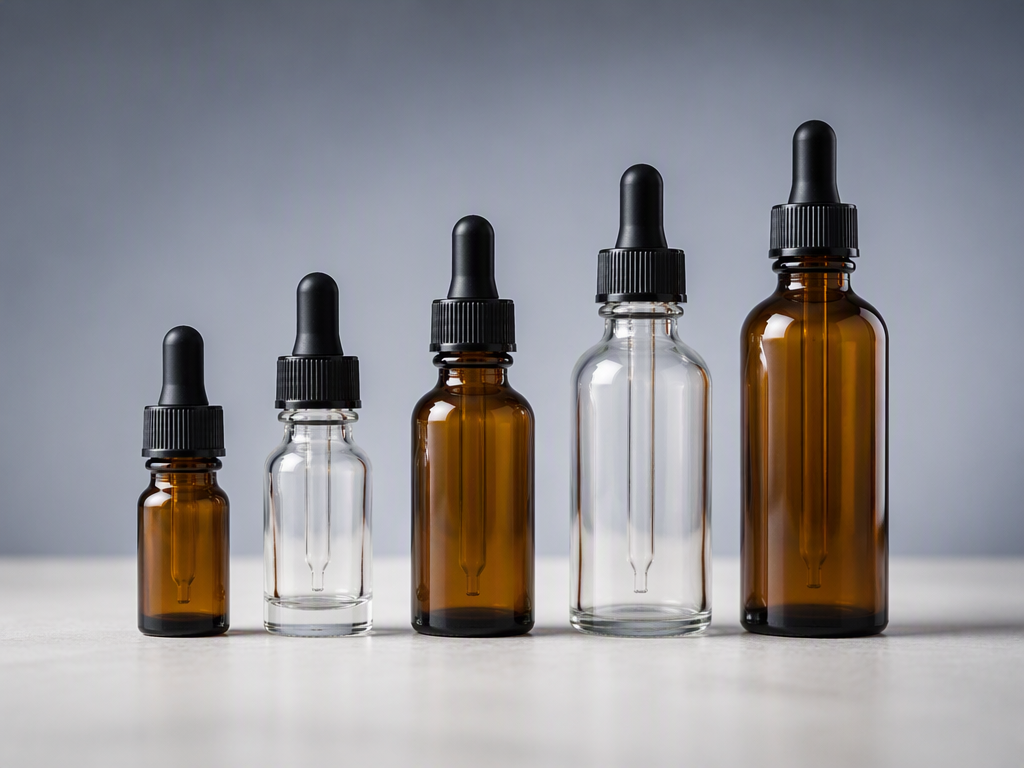
Stress cracks form during annealing, the controlled cooling step after moulding, and often stay invisible until the bottle meets a temperature swing in transit or on your filling line. Polarised-light inspection — a polariscope check — reveals coloured stress rings at the base and shoulder that no visual check can show. If you fill hot liquids, request this test on sample batches.
5. Decoration quality
Frosting, colour spraying, electroplating and hot stamping each bring their own defect vocabulary: adhesion failure, pinholes, uneven haze, plating discolouration and misregistration. Measure colour with a spectrophotometer rather than by eye, and inspect under standardised lighting — D65 (6500K daylight) at a minimum of 1,000 lux, per ASTM D1729. As a working rule, decoration off target by more than 3mm, or colour beyond Delta E 5.0, is a major defect and not a minor one.
Which AQL levels should you set?
The right AQL balances brand perception against rejection cost. Tighter limits mean more lots rejected, more rework and a higher landed price; looser limits mean defective bottles reach your filling line. A practical framework by brand tier:
| Brand tier | Retail price | Critical | Major | Minor | Inspection level |
|---|---|---|---|---|---|
| Luxury / prestige | Over US$80 | 0 | 1.0 | 2.5 | III |
| Masstige | US$20–80 | 0 | 2.5 | 4.0 | II |
| Mass market / private label | Under US$20 | 0 | 4.0 | 4.0 | II |
Inspection Level III is worth the extra cost on luxury programmes: the larger sample gives better statistical confidence where a false acceptance is expensive. The cost side is equally real — tightening major defects from AQL 4.0 to 2.5 on a mass-market programme can add roughly 8–12% to per-unit packaging cost through rejections and rework, and luxury-tier inspection typically runs 10–15% above mass-market inspection cost. With no quality history at a new supplier, QIMA’s rule of thumb is a sound start: AQL 2.5 for general consumer goods, 1.0 for higher-risk categories and 4.0 where minor cosmetic defects are acceptable.
What to do when a lot fails inspection
An AQL failure is not the end of an order, but the response has to match the defect class:
- 100% sort — critical defects or a high major-defect rate. The supplier inspects every unit, removes the defectives and presents the sorted lot for fresh inspection, at roughly 5–10% of order value added to their cost. Critical defects always require a full sort; never accept a concession.
- Rework and resubmit — fixable major or minor defects. Decoration reprinted, surfaces cleaned, closures re-seated, then re-inspected. Typically one to two weeks.
- Accept with concession — minor defects only, non-premium programmes. Take the lot at a negotiated discount, usually 5–15% of order value.
- Outright rejection — systemic failure. Reserved for defect rates three to five times the AQL limit, where the cause is a process problem rather than random variation. Expect a six- to eight-week remanufacturing delay.
How to write glass bottle QC into your purchase order
Most glass bottle quality control failures are process failures on the buyer’s side: the requirements were never written down. Close the gaps before the mould is cut:
- Document AQL levels and defect definitions in the supplier quality agreement, with photo standards or physical boundary samples so “slight scratch” has exactly one meaning.
- Approve a golden sample — a signed pre-production reference bottle, closure and decoration. For a new shape, a 3D-printed prototype catches a thin shoulder wall or an off-spec finish before you commit to tooling.
- Require random, unopened lots. Sampling is only valid if the lot is presented in its original production packaging; pre-sorted product invalidates the inspection. Use stratified random sampling — pallet groups, then cartons, then units.
- Ask for a per-batch inspection report or Certificate of Analysis rather than a per-shipment document. That gives you a traceable record if a defect surfaces after filling.
- Book a third-party pre-shipment inspection on first orders. A few hundred dollars against the value of a container is cheap insurance, and it removes the conflict of interest in factory self-inspection.
The same discipline applies while the container is still being defined: capacity drawings, neck finish code, decoration method and colour standard belong in the same document as the AQL levels for custom glass bottle projects.
Frequently asked questions
What does AQL 2.5 actually mean for a glass bottle order?
It means you accept the lot when the number of defective units in the sample stays inside the acceptance number for that sample size. For 5,000 bottles at General Level II, the inspector checks 200 units; 10 or fewer defectives pass, 11 or more reject the lot. AQL 2.5 is the maximum defect rate you accept — not a target quality level.
How many glass bottles do I need to inspect?
Sample size comes from lot size and inspection level in the ISO 2859-1 tables, not from a fixed percentage of the order. A 5,000-piece lot at General Level II means 200 units; smaller lots need proportionally more of the batch and larger lots proportionally less.
Should the factory or a third party run the inspection?
Independent inspection is the safer default for a first order: when a factory samples its own lot, the incentive is to pass rather than to find defects.
Need glass bottles that pass inspection the first time?
We manufacture custom perfume, essential oil, nail polish and skincare glass bottles with documented AQL levels, in-house finish and leak testing, and third-party inspection support on request.