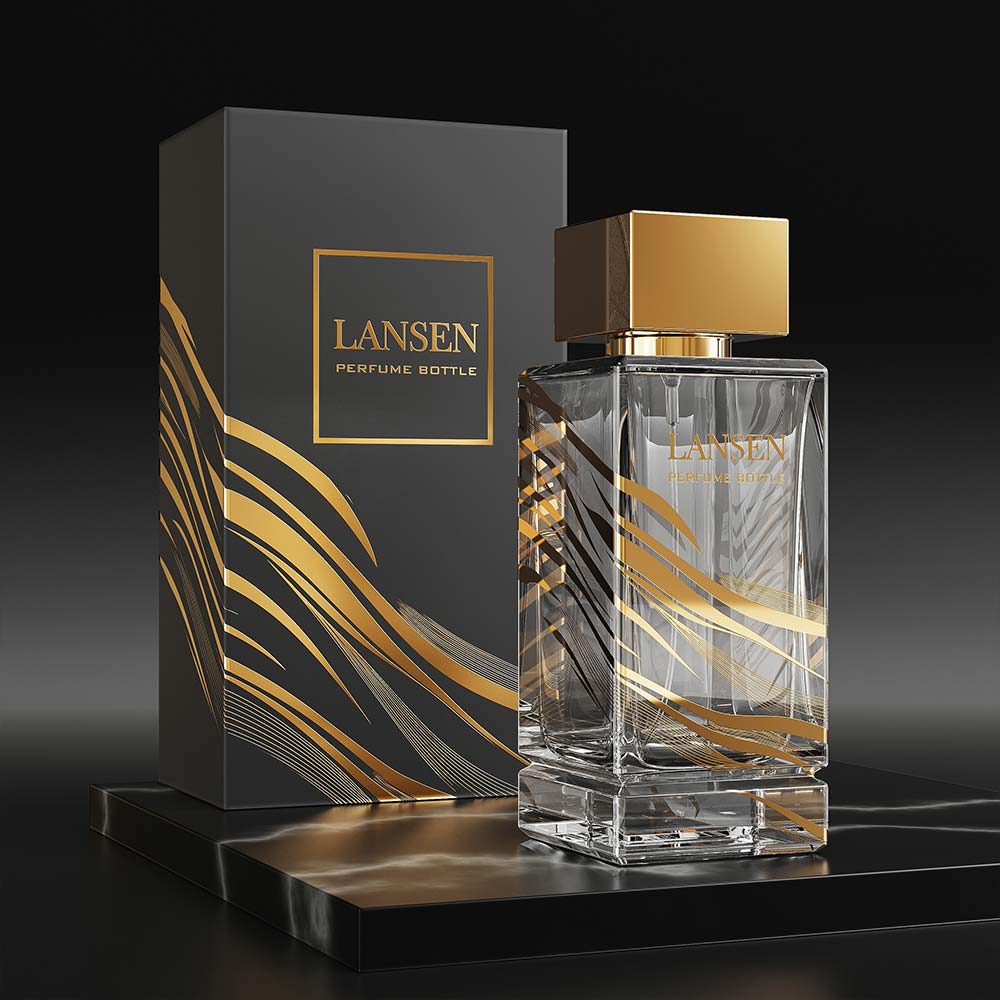
Glass bottle gift box packaging is the retail box that holds your bottle, protects it through fulfilment, and does the selling on the shelf before anyone smells the product. The short answer for buyers: match the structure to your price point — a rigid box for premium fragrance, gift sets and sculptural bottles; a folding carton for everyday ranges, travel sizes and high-volume programmes — and never approve either without a fitted insert that has been tested with your actual bottle and closure. Get this layer wrong and you pay twice: once for the packaging, and again for the replacements.
The short answer
- Rigid box (1.5–3 mm chipboard wrapped in printed paper): the strongest gift feel and the best protection for heavy or irregular glass. It ships assembled, so it costs more per unit and takes warehouse space.
- Folding carton (300–400 gsm SBS board): lighter, ships flat, cheaper per unit, and prints beautifully — but it needs a paperboard insert before it can safely hold a glass bottle.
- Insert: foam, molded pulp or paperboard. Choose it by bottle weight and shipping route first, appearance second.
Source: Precedence Research, Gift Packaging Market 2026–2035
What Does Secondary Packaging Actually Do for a Glass Bottle?
For a glass bottle gift box, secondary packaging is everything between the filling line and the consumer’s hands that is not the bottle itself: the printed box, the insert, the sleeve, the tissue, the ribbon. It has three jobs, and buyers usually under-budget two of them.
1. Absorb impact. Glass fails on point loads and hard contacts, not on average handling. A bottle rattling inside an oversized box will break against its own shoulder line long before the outer carton shows damage. This is why the insert — not the board grade — usually determines your breakage rate.
2. Sell before the smell. Fragrance is an emotional purchase, and most shoppers decide whether a bottle reads as luxury or mass-market while holding the box. A heavy, solid box with a clean reveal supports a premium price; a thin carton that flexes in the hand quietly argues for a discount. Premium gift packaging has kept growing for exactly this reason: the luxury rigid box segment alone was valued at USD 4.57 billion in 2024 and is forecast to pass USD 6.70 billion by 2034, a 3.9% CAGR, according to Towards Packaging data published via GlobeNewswire.
3. Carry the mandatory copy. Volume, ingredient list, batch code, warnings and origin statements have to live somewhere that does not wreck the front panel — usually the back or base. Plan that space in the dieline stage, not at the print proof.
Note the boundary: secondary packaging travels with the product to the shopper. Tertiary packaging — the master carton, honeycomb dividers and pallet configuration — is a separate decision covered in our glass bottle packaging guide for export. Mixing the two in one brief is the fastest way to buy a beautiful gift box that still breaks in an LCL container.
Rigid Box vs Folding Carton: Which Fits Your Glass Bottle?
The structural choice is a budget and positioning decision, not a taste decision. Both formats can look premium; they behave very differently in production and in a warehouse.
| Factor | Rigid box (set-up box) | Folding carton |
|---|---|---|
| Board | 1.5–3 mm chipboard, paper-wrapped | 300–400 gsm SBS paperboard, single sheet |
| Feel & perceived value | Heavy, gift-ready, reuse-worthy | Light and clean; premium only with strong finishes |
| Protection of glass | Excellent, especially with a fitted insert | Adequate only with a paperboard insert |
| Unit cost | Higher | Lower |
| Shipping & storage | Ships assembled — bulky, more space and freight | Ships flat — thousands fit in a small footprint |
| Production speed | Slower, more hand assembly | Fast and highly automated |
| Best for | Luxury fragrance, gift sets, limited editions, shaped bottles | Core ranges, body mists, travel sizes, seasonal reprints |
Board specifications per PackWhole’s rigid-vs-carton comparison.
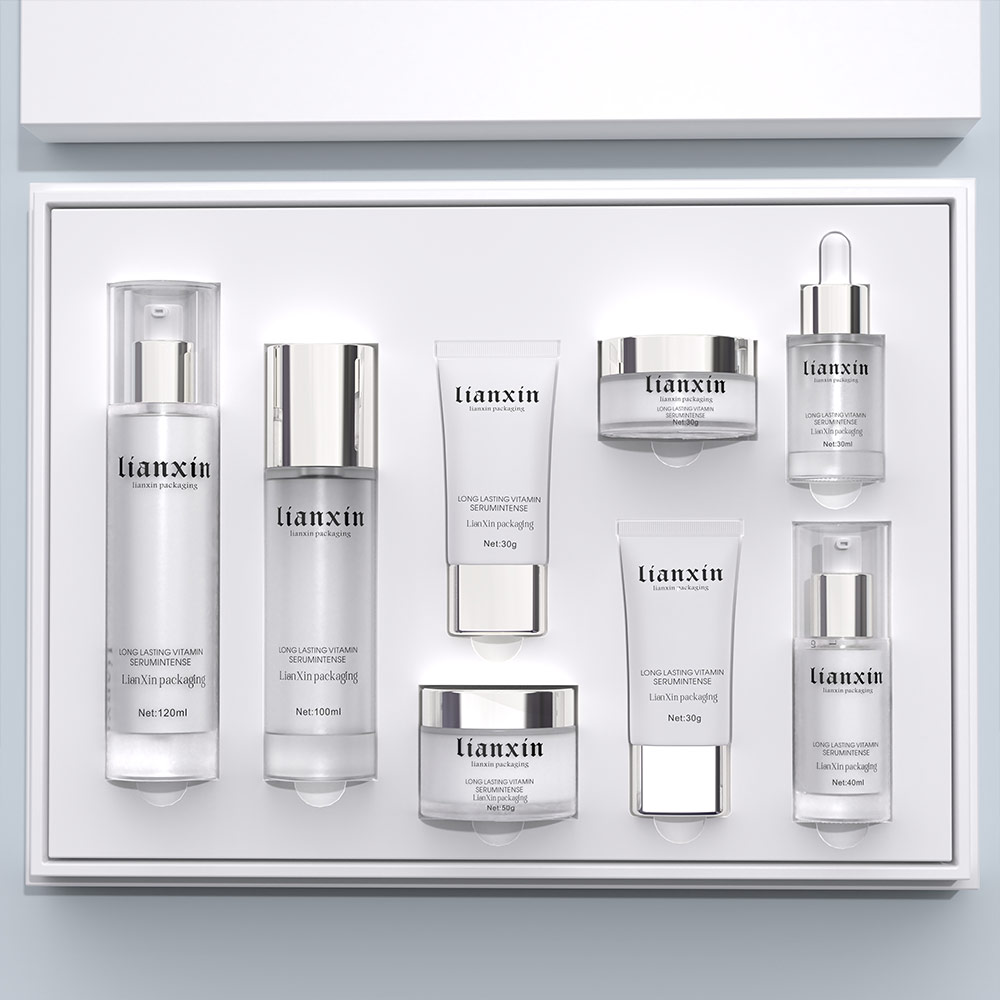
Most brands we quote end up running both. Folding cartons carry the 30 ml and 50 ml sizes that have to hit a price point, while rigid boxes wrap the 100 ml hero bottle, the holiday edition and the two-piece gift set. That split protects margin without flattening the brand.
For fragrance specifically, the structure has to be designed around the bottle, not the other way round. A custom glass perfume bottle with a heavy base and a wide shoulder needs a box with enough internal height for the actuator, and a cavity that grips below the shoulder rather than on the neck. Slim cylindrical formats are easier: a round cavity with a paperboard collar holds them securely at a fraction of the tooling cost.
How Do You Choose the Right Insert for a Glass Bottle Gift Box?
The insert is the part customers never think about and buyers should never skip. It creates the layout, keeps components from touching each other, and takes the shock load in a drop. Three materials cover most glass bottle programmes.
| Insert type | Protection | Tooling & cost | Best for |
|---|---|---|---|
| EVA / PE foam | Highest — die-cut or CNC-milled to the exact silhouette | Cutting die or CNC programming; mid cost | Heavy or sculptural bottles, gift sets, e-commerce shipping |
| Molded pulp | High for weight and stacking; softer surface than foam | Mold tooling; best amortised at volume | Paper-first brands, multi-bottle sets, larger formats |
| Paperboard / velvet-wrapped | Moderate — good for retail, weaker in parcel networks | Lowest; simple die and fold | Folding cartons, counter displays, tight budgets |
Two data points should shape that table. First, inserts are now the default rather than the upgrade: the segment with inserts dominated the rigid box market in 2024, and foam inserts are projected to grow fastest because of their shock absorption. Second, foam is the hardest component to recycle — a box that mixes board, lamination and foam needs its parts separated before it can go in a paper stream.

Practical rule: test with the filled bottle, not an empty one. A 50 ml essential oil bottle and a 100 ml perfume bottle weigh very differently once filled, and the insert that holds both at rest may only protect one of them in a drop. Ask for a filled-sample drop test before the insert die is cut — recutting a cavity is cheap, reprinting a run is not.
How Should You Size a Glass Bottle Gift Box?
Sizing errors in a glass bottle gift box cause more launch delays than design disagreements, because the box is usually approved before the bottle is final. Measure in this order and you avoid the three classics — box too short for the cap, cavity too tight at the shoulder, and artwork that no longer fits once the bottle volume changed.
- Total height with the closure fitted. Measure the bottle with the pump, sprayer actuator or dropper cap installed, not the bare bottle.
- Maximum diameter, not nominal diameter. The widest point is often the shoulder or the cap skirt, not the body label area.
- Dip tube and fitment depth. For pump and spray bottles, confirm the assembled height and that the tube clears the base without touching it.
- Decoration build-up. Screen print, hot stamping and heavy coating add thickness; check clearances after decoration is approved, not before.
- Insert and wrap allowance. Add room for tissue, a sleeve or a ribbon channel inside the lid — those millimetres must exist in the internal dimension.
Then convert: internal box dimension = bottle maximum dimension + insert thickness on both sides + the wrap allowance you decided. Confirm the figure on a physical white mock-up with the real bottle inside before the print plate is made. If you are still choosing between frosted glass bottles and clear formats, settle that first — the finish affects the decoration clearance and the visual weight of the box.
What Do Rigid Box MOQ, Tooling and Lead Time Depend On?
There is no universal MOQ for glass bottle gift box packaging, because the number is driven by how much one-off tooling has to be spread across the run. Expect to see the price curve flatten quickly and then stop rewarding volume — the last increment rarely pays for another plate.
| Cost driver | What pushes it up |
|---|---|
| Structure | Magnetic closure, drawer, hinge lid or shoulder-neck builds = more hand assembly than a simple lift-off lid |
| Board & wrap | Thicker chipboard, specialty or textured wrap paper, tight registration |
| Print & finishes | Spot colours, foil stamping, embossing, soft-touch lamination, spot UV — each adds a pass |
| Insert | Custom die-cut foam or a new molded pulp mold; velvet wrapping adds labour |
| Logistics | Assembled rigid boxes are bulky and non-collapsible, so warehousing and freight rise with volume |
| Timing | Holiday and gifting peaks compress factory capacity — book tooling earlier than the bottle order |
Three habits keep this manageable. First, request quotes at three quantities rather than one, so you can see where the tooling stops distorting unit price. Second, ask whether a collapsible rigid box is acceptable — it sacrifices a little rigidity to cut freight and storage dramatically. Third, sequence tooling properly: bottle drawing approved, then insert, then box dieline, then print. Reversing that order is how brands end up with a beautiful box that no longer fits the custom glass bottle you refined in week six.
How Do You Keep Gift Box Packaging Recyclable?
Premium and recyclable are not opposites, but the popular constructions fight each other. Magnets, foam, plastic lamination and mixed-material wraps all have to be removed before a box can enter a paper recycling stream — and in practice most consumers will not do it. Regulatory pressure in Europe is pushing brands toward mono-material, paper-based formats, and paper and paperboard already hold 44% of gift packaging materials, with gift boxes the single largest product segment.
The workable compromises are well known by now:
- Replace foam with paperboard or molded pulp wherever the bottle survives the drop test — a cavity that folds costs less and recycles with the box.
- Keep magnets optional, or specify a ribbon-tie or tuck closure for markets with strict sorting rules.
- Choose uncoated or water-based finishes over plastic lamination and keep the board as a single material.
- Print recycling instructions on the base panel, and describe the separated components honestly.
A glass bottle gift box that can be flattened, sorted and recycled without a knife is now a selling point in its own right — and it usually costs less to produce than the laminated, magnet-closed version it replaces.
The Bottom Line
Glass bottle gift box packaging should be specified in this order: bottle silhouette and fill weight, then insert, then structure, then print. Get the first two right and the box protects the product and supports the price; get them wrong and no amount of foil stamping rescues the launch. If you want a second opinion before you commit tooling, send us the bottle drawing and your target retail price — we will tell you which structure, insert and finish combination fits the budget, and where the savings actually are.