
Short answer: glass bottle packaging for export is built from three engineered layers — a robust primary bottle, a divider system that eliminates all rattle (honeycomb kraft for round bottles, molded pulp trays for high volume), and a double-wall corrugated carton rated at a minimum 200 lb burst / 32 ECT, column-stacked no higher than 1.7 m. Importers who fix those three points typically bring breakage below 0.5% on full 40-ft ocean containers, even on 30+ day sea routes.
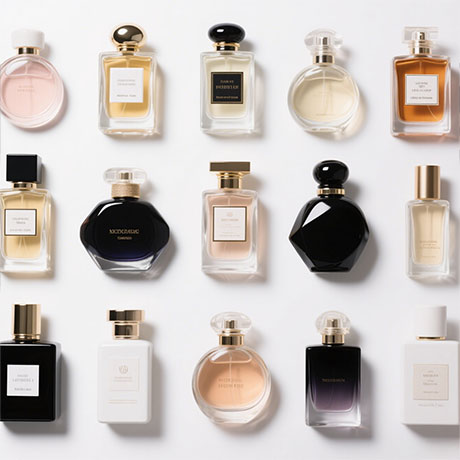
The glass cosmetic bottle market was valued at $3.3 billion in 2025 and is projected to grow from $3.5 billion in 2026 to $4.7 billion by 2033, according to Grand View Research. More premium glass is moving across borders than ever — and more of it is breaking in transit than most buyers budget for. Across the wider glass industry, shipment damage is a $4.7 billion annual problem, a figure reported by Impact-O-Graph and cited in GlassyPack’s 2026 shipping guide.
The good news: in glass packaging, the bottle is almost never the weak point. So this guide breaks down glass bottle packaging for export the way an experienced importer actually specifies it — divider geometry, carton strength, pallet behavior, and the test reports you should demand before a single container sails.
What Makes Glass Bottle Packaging for Export Different?
Domestic parcel shipping punishes a bottle once. Ocean freight punishes it repeatedly. Container ships vibrate continuously through engine harmonics, wave impact, and rail transfers at ports — and over a 20 to 40 day crossing, that low-grade vibration does more cumulative damage than a single hard drop, because it fatigues the glass at the same stress points over and over. According to Packafill’s 2026 export packing guide, this vibration damage often shows up weeks later as micro-fractures at the neck or base that leak on a retail shelf — after the shipment has already been signed for.
Three failure points dominate real-world claims:
- Loading — forklift impact and drops at the factory or consolidation warehouse.
- Transit — 20-40 days of vibration and container sway, compounded by heat and humidity.
- Unloading — rougher handling at destination ports where oversight is thinner.
Within the bottle itself, the two thinnest cross-sections are the neck-to-shoulder transition and the base heel. Those are exactly where your divider must make firm, snug contact — not loose contact. Bottles designed with reinforced neck rings or a thicker heel perform measurably better on long sea routes than lightweight designs optimized purely for unit cost, which is why bottle geometry belongs in the same conversation as the carton spec. If your line includes wholesale perfume bottles with tall, narrow profiles or essential oil bottles with small-diameter necks, expect that conversation to start early.
Transit risk at a glance
- 20-40 days — typical ocean transit during which vibration fatigue accumulates
- Up to 50% — strength loss a corrugated carton can suffer after absorbing moisture in a humid container
- 1.6-1.8 m — pallet height ceiling most reputable glass exporters apply, including the pallet base
- <0.5% — the breakage rate achievable on full container loads once dividers, cartons and stacking are engineered
How to Choose Dividers: Honeycomb Kraft, Molded Pulp or Foam?
Divider choice follows bottle shape and order volume — not habit. The single most common mistake buyers make is reusing one carton and divider spec across an entire product line, then wondering why one SKU keeps arriving cracked.
| Divider system | Best for | Cost profile | Trade-off |
|---|---|---|---|
| Honeycomb kraft grid | Cylindrical bottles under 500 ml | Low unit cost, low tooling | Flexes on impact by design — absorbs shock rather than transferring it |
| Molded pulp trays | One standardized shape at high volume | Cheaper per unit at scale, mold tooling required | Fully recyclable, which matters for EU-bound shipments; utilitarian look |
| Die-cut corrugated insert | Retail-ready cartons, DTC and gift sets | Upfront die tooling, low unit cost | Excellent presentation and unboxing, higher MOQ |
| Custom foam (EPS/PE) | Irregular or heavy shapes — embossed, handled | Highest material cost, bulky storage | Maximum impact resistance, weakest environmental profile |
There is one acceptance test that beats every specification sheet: if you can shake a packed carton and hear glass moving, the divider is wrong. Zero rattle is the target — not “pretty snug.” For nail polish bottles with long slender profiles and heavy glass bases, and for square or rectangular designs, the divider must be sized to the shoulder width of the bottle, not its maximum diameter, or the bottle will rotate and knock.

What Carton Strength Do Glass Bottles Need for Ocean Freight?
Most buyers check bottle specs obsessively and never ask about the carton’s burst strength or edge crush test (ECT) rating. That is backwards. A 32 ECT carton can handle roughly double the stacking pressure of a standard 23 ECT box — a difference that matters enormously when pallets sit five or six high in a container for a month.
| Shipping mode | Minimum spec to request | Why |
|---|---|---|
| Ocean freight (international) | Double-wall, 200 lb burst ≈ 32 ECT | Withstands month-long stacking pressure plus container humidity |
| Air freight / short domestic | Single-wall, 175 lb ≈ 23 ECT | Lower transit stress; saves freight weight |
| Tropical routes / long port dwell | Wax-coated or water-resistant kraft, plus silica gel packs | Moisture absorption can cut corrugated fiber strength by up to 50% of its dry-state rating |
Packafill documents an olive oil importer who switched from single-wall to double-wall cartons after a 3% breakage rate on their first container. The carton upgrade alone — no divider change — dropped breakage to under 0.4% on the next shipment.
Then there is stacking. Column stacking — cartons lined up edge-to-edge in vertical columns — distributes weight straight down through the carton walls and is the stronger method for glass. Interlocking (bricklay) patterns look more stable visually but redistribute weight onto weaker carton points, increasing crush risk in any load containing glass. Cap pallet height at 1.6-1.8 m including the pallet base, and wrap with at least three rotations of stretch film at the top and bottom edges, where shifting starts.
A distributor importing amber pharmaceutical bottles was losing 4% of every container to breakage — enough to erase the margin on the whole order. The diagnosis: single-wall cartons, loose paper dividers, and bricklay stacking at 2.1 m. The fix was molded pulp trays sized to shoulder width, double-wall cartons, a 1.7 m pallet ceiling, and column stacking. Next shipment: 0.3% breakage.
How Do You Test Packaging Before Mass Production?
Ask for test reports before mass production approval, not after a container has already sailed. Reputable manufacturers build these tests into the mold and packaging approval stage, which is far cheaper than discovering the problem in a damage claim.
- Carton compression strength (CCS) — run at simulated humidity, not dry lab conditions, so the number reflects what happens inside a humid container.
- Drop tests — at minimum from 0.5 m and 1 m heights.
- Vibration simulation — required for sea routes longer than 20 days; ISTA 3A is the widely used parcel-network protocol and includes an optional random vibration test under low pressure.
Independent labs describe ISTA 3A as the standard for parcel delivery networks (shipments up to 150 lb) such as UPS, FedEx and DHL — the same protocols a retail partner may later require from you. If your bottles are custom, the cheapest moment to de-risk all of this is at the prototype stage: 3D printed bottle prototypes let you validate shoulder geometry, cap fit and divider contact before mold steel is cut, and custom color matching can be locked in during the same round.
What Does Export Packaging Add to Cost, MOQ and Lead Time?
Engineered packaging is a line item, and it is usually a small one relative to the downside. Treat the upgrade cost as insurance priced against your landed cost, not as a discount opportunity.
| Upgrade | What it changes | Buyer impact |
|---|---|---|
| Single-wall → double-wall carton | Burst 175 lb → 200 lb (23 → 32 ECT) | Small per-carton increase, slightly heavier freight |
| Paper dividers → molded pulp trays | Fixed shoulder contact, zero movement | One-time mold cost, lower unit cost at volume |
| Standard pallet → capped, column-stacked pallet | Height limited to 1.7 m, column pattern | May reduce cartons per pallet — accept it, or raise container count |
| Skipping the test reports | Nothing measured, nothing fixed | Cheapest on paper, most expensive per claim |
Two practical notes for quoting. First, packaging tooling (divider molds, die-cut cutting dies) is usually quoted separately from bottle molds, and it is a one-time cost you keep across repeat orders. Second, if you need decorated or finished bottles — frosted glass bottle finishes, for example — confirm whether finishing happens before or after the breakage-critical packing step, since re-packing decorated glass is where rejection rates quietly climb.
The Bottom Line
Glass bottle packaging for export succeeds or fails on three decisions you control long before the container is loaded: a divider sized to shoulder width with zero rattle, a double-wall carton at 200 lb burst / 32 ECT for ocean freight, and a column-stacked pallet capped at 1.7 m. Add compression, drop and vibration test reports to your approval checklist, and the difference between a 4% breakage claim and a 0.3% clean delivery is engineering, not luck.
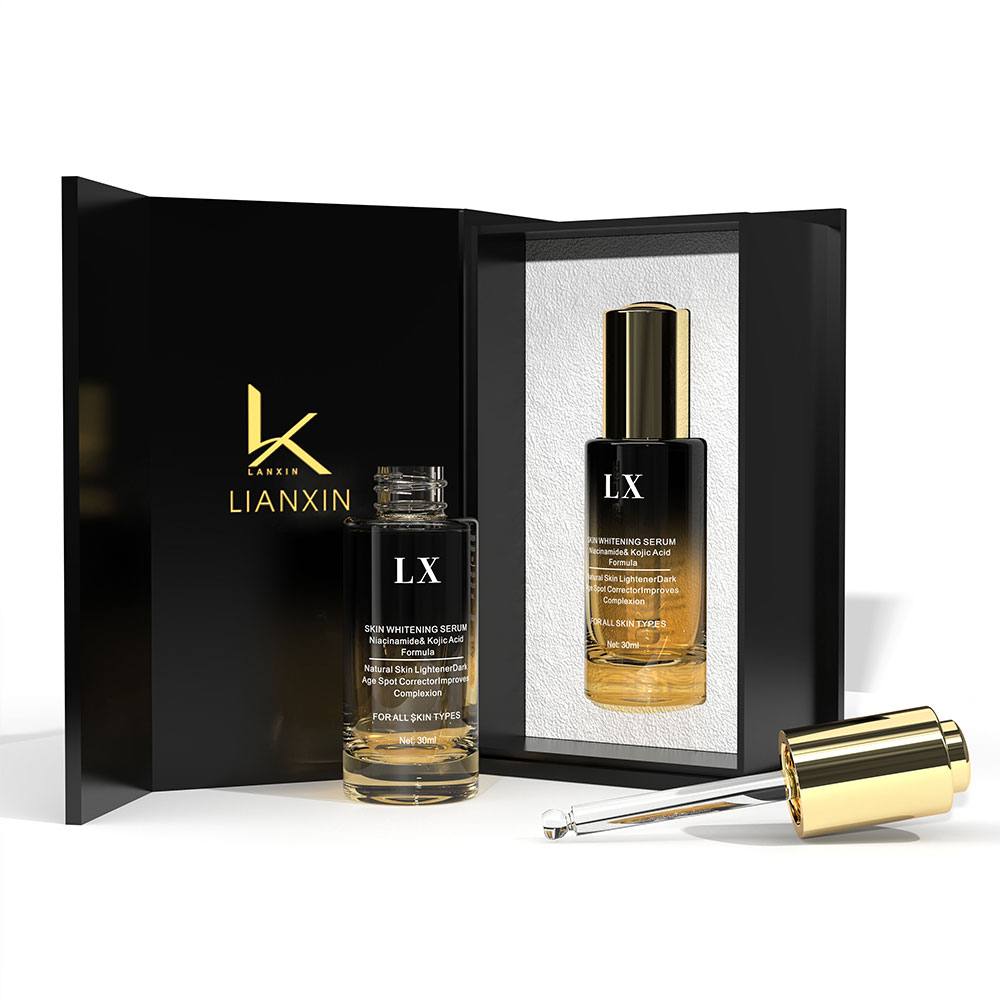
If you are specifying packaging for a new glass bottle program — or reopening one that keeps generating breakage claims — Lianxin supports full custom glass bottle development from prototype through carton and divider specification, so the bottle and the box are approved as one system rather than two.