Short answer: How to clean glass bottles before filling depends on two variables — how the empties were packed and what will go inside them. Bottles delivered in sealed, supplier-controlled packaging usually need only filtered-air particle removal plus a defined inspection. Bottles that arrive loose and dusty, or that will hold a water-based formula, need a validated wet wash with a purified-water rinse and measurable drying. Sterilizing every bottle is not the default, and an uncontrolled rinse can add moisture and chemical residue instead of removing risk.
The cost of getting that decision wrong is not cosmetic. Filling-line sanitation guidance attributes 64% of microbial outbreaks in glass bottle filling operations to biofilm and particulate contamination, according to ACE Filling, and the particles that start those problems often arrive inside the bottle rather than from the machine. A bottle can pass a visual check with dust on the shoulder and fine glass powder in the base. That is why the preparation route should be written into the packaging specification, not improvised on the filling day.
Bottle preparation benchmarks at a glance
- ~1.99% NaOH at 60 °C / 80 °C / 60 °C — average caustic concentration and bath temperatures in a published returnable glass bottle washer study
- pH 10–12 — the alkaline stage range used to dissolve organic soil on filling lines
- 2% caustic at 60 °C for ~8 minutes — contact time reported to break down established biofilm
- 2–3 bar turbulent rinse — removes roughly 95% of detergent residue
- 0.45 m/s laminar airflow — drying method that reaches under 5% residual moisture
Do New Glass Bottles Need Washing Before Filling?
Not automatically. How to clean glass bottles before filling is a risk assessment based on incoming packaging condition and formula sensitivity, not a habit — which is exactly the framework professional line builders use: define how the empty packaging is manufactured, packed, transported and opened, then choose an approved route from a short list. The container-preparation decision guide from ZXSMART makes the same point bluntly — washing every bottle is not automatically safer, because a wet rinse adds water, chemistry, drying time and a new contamination route.
In practice, most cosmetic buyers fall into one of four routes:
| Incoming condition | Approved route | Evidence to keep on file |
|---|---|---|
| Sealed bags or shrink trays from an approved supplier, opened at the line | Controlled depacking, filtered-air particle removal, defined inspection | Packing specification, bag integrity check, sampling and release record |
| Bulk cartons, loose bottles, long storage, visible dust | Dry vacuum and air removal, or a wet wash if dust is bonded to the glass | Air quality, nozzle and orientation setup, reject criteria |
| Water-based, hot-fill or preservative-light formula | Validated wet wash, purified-water final rinse, measured drying | Rinse water spec, contact time, dryness result, maximum hold time |
| A regulated claim — sterile or micro-reduced | A separate, validated sterilization process defined by your quality team | Validation protocol, bioburden result, release responsibility |
One language discipline matters as much as the process: clean, sanitized and sterilized are three different claims and should never be used interchangeably. A machine labelled “air rinser” does not prove a hygiene result. Suppliers who describe a sterilization step usually quote parameters such as steam at around 100 °C for 3–5 minutes or ozone treatment of roughly 15 minutes, as BEYAQI’s bottle-cleaning overview sets out — useful reference points, but your validation, not theirs, is what a customer audit will ask for.
What Actually Arrives Inside a New Glass Bottle
Empty does not mean clean. Five categories of contamination show up on incoming glass, and each one needs a different response:
- Glass fines and dust. Bottles rub against each other in bulk packing. Fine glass powder settles in the base and along the shoulder, where a rinse jet reaches least effectively.
- Alkali bloom. A white haze that forms when residual surface alkali reacts with carbon dioxide in the air. On a clear flint bottle it reads as a defect to the consumer, and it signals that the glass surface still carries alkali. A mild acidic rinse neutralizes it without polishing or damaging the glass.
- Machine and mould residue. Trace oil, graphite and release agents concentrate near the neck and base — the two areas closest to the closure and most visible after filling.
- Fibre and cardboard dust from partitions, dividers and outer cartons, which is exactly what a dry air rinse is designed to lift.
- Decoration residue. Overspray mist from color spraying, solvent carry-over from hot stamping, or stray flocking fibre on the shoulder.
Where the contamination is loose and dry, particle removal is the correct and cheapest intervention. Where it is bonded — bloom, dried residue, handling film — air alone will not move it, and the specification needs a wet stage.
The Glass Bottle Washing Process: Temperature, Chemistry and Rinse Water
A controlled glass bottle washing process is a sequence, not a single spray. Each stage has a job, and skipping the rinse or drying steps is how a wash makes things worse. The parameters below are the ones industrial references actually publish; adapt them to your bottle and formula, then validate on your own line.
| Stage | Typical parameters | Purpose |
|---|---|---|
| Pre-rinse | Water around 60 °C | Lifts loose glass dust and prevents soil from setting on the surface |
| Alkaline wash | pH 10–12, NaOH around 2%, 60–80 °C, minutes not hours | Dissolves oils, adhesive residue and organic film |
| Intermediate rinse | Filtered water below 45 °C | Carries detergent away before it can dry onto the glass |
| Final rinse | Purified or deionized water, 2–3 bar turbulent spray | Removes residual chemistry and prevents mineral spotting |
| Drying | Filtered air, laminar flow around 0.45 m/s | Reaches under 5% residual moisture before the bottle is closed |
A published study on optimizing bottle-washer performance for returnable glass bottles ran three caustic baths at average temperatures of 60 °C, 80 °C and 60 °C, with average NaOH concentration around 1.99% — a useful reference for the strength and temperature band a glass bottle can take. Source: bottle washer optimization study (PDF)
Two chemistry warnings are worth writing into your spec. First, rinse water quality is a specification, not a utility: purified or deionized water is used precisely because tap water leaves hardness spots and chloride behind, and real-time conductivity monitoring is the practical release check for detergent carry-over. Second, more chemistry is not better — caustic soda combined with phosphates and EDTA is documented to etch glass over repeated exposure, so cap the additive package and control contact time rather than raising concentration.
Will Washing Damage Frosted, Sprayed or Hot-Stamped Bottles?
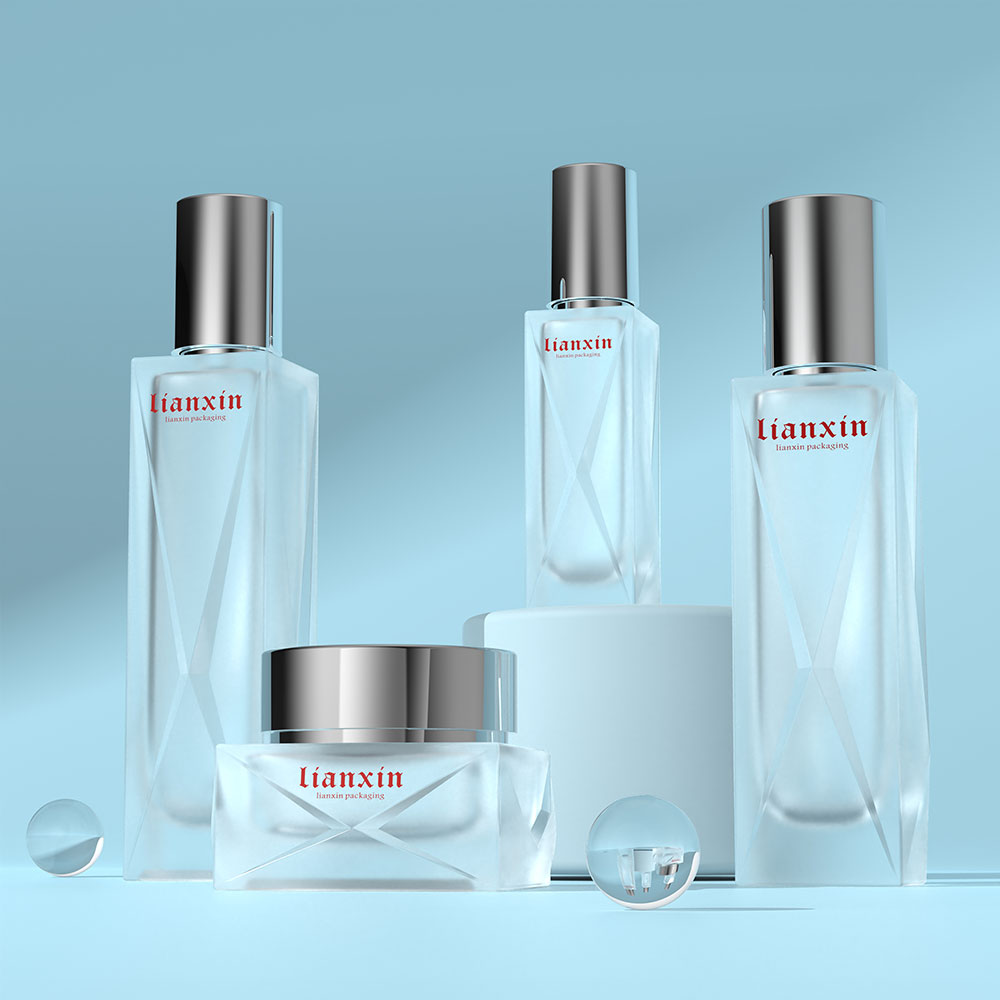
Decoration, not the glass, is usually the first thing a wash damages. Any buyer ordering frosted glass bottles or a coated finish should ask for wash-resistance data before the purchase order, not after the first production run.
- Acid-etched frosted surfaces are chemically active by design. Long hot alkaline soaks dull the etch and can leave chalky patches that no polishing will fix. Shorter contact, lower temperature and no aggressive chelates are the controls.
- Spray coatings and gradient finishes fail by adhesion, not by colour: a weak bond at the shoulder blisters or lifts after immersion. Cross-hatch adhesion plus a 24-hour immersion test is the right qualification.
- Hot stamping foil sits on a size coat that hot caustic can soften, which shows up as edge blistering rather than a full peel.
- Screen print and UV print failures are almost always under-cure. If the ink is fully cured, the wash is not the variable.

The practical test is cheap and fast: put five to ten decorated bottles through the worst-case cycle you would ever run — highest temperature, longest contact, strongest concentration — then check colour shift, gloss and adhesion against an untreated control. If a supplier cannot state a wash-resistance limit in writing, the specification is incomplete; bottle customization should be agreed together with the cleaning route, because a finish that cannot be washed forces a dry-only line.
How to Dry and Hold Bottles Without Re-Contaminating Them
Drying is where the cheapest savings turn into the most expensive recalls. Inverted drainage followed by filtered forced air is the standard, and the reason is measurable: uncontrolled air-drying raises the risk of bacterial regrowth by roughly 40% within two hours, while a controlled laminar airflow stage reaches under 5% residual moisture.
Three controls complete the picture:
- Define a maximum hold time between washing and filling, and inspect again at the filler. A bottle that sat open overnight is a different bottle.
- Protect the opening. Keep washed bottles neck-down on a clean, non-porous surface or under cover, and never stack them open-mouth against cardboard.
- Match rigour to the formula. A fraction of a millilitre of residual water is trivial in an anhydrous perfume or essential oil bottle and serious in an unpreserved water-based serum. Solvent-based products such as nail polish bottles tolerate a dry rinse far better than an emulsion does.
What to Put in Your Cleaning Specification
A supplier cannot quote or guarantee “clean the bottles”. How to clean glass bottles before filling has to be written as decision-ready inputs, and these are the ten that remove most disputes:
- Incoming packing method — sealed bag, tray, carton or bulk bin, and who opens it.
- Approved route — use-as-supplied, dry particle removal, or wet wash, stated explicitly.
- Chemistry limits — maximum NaOH concentration, maximum temperature, maximum contact time.
- Water specification — purified or deionized, with a conductivity limit and a log.
- Drying acceptance — how residual moisture is measured and what value passes.
- Decoration compatibility — which finishes the route has been tested against.
- Sampling plan — sample size, inspection lighting and defect classes, aligned with your AQL scheme.
- Records — bath concentration, temperature, rinse conductivity and release signature per lot.
- Change control — any change of chemistry, water supply or decoration triggers re-qualification.
- Responsibility — who owns the hygiene claim: the bottle supplier, the filler or the brand.

Agree it at sample stage. Once moulds and decoration are approved, changing the cleaning route means re-testing adhesion, print cure and closure torque — a cycle that costs weeks. Buyers who document the route in the packaging specification during sampling avoid that entirely.
Frequently Asked Questions
Do I need to sterilize glass bottles for perfume? Usually not. Alcohol-based fragrance has low water activity, so particle removal, a purified-water rinse where dust is bonded, and verifiable dryness cover the realistic risk. Sterilization is a separate validated claim for products that actually need it.
Can I wash bottles with tap water? Only as a pre-rinse. Tap water leaves mineral spotting on clear glass and introduces hardness and chloride, which is why controlled lines finish with purified or deionized water and monitor rinse conductivity.
How do you clean glass bottles before filling in small batches? Hand washing works when three things are controlled: a detergent that rinses clean, a purified-water final rinse, and forced-air drying to visible dryness before the bottle is capped.
Does washing remove a frosted finish? Not if the chemistry is controlled. Acid-etched surfaces are dulled by long hot alkaline soaks, so limit contact time and temperature rather than eliminating the wash.
Get a Cleaning Route That Survives Your Filling Line
The right answer to how to clean glass bottles before filling is the one your supplier, your filler and your quality team have all signed off in writing — with the chemistry, water, drying and decoration limits attached. We quote custom perfume bottles and cosmetic glass with the decoration route and wash-resistance limits stated up front, so the specification is complete before moulds are cut.