Quick answer: glass bottle thermal shock is the cracking that occurs when one area of a container heats or cools faster than the rest. Thicker glass does not solve it. A container survives hot filling when three things line up: glass that was properly annealed, a thermal shock limit written into the purchase specification, and a filling line that keeps the temperature differential inside that limit.
In this guide: what causes the failure, the temperatures that trigger it, how ASTM C149 and ISO 7459 testing work, and the exact numbers to request from a supplier before mass production.
Glass bottle thermal shock is the cracking or fracturing that happens when one part of a container heats or cools much faster than another part. The answer to preventing it is not thicker glass — it is a combination of correct annealing, a thermal shock limit written into your purchase specification, and filling-line practice that keeps the temperature differential inside that limit. Hot-fill liquids are heated to roughly 82–95°C (180–203°F) before they enter the container, so a room-temperature bottle can face a gradient close to what ordinary soda-lime container glass tolerates. This guide explains the causes of glass bottle thermal shock, how ASTM C149 and ISO 7459 testing works, and which numbers to demand before approving a production run.
What Causes Glass Bottle Thermal Shock?
Glass expands when heated and contracts when cooled. When the inside wall of a bottle is hot and the outside wall is still cold, the two surfaces want to occupy different volumes while they remain bonded together. The result is tensile stress on one face and compressive stress on the other. Glass fails in tension, so a crack opens wherever local tensile stress exceeds the strength of the material at that point — usually at a surface flaw, a mould seam, or a sharp change in wall thickness.
Four variables decide how much stress a given temperature difference produces:
- Coefficient of thermal expansion. Soda-lime container glass expands far more than borosilicate. Published lab guidance puts soda-lime float glass at roughly a 40°C differential before fracture risk, while borosilicate tolerates 160–200°C. Container glass is not float glass, but the ranking holds — which is why custom glass bottle projects rarely switch to borosilicate unless the process demands it.
- Wall thickness distribution. A heavy base joined to a light body cools at two different rates. The gradient between those sections is where most field failures begin. Uniform thickness matters more than total weight.
- Residual stress from forming. If the annealing lehr does not relax that stress before the glass drops below its strain point, the container carries a permanent load that subtracts from every other margin it has.
- Surface condition. Chips, scratches, checks and stones concentrate stress. A bottle with a damaged heel can fail at a differential a flawless bottle would survive.
Decoration belongs in this list too. Acid frosting, spray coating, electroplating and oven-cured inks change the surface, and some processes re-heat the container after annealing. Glass bottle thermal shock results should be validated on decorated ware, not the plain sample from the sample room.
Why Do Glass Bottles Crack During Hot Filling?
In hot filling, the product is heated first and the container is filled at ambient temperature. Liquids are typically held at 180–203°F (82–95°C) before filling, depending on the preservative requirements of the recipe. That is a 55–75°C gradient against a 20°C bottle, applied to the base first, because product reaches the bottom of the container before it reaches the shoulder.
Process temperatures that create the gradient
- Hot-fill liquid product: 180–203°F (82–95°C) at the filler
- Soda-lime glass fracture risk: from roughly a 40°C differential in published lab guidance
- Borosilicate tolerance: 160–200°C differential
- Candle wax: fully melted around 180°F, poured anywhere from 90°F to 185°F depending on the wax system
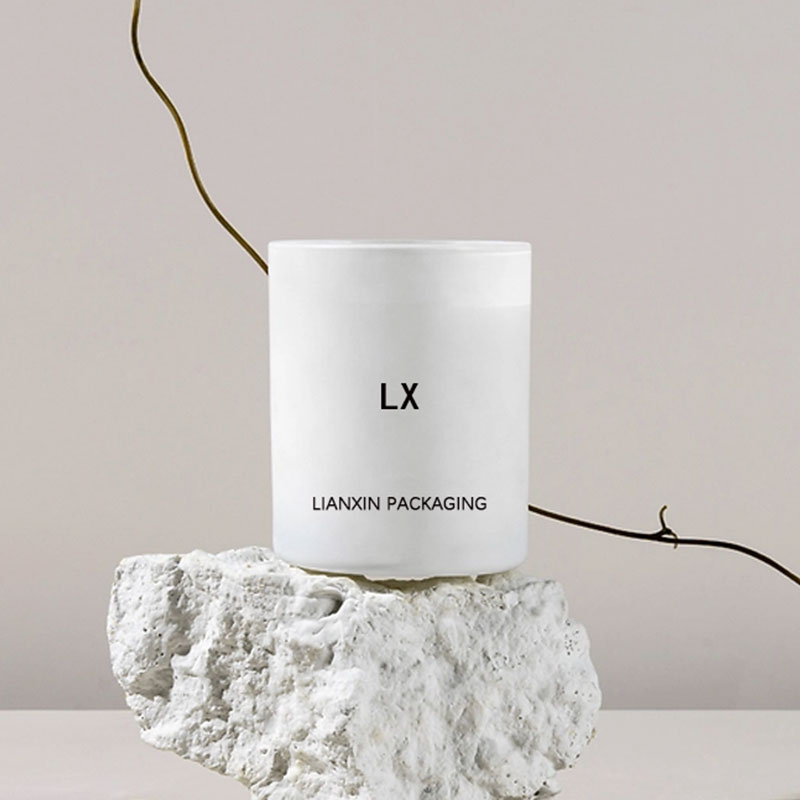
Candle jars follow the same physics with a slower, more localised heat input, concentrated at the base and lower sidewall. Glass bottle thermal shock rarely announces itself at the pour; the crack often appears hours later as the wax contracts and the jar cools. That delay is why a pour test is not a quality record.
Two other situations produce the same crack and both get misdiagnosed as “bad glass”: hot water rinsing of room-temperature bottles, and rapid cooling after a hot-fill or pasteurisation step. If the crack starts at the base corner with no impact mark, the issue is not packing — it is the temperature differential and the annealing record behind that batch.
How Is Thermal Shock Resistance Tested? ASTM C149 and ISO 7459
ASTM C149 is the standard test method for the relative thermal shock resistance of commercial glass containers. Containers pass from a hot bath into cold water, and inspectors record which ones survive.
“Containers are immersed in hot water (typically 60–90°C depending on the test level) for a defined dwell time (1–2 minutes) to uniformly heat the container. Containers are immediately transferred to cold water (typically 0–20°C).”
— Infinita Lab, ASTM C149 thermal shock testing method guide
The variant matters when you read a supplier’s report:
| Test variant | What it does | What it tells a buyer |
|---|---|---|
| Simple pass/fail | One defined differential applied to a sample lot | Whether the lot clears your line condition |
| Progressive test | Differential raised until a set percentage fractures | The margin you have above the line |
| High-level test | Higher differentials for autoclave or high-temp service | Suitability for sterilisation cycles |
ISO 7459 covers thermal shock resistance and thermal shock endurance of glass containers and is the reference most non-US buyers write into a specification. For candle containers there is a third reference: ASTM F2179, which sets performance requirements for annealed soda-lime-silicate jars made for candles, including annealing and thermal shock.
A single number is meaningless without its conditions. Any glass bottle thermal shock report worth accepting states the starting temperature, hot and cold bath temperatures, dwell and transfer time, sample size, whether the sample was plain or decorated, and the pass criterion.
How Does Annealing Quality Affect Thermal Shock Resistance?
Annealing is the controlled cooling that removes the stress locked in during forming. A lehr holds the ware above its annealing point long enough for strain to relax through the full wall, then cools it at a rate the heaviest section can follow. Run a heavy-based jar on a curve written for a light bottle and the base cools too fast: the gradient becomes permanent, and the container starts life with part of its thermal budget already spent.

You cannot see annealing quality by eye, which is why it becomes a commercial argument after the first cracked pallet. Three pieces of evidence settle it:
- Polariscope screening on the line, using crossed polarising filters. Stressed glass shows coloured fringes; a heavily strained bottle is diverted before packing.
- A quantitative stress reading on bottles drawn from the run, reported with the measurement location, glass colour and scale. ASTM C148 describes polariscopic examination of glass containers and is the method behind these readings.
- The lehr curve the batch actually travelled, with hold temperature and maximum cooling rate logged against the container’s wall weight.
Location is the part buyers overlook. Stress concentrates at the base corner where wall meets bottom, the heel, the mould seam, the shoulder and the finish. A reading taken through a convenient sidewall point can look excellent while the base corner — where most field failures begin — is out of limit. Ask for separate limits per location.
Annealing and thermal shock are related but not interchangeable. Good annealing leaves more margin, but it does not prove a thermal shock result, and a passed test does not prove residual stress is controlled. Specify both.
Which Thermal Shock Specifications Should Buyers Request?
A thermal shock clause is only enforceable if two readers reach the same verdict. That requires five elements: the container identified by capacity, colour and mould; the test method with its temperature differential; the acceptance number and sampling ratio; the disposition of failures; and a change-notification rule covering glass composition, mould, lehr setting or container weight.
| Specify this | Why it matters |
|---|---|
| Test method and ΔT (e.g. ASTM C149 at a stated differential) | Without the differential, “passes thermal shock” means nothing |
| Sample size, sampling interval and acceptance number | Prevents a three-bottle sample from representing a production run |
| Residual stress limit by location, on a named scale | Base corner and sidewall rarely deserve the same number |
| Whether testing uses plain or fully decorated ware | Frosting, spraying and plating change the surface you ship |
| Lehr curve and batch traceability record | Turns a repeat complaint into a root cause |
Then state your real line condition. If your filler presents product at 90°C, a glass bottle thermal shock test at a 30°C differential proves nothing. Give the supplier the actual differential, fill temperature and plant ambient conditions, and ask for a progressive test rather than a pass statement.
How to Reduce Thermal Shock Breakage on Your Filling Line
Most glass bottle thermal shock breakage is solved before the bottle is ordered, but a few line practices recover margin cheaply:
- Condition the ware. Let bottles reach room temperature in the filling hall instead of pulling them from a cold container or a winter truck onto the line.
- Ramp the rinse. A warm rinse before hot product removes the largest single-step gradient. Cold water into a hot-fill sequence, or hot water into a cold bottle, is the classic base crack.
- Keep the base off cold surfaces. Cold stainless steel and cold air knives at the base corner do more damage than the product itself.
- Check decorated ware separately. Frosted, spray-coated and electroplated containers should be validated after decoration. If a finish changes the surface, retest it — see our guides to frosted glass bottles and colour spraying.
- Inspect the heel and base corner. A chip at the heel halves the differential a bottle can take. Make it a documented inspection point.
The same logic applies across categories. Perfume and fragrance containers rarely see hot product, but they do see hot rinses, oven-cured decoration and cold-chain journeys — so perfume bottles and essential oil bottles benefit from the same annealing evidence as a jam jar.
Frequently Asked Questions
Does thicker glass resist thermal shock better?
No. Thickness distribution, composition, annealing and surface condition all matter more than total wall thickness. A thick, poorly annealed jar can fail earlier than a thinner, correctly annealed one, because the temperature gradient across a thick wall is steeper.
Is thermal shock testing the same as a drop test?
No. A drop test measures impact resistance of the pack; thermal shock measures response to a temperature differential. A bottle can pass one and fail the other, which is why both belong in a specification for hot-filled or candle ware.
Planning a hot-fill or candle project?
Send us your fill temperature, container size and decoration plan. We will confirm the thermal shock specification, annealing record and sampling plan before tooling starts.
The Bottom Line
Glass bottle thermal shock is a specification problem more often than a material problem. Soda-lime container glass will always have a finite differential; the job is to know what that differential is for your container, prove it with ASTM C149 or ISO 7459 under conditions that match your line, and control the residual stress that quietly removes margin. Brands that buy on wall thickness and price alone discover the gap on the filling line. The glass packaging market is forecast to grow from USD 72.69 billion in 2026 to USD 102.62 billion by 2034, which makes a documented specification a negotiating advantage, not paperwork.
Sources: Fortune Business Insights, glass packaging market outlook; The Cary Company, hot fill packaging process temperatures; Infinita Lab, ASTM C149 method; Bottle Sourcing, glass bottle annealing and residual stress verification; Lone Star Candle Supply, wax melting and pouring temperatures.