E-commerce packaging is now a USD 89.07 billion global market in 2026, up from USD 78.39 billion in 2025, and protective formats such as cushioning and void fill are the fastest-growing segment at a 15.95% CAGR through 2031, according to Mordor Intelligence. The reason is expensive and simple: U.S. consumer goods firms absorbed nearly USD 1 billion in damage-related write-offs in 2024. For glass, most of that loss is decided long before the parcel leaves the warehouse.
Glass bottle packaging for Amazon FBA is not a cosmetic choice — it is a compliance specification. Amazon requires every unit to survive five consecutive drops from 3 feet (about 0.9 m) onto concrete without leaking; glass containers must be protected with bubble wrap and, where the wrap alone does not stop leakage, a cap seal. Bottles over 4.2 oz (125 mL) and any formula classified as dangerous goods need additional prep before they are allowed into a fulfillment center.
The short answer for glass bottles on FBA
- Bubble wrap every glass unit — two layers, no exposed glass, no empty space.
- Add a second seal — induction seal, safety ring, shrink band, plastic wrap band or a child-resistant cap.
- Bag it if the formula is hazmat — alcohol-based perfume and flammable nail polish are bagged regardless of volume.
- Prove it with five drops from 3 feet — chips are acceptable; leaks are not.
What Are the Amazon FBA Packaging Requirements for Glass Bottles?
Amazon’s liquid products policy splits containers into volume bands and seal types, while its fragile products policy governs how the glass itself must be cushioned. For a glass bottle you have to satisfy both. Four layers of requirements apply to every unit:
- Unit protection — the bottle must be individually wrapped or boxed with six solid sides; loose units are rejected in receiving.
- Seal integrity — either a genuine double seal, or a cap seal / poly bag added during FBA prep.
- Identification — a scannable FNSKU label that is not wrapped over or placed on a curved shoulder where scanners miss it.
- Carton discipline — a six-sided master carton that will not collapse, with no empty space that lets units shift.
Amazon states plainly that non-compliant packaging or barcodes may be refused, returned, or repackaged at the seller’s expense — and that extra prep can be imposed after a damage event. That is why the cheapest place to fix a glass bottle is the specification sheet, not the fulfillment center.
| Bottle scenario | Prep normally required |
|---|---|
| Non-hazmat glass, ≤ 125 mL, single seal | Bubble wrap; cap seal if wrap does not stop leakage |
| Non-hazmat glass, > 125 mL | Bubble wrap plus cap seal or poly bag |
| Glass with a double seal (induction seal, safety ring, CR cap…) | Bubble wrap; extra bagging usually unnecessary |
| Hazmat / limited quantity (alcohol perfume, flammable polish) | Bagging regardless of seal or volume |
| Spray bottle without a locking mechanism | Bagging instead of a cap seal |
| Set or bundle | Each unit wrapped, plus “Sold as set” labelling |
Which Glass Bottle Sizes Need Extra FBA Prep?
The 4.2 oz rule is where glass bottle packaging for Amazon FBA most often goes wrong. For non-hazmat liquids at or below 125 mL (4.2 oz), Amazon requires no additional prep — unless the product is repeatedly damaged in transit. Fragile-container rules still apply, so a 30 ml glass perfume bottle is exempt from bagging, not from bubble wrap.
| Typical glass bottle size | Volume vs 125 mL | Non-hazmat prep |
|---|---|---|
| 10–15 ml nail polish or sample vial | Under | Bubble wrap only |
| 30 ml serum or essential oil bottle | Under | Bubble wrap only |
| 50 ml perfume or lotion bottle | Under | Bubble wrap only |
| 100 ml fragrance bottle | Under | Bubble wrap only |
| 150 ml lotion or 200 ml diffuser | Over | Bubble wrap + cap seal or bag |
Two exceptions override the table. First, hazmat classification: an alcohol-based fragrance or a flammable polish is bagged at any size, because the risk is the formula rather than the volume. Second, damage history: Amazon explicitly reserves the right to add prep requirements when a product is repeatedly damaged, which is how a compliant 50 ml bottle suddenly needs bagging. If your SKU is heavy for its footprint — a thick-walled 50 ml bottle with a weighted cap, for instance — test it rather than trusting the exemption.
Cap Seal or Double Seal: How Should You Seal Glass Bottles for FBA?
Amazon defines a double seal as a tightened lid that cannot be easily opened plus one recognised secondary seal. Seal types accepted as the second element include induction seals, safety rings, metal clips, plastic wrap bands, child-resistant caps, heat-shrink sleeves and sealed six-sided boxes. A bottle with a genuine double seal usually escapes bagging entirely, which cuts prep labour and dimensional weight.
| Second seal | Best fit on glass | Watch-out |
|---|---|---|
| Induction seal | Screw-neck essential oil bottles, lotion bottles | Needs a lined closure and a foil-compatible neck |
| Safety ring / shrink band | Nail polish bottles, dropper bottles | Band must sit under the cap shoulder, not over the brush |
| Child-resistant cap | Oils, polish remover, nicotine-adjacent liquids | Verify push-and-turn force after filling |
| Crimp + sealed box | Crimped glass perfume bottles in retail cartons | Box must be six-sided and sealed, not a sleeve |
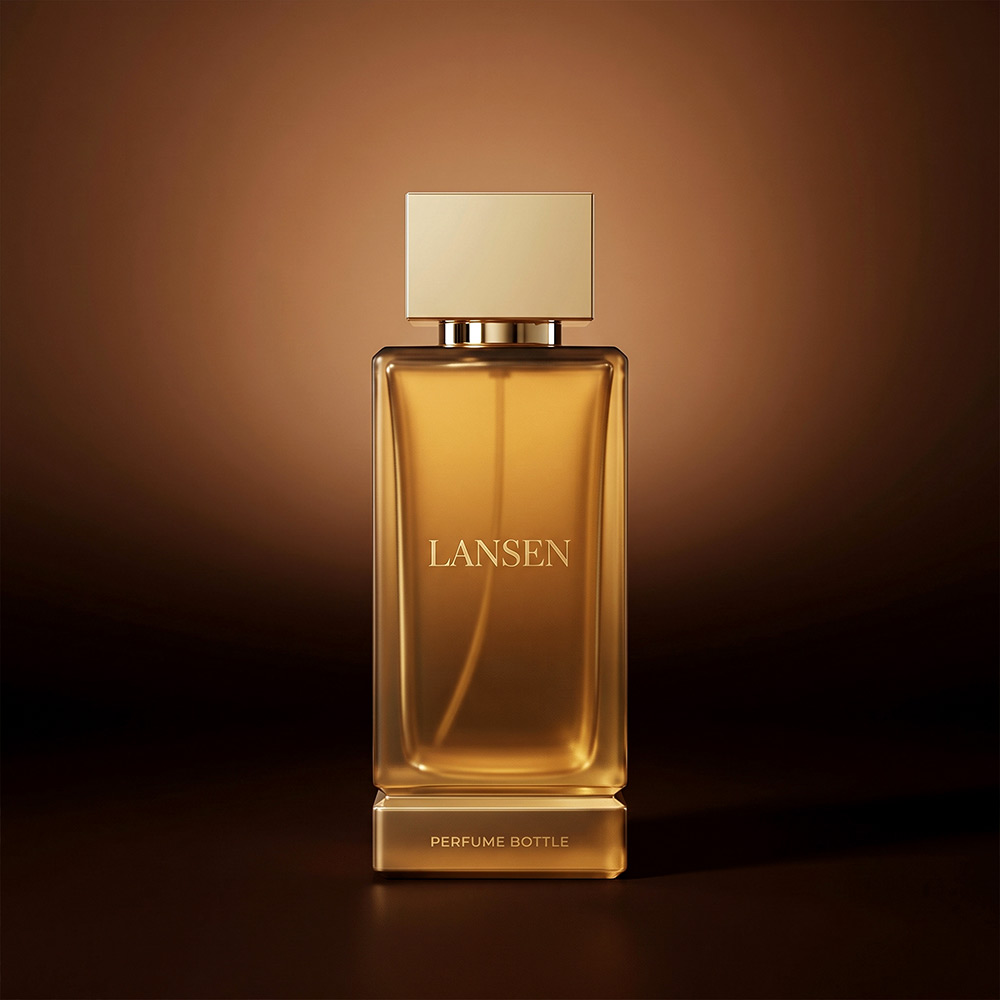
Crimp-neck fragrance bottles behave differently from screw-neck bottles. A crimped pump is mechanically locked to the bottle, so leakage risk sits at the pump gasket and collar rather than the thread; a screw cap relies on liner compression and torque, which relaxes over time and in low humidity. When you specify a custom glass bottle for e-commerce, state the filling method (crimp or screw) and the prep step you plan to use, because the neck finish has to be agreed before the mold is cut. Third-party prep guides also note that poly bags must be at least 1.5 mil thick and carry a suffocation warning once the opening reaches 5 inches — an easy audit failure if your 3PL buys generic bags.
How Do You Pass Amazon’s 3-Foot Drop Test with Glass Bottles?
The protocol is short: five consecutive drops from 3 feet onto a concrete surface, on a single test article, on five different faces. Amazon’s fragile-products policy lists the drop sequence as top, bottom, largest side, bottom corner and longest bottom edge. Damage to the container is acceptable — only leaks or a significant change to product integrity fail the test. Amazon does not run this test for you, so the evidence has to come from your supplier.
- Drop 1 — top: tests cap retention and whether the closure separates from the neck.
- Drop 2 — bottom: tests base thickness and the heaviest contact point of a filled bottle.
- Drop 3 — largest side: tests body wall and the decoration layer.
- Drop 4 — bottom corner: the classic failure point for square and rectangular bottles.
- Drop 5 — longest bottom edge: tests base-to-wall transition and shoulder stress.
Four design variables decide the outcome, and all four are set before production. Wall and base thickness govern impact resistance more than total weight; a 100 ml bottle with a thin base cracks before a heavier one with a thicker heel. Geometry matters: sharp shoulders and square corners concentrate stress, while a recessed base and generous fillet spread it. Closure mass matters too — a heavy zamac cap turns a light bottle into a top-heavy parcel that lands cap-first. Decoration is the fourth: sprayed coatings and metallic finishes can chip on impact, and chips read as damage even when the bottle is intact, so specify an abrasion-resistant color spraying system or a frosted finish that hides scuffs.
What Does FBA-Ready Glass Bottle Packaging Add to Cost, MOQ and Lead Time?
Glass bottle packaging for Amazon FBA is applied after filling, so it adds cost in three places rather than one. Consumables — shrink bands, induction foil, bubble wrap, bags — are a per-unit line item. Labour and inspection — sealing, bagging and a leak check after capping — is the larger share on small orders. Cube is the hidden one: two layers of bubble wrap add thickness on every side, which cuts units per master carton and raises inbound freight and FBA dimensional-weight charges. Ask your supplier to quote the retail-ready pack as a separate line rather than folding it into the bottle price.
MOQ is usually driven by the bottle, not the prep. Mold and decoration minimums apply to the glass; a printed shrink band or a custom CR cap may carry its own minimum that is higher than the bottle’s. Lead time moves because sealing happens after filling: build it into the production schedule as its own step, and run the five-drop test on filled samples at your real fill weight — not on empty bottles, which pass almost anything.
The cheapest fix is still at the design stage. A bottle specified for a shelf is judged on silhouette and light transmission; a bottle specified for the parcel network is judged on base thickness, shoulder radius and closure retention. Send us your fill volume, formula type and prep plan, and we will tell you which neck finish and closure combination will clear the drop test before you commit to tooling.
Specify a parcel-ready glass bottle before the mold is cut
Share your fill volume, closure type and FBA prep plan — we will recommend a bottle and cap combination that passes the 3-foot drop test and returns a quote with the retail-ready pack broken out.
Build the Bottle for the Parcel Network, Not Just the Shelf
Amazon’s rules are unusually concrete for a marketplace: 125 mL, five drops, 3 feet, a defined list of double seals. That makes them a design brief rather than a nuisance. Bottles that ship cleanly share the same traits — a thick, recessed base, a rounded shoulder, a closure that is either crimped or sealed with a torque-controlled screw cap, and a decoration that survives abrasion. Everything else is packaging around a problem you did not solve.
If you are launching a fragrance, oil or polish line for e-commerce and shipping through Amazon FBA, start from the glass perfume bottle and essential oil bottle ranges, then confirm the prep route with your fulfillment partner before the first production run. Test on filled units, photograph the five drops, and keep the report with your spec sheet — it is the document that settles a damage claim.