Glass bottle certifications are the documents that prove a factory is allowed to manufacture, decorate and ship cosmetic packaging into your market — and they are the most commonly misrepresented part of a supplier quotation. The short answer: there is no government-issued “FDA certified glass bottle.” What actually protects an order is a small, verifiable set of documents: FDA facility registration where the law requires it, an ISO 9001:2015 certificate whose scope names glass container manufacturing, a REACH SVHC declaration, and an EU Declaration of Compliance for food contact. Everything else is a logo on a factory wall. This guide explains what each document covers, how to verify it in minutes, and what to demand before you pay a deposit.
Quick answer: ask for four things and nothing less — 1) the registration or certificate number, 2) the document scope, 3) the issue and expiry dates, and 4) the underlying test data. A supplier who can produce all four for your exact SKU, including its decoration, is worth negotiating with. A supplier who sends a cropped PDF of a logo is not.
What Glass Bottle Certifications Should a Supplier Actually Have?
There is no single glass bottle certification that covers everything. Compliance is a stack of documents, each answering a different question: can this factory reproduce quality consistently, is the base material safe in contact with a formula, and is the decoration layer safe too. Buyers who ask for one certificate usually end up with the weakest one.
| Document | What it actually proves | Relevant market | Validity cycle |
|---|---|---|---|
| FDA facility registration (MoCRA) | The facility is registered and its status is current | United States | Renewed every 2 years |
| ISO 9001:2015 certificate | Repeatable quality management, if the scope covers container manufacturing | Global baseline | Audited annually |
| REACH SVHC declaration | No substance of very high concern above 0.1% w/w in the article | European Union | Re-check when the Candidate List updates |
| EU Declaration of Compliance (Reg. 1935/2004) | The article is safe for its stated conditions of contact use | European Union | Per product code, updated with changes |
| Heavy metals migration test (EN 1388-1) | Lead and cadmium release stays within limits | EU and US | Re-testing roughly every 2 years |
| Social audit (Sedex, BSCI) | Labour practices and working conditions, verified on site | Retail and ESG requirements | Reports within 12 months |
One clarification worth keeping: RoHS is not the framework for glass packaging — it targets electrical and electronic equipment. For containers, the language to use is REACH, Regulation 1935/2004 and, for coatings, the applicable FDA food-contact rules.
The numbers behind glass bottle certifications
- 62% of factories claiming “FDA-compliant” production had no valid FDA registration, in an audit of 80+ glass packaging suppliers in China, India, Europe and Mexico published by GlassCraft Bottle and cross-checked against FDA’s public database.
- 38% overstated ISO 9001 status — usually with expired or scope-limited certificates.
- 253 substances were on the ECHA SVHC Candidate List as of 4 February 2026; industry reviewers counted 247 only a month earlier, which is why “we have a REACH certificate” is never a complete answer.
- 2 years is the MoCRA facility registration renewal cycle, counted from the initial registration date.
- 3–4 weeks is the realistic turnaround for new migration testing on a novel decoration specification — budget it into your launch timeline.
“FDA Certified Glass Bottles” vs FDA Registration: What MoCRA Changed
The phrase “FDA certified glass bottles” is search bait, not a status. Under the Modernization of Cosmetics Regulation Act of 2022 (MoCRA), which the FDA describes as the most significant expansion of its authority over cosmetics since the Federal Food, Drug and Cosmetic Act of 1938, the obligations fall on the cosmetics manufacturer or importer — not on the company blowing the glass.
FDA defines a facility as an establishment that manufactures or processes cosmetic products distributed in the United States. A glass plant that moulds, decorates and packs empty containers is not automatically a cosmetic product facility; the brand filling the bottle is the “responsible person.” That distinction matters when a supplier advertises registration you do not actually need, and hides documentation you do.
What the law does require, per the FDA’s registration and listing guidance, is worth knowing because your supplier’s paperwork feeds your own filing:
- Facility registration must be renewed biennially — renewal dates run from the initial registration date (register on 20 February 2024, renew by 20 February 2026).
- Product listing covers each marketed product, including ingredients, with updates at least annually.
- Serious adverse events must be reported to the FDA within 15 business days, with follow-up information submitted on the same clock.
- Registration suspension is a live risk: if a registration is suspended, distributing product from that facility becomes a prohibited act.
- Small-business exemptions exist, but not for eye-area products, injected or internal-use products, or products that alter appearance for more than 24 hours.
For packaging, the practical FDA-facing questions are narrower: is the material suitable and inert in contact with the formula, is there documented good manufacturing practice, and if the bottle carries an internal coating, does it meet the relevant food-contact coating rule. Those are exactly the questions to put in writing when you source custom perfume bottles or essential oil bottle ranges for the US market.
REACH Compliance and the EU Declaration of Compliance for Glass Packaging
Glass bottle certifications for the EU market start with REACH — Regulation (EC) 1907/2006, in force since 2007, which places responsibility on industry to manage chemical risk and communicate safety information. For glass bottles, treated as articles rather than chemical substances, two duties matter:
- Article 33 communication: if a substance of very high concern from the Candidate List is present above 0.1% by weight, customers must be informed, and consumers have a right to ask and receive an answer within 45 days.
- Notification and SCIP: producers and importers above one tonne per year must notify ECHA, and articles above the 0.1% threshold must be submitted to the SCIP database.
Standard soda-lime glass is usually clean on this front. The compliance risk lives in the decoration layer — ceramic screen-printing inks, metallic pigments and surface coatings — which is why a declaration must cover the applied materials, not just the substrate. You can check the current scope on the ECHA SVHC Candidate List; it is updated several times a year, so a declaration that does not state which version of the list it was checked against is a red flag in itself.
Food contact is a separate exercise. EU Regulation 1935/2004 sets the framework, supported by good manufacturing practice rules. Unlike plastics, which have a dedicated harmonised regulation with a positive list of permitted substances, glass has no equivalent specific regulation — so the Declaration of Compliance plus accredited migration test data is effectively your evidence base. A usable DoC names the article and its conditions of use, and addresses inks, coatings and frosting explicitly.
How to Verify Glass Bottle Supplier Certifications in 5 Steps
Verification is cheap; a rejected container at the port is not. Five steps cover most of the risk in glass bottle certifications:
- Read the scope, not the logo. An ISO 9001 certificate is only meaningful if the scope statement names glass container manufacturing — not “trading” or “sales support.” Ask for the scope annex, not the cover page.
- Search the registry. Check the FDA registration number against the FDA’s public database, ISO certificates against the issuing body’s verification service, and social audits through the platform that issued them. “Inactive” or “expired” is a stop sign.
- Match the document to your SKU. Generic factory-wide statements do not cover your bottle, your volume, your cap, or your finish. Ask for the document referencing your product code and decoration.
- Check the date logic. Registration renewals, re-tested migration reports and audit reports all age out. A 2019 PDF attached to a 2026 quotation is an unpriced risk.
- Ask for the raw data behind the claim. Annealing records, dimensional sampling reports and lab results from an accredited testing body tell you whether the system works, not just whether it exists.
An audit of more than 80 glass packaging suppliers published by GlassCraft Bottle found that 62% of factories claiming “FDA-compliant” production lacked valid FDA registration, and 38% misrepresented ISO 9001 status — typically through expired or scope-limited certificates. Certification, in other words, is not a differentiator. Transparency is.
Run these checks before you negotiate price, because they change what you are comparing. A factory that cannot produce an in-scope certificate is not “cheaper” — it is a different, riskier product.
How Decoration and Finishing Change Your Compliance Documents
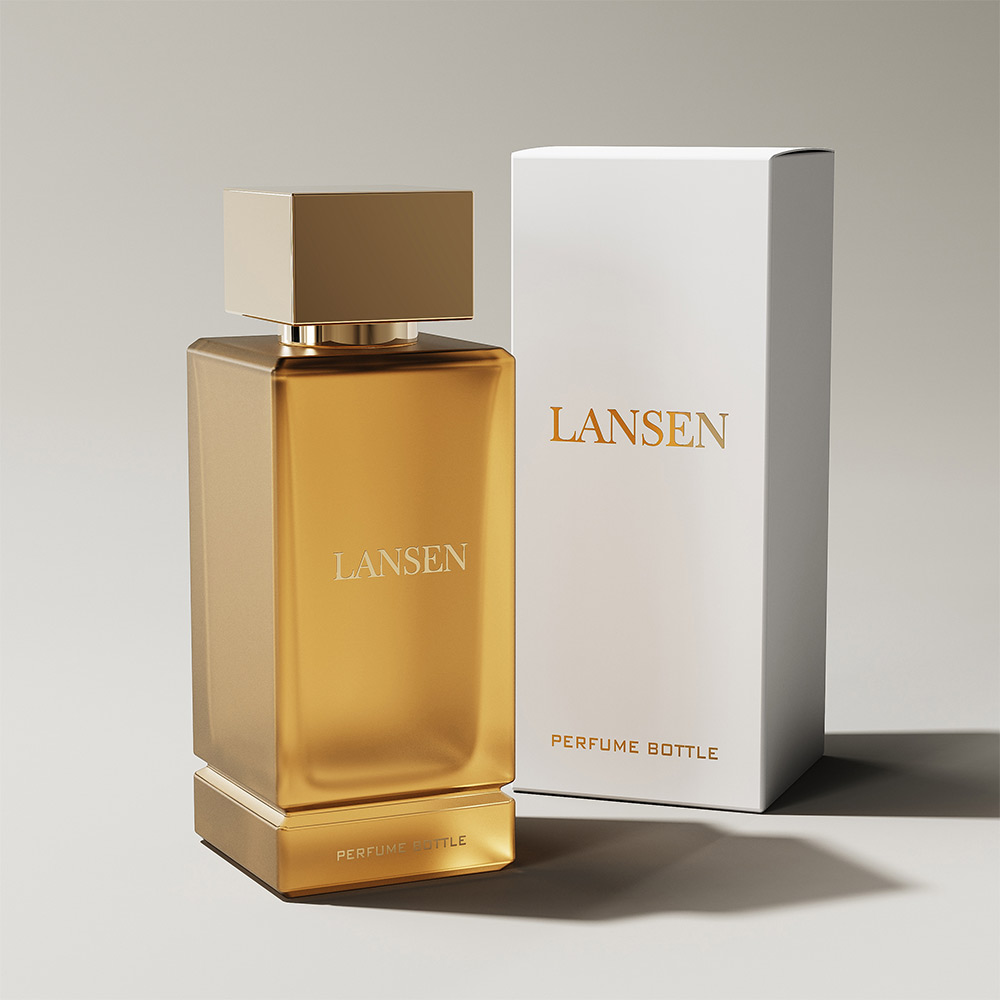
Every finishing step adds a material, and every material needs to be declared. A plain flint bottle and the same bottle with frosted glass finishing, color spraying, hot stamping or metallic coating are not equivalent from a compliance standpoint, even though they share a mould.
- Exterior-only decoration (acid frosting, exterior lacquer, external printing) usually keeps the contact zone clean — but the ink or coating supplier’s SVHC status still needs to be on file.
- Decoration in or near the contact zone triggers migration testing under the food-contact framework, which is the slowest and most expensive compliance path.
- Metallic and ceramic pigments deserve case-by-case review, because the substances that end up on the Candidate List most often come from pigment chemistry.
- New specifications need new data. Budget roughly 3–4 weeks for fresh migration testing on a decoration that has not been tested before, and place it before production, not after.
The efficient approach is to consolidate: choose a manufacturer that already produces the finish you want, so its existing test library covers your specification. Our custom glass bottle customization program documents the finish, its inputs and the applicable declaration together.
Which Certification Documents to Request in Your First RFQ
Put the request in the first RFQ, not in the purchase order — suppliers price documentation requests very differently once a deposit has been paid. These are the glass bottle certifications and supporting documents worth having in hand before you order.
| Document | What it must show | Typical turnaround |
|---|---|---|
| ISO 9001:2015 certificate + scope annex | Glass container manufacturing named in the scope | On request |
| REACH SVHC declaration | Statement against the current Candidate List, covering glass and decoration | At order confirmation |
| EU Declaration of Compliance | Regulation 1935/2004 reference, article, conditions of use, decoration coverage | Per product code |
| Migration test report (EN 1388-1) | Lead and cadmium release data from an accredited laboratory | 3–4 weeks for new specifications |
| GMP / CGMP documentation | Manufacturing practice aligned with US expectations, plus coating documentation where applied | On request |
| Social audit report (Sedex / BSCI) | Site audit dated within the last 12 months | Annual cycle |
| California Prop 65 assessment | Lead and cadmium from decorative coatings assessed against safe harbour levels | On request for decorated glass |
Six red flags that should stop an order
- A certificate without a scope annex, or a scope that avoids the words “glass container manufacturing.”
- The phrase “FDA approved” applied to a glass bottle. Approval is not a status that exists for containers.
- A Declaration of Compliance that covers the glass but stays silent on ink, coating or frosting.
- Test reports from an unnamed laboratory, or reports dated more than two years ago.
- A REACH declaration that does not state which version of the Candidate List it was checked against.
- Refusal to share batch-level data — annealing logs, dimensional reports, inspection records — for your first order.
Ask early, compare suppliers on the paperwork as seriously as on the price, and glass bottle certifications become a competitive advantage rather than a last-minute scramble.
Need the documentation package with your quotation? Send us your bottle specification and target market, and we will return the matching certificate set, declaration and test data alongside the price.