Spray painted glass bottles are clear or light-colored glass containers finished with an opaque or semi-transparent color layer applied by automated spray painting. In short: if your brand needs a signature color — a deep emerald serum bottle, a blush-pink perfume flacon, or a two-tone gradient — spray painting can deliver it on stock or custom glass far more affordably than ordering glass that is colored in the furnace, and most cosmetic glass bottle manufacturers now offer this finish in-house.
Decorated glass is where the market is heading. Mordor Intelligence values the cosmetic perfumery glass bottle packaging market at USD 2.73 billion in 2026, growing at a 4.61% CAGR to USD 3.42 billion by 2031. Broader estimates follow the same curve: the global glass cosmetic bottle market was put at roughly USD 3.3 billion in 2025 and is projected to reach USD 4.7 billion by 2033, with rising premiumization named among the key growth drivers (industry market summary, May 2026).
Market data at a glance
- USD 2.73B — cosmetic perfumery glass bottle packaging market in 2026, reaching USD 3.42B by 2031 (Mordor Intelligence)
- USD 3.3B — glass cosmetic bottle market in 2025, projected to USD 4.7B by 2033 (~4.3% CAGR)
- Premiumization is the #1 driver — brands pay more for color, texture and brand-matched decoration
Quick answer for B2B buyers: spray painted glass bottles are produced by spraying pigmented lacquer onto the glass surface, then curing the coating so it bonds to the bottle. The finish can match any Pantone brand color and supports solid, matte, metallic and gradient effects. Compared with custom colored glass, color spraying works on existing molds, cuts lead times, and keeps MOQs lower — typically a few hundred to a few thousand pieces per color, depending on bottle type and supplier.
What Are Spray Painted Glass Bottles?
It helps to separate two things buyers often confuse: colored glass and painted glass bottles. Colored glass (amber, cobalt, emerald) gets its color from metal oxides melted into the batch — the color runs through the whole wall and cannot be changed per run. Spray painted glass bottles, by contrast, start as clear or lightly tinted glass and receive a surface coating. That distinction drives the buying decision:
- Any brand color, including gradients. A coating can reproduce a specific Pantone shade — or blend two or three colors in an ombre fade — which is physically impossible with furnace-colored glass.
- Existing stock molds can be upgraded. Instead of paying for a new mold or a colored-glass run, you decorate a proven bottle shape, which shortens time-to-market.
- Smaller, per-color production lots. Each color is applied in a dedicated run, so you can order smaller quantities of multiple colors for limited editions.
- Opaque coverage protects sensitive contents. A solid coating blocks light — useful for essential oils, serums and other light-sensitive formulas.
In practice, spray painting is one of the most requested upgrades across custom perfume bottles, glass essential oil bottles and nail polish bottles, because it turns an ordinary clear bottle into a shelf-ready branded product. For the full menu of shade matching, see how we handle custom color glass bottles.
How Does the Color Spraying Process Work?
Professional glass bottle spray painting is a controlled finishing process, not a hand-spray job. Here is the step-by-step color spraying process used by packaging factories:
- Surface preparation. Bottles are cleaned and pre-treated so the coating adheres evenly — contamination is the main cause of peeling later.
- Masking. Threads, necks and areas that must stay clear (e.g., a viewing window for lotion level) are masked before paint is applied.
- Primer. A bonding layer is applied to stabilize color consistency, especially on large flat panels.
- Spray application. Paint is applied with automatic guns in a booth. Many factories use electrostatic spraying, which charges the paint particles to wrap around the bottle, cutting waste and improving coverage.
- Curing. The coated bottles are heat-cured so the lacquer hardens and bonds to the glass surface.
- Protective topcoat (optional). A clear over-lacquer adds scratch and alcohol resistance — important for bottles handled daily or refilled.
- Quality control. Color is checked against the approved standard, and film adhesion is tested before bulk packing.
Light colors such as white and pale pastels demand the most careful film control — if the coating is uneven, the glass shows through. Gradients add passes and masking steps, which is why they cost more than a solid color. Whatever the effect, always request a physical spray-out sample before production: color on screen never matches color on glass.
Finish Options: Matte, Gradient, Metallic and Gloss
Within the spray painting family, the finish you choose changes the product’s personality — and its price. The main options for color coated glass bottles are:
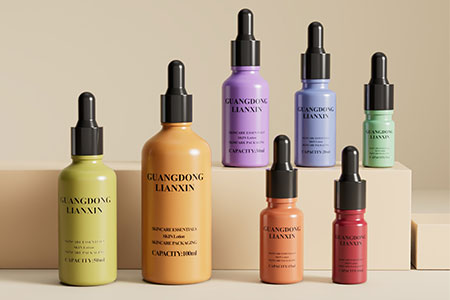
- Solid gloss. A smooth, shiny, opaque color — the workhorse finish for serums, toners and cosmetics where a clean, modern look is wanted.
- Matte. A soft, velvety, non-reflective surface that reads premium and is kind to fingerprints. Matte color coated bottles are a favorite for skincare lines and are typically paired with gold or black caps.
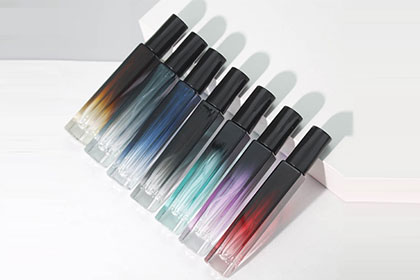
- Gradient (ombre). One color fading into another, or into clear glass. Gradient glass bottles photograph beautifully and are widely used in perfume and travel-size formats.
- Metallic and pearl. Pigments that give a shimmering, lacquered look — popular for limited editions and color cosmetics.

As a rule of thumb: solid colors fit broad-market skincare and fragrance ranges; matte suits premium serums and oil-based products; gradients and metallics are reserved for hero SKUs and launches where shelf impact justifies the higher decoration cost.
Spray Painting vs Frosted vs Electroplated: Which Finish Fits Your Brand?
Color spraying is one member of a family of glass decoration techniques, and the right choice depends on the effect and budget. This comparison covers the three finishes buyers ask about most:
| Finish | Look | Durability & care | Best for | Relative cost |
|---|---|---|---|---|
| Color spraying | Opaque solid, matte, gradient or metallic | Good with topcoat; avoid harsh abrasives | Brand color matching, skincare, perfume, travel sizes | $–$$ |
| Frosting | Satin etched translucent texture | Very durable — the finish is etched into the glass | Soft, natural, light-diffusing looks | $$ |
| Electroplating | Mirror-like metallic coating | Striking but shows fingerprints; needs careful handling | Luxury accents, caps, gift editions | $$$ |
These techniques are not mutually exclusive. A common premium recipe is a spray-painted matte body with a frosted window, or color spraying combined with a hot-stamped logo. If your concept leans on texture rather than color, review our guides to frosted glass bottles and electroplated glass bottles before deciding.
What Is the MOQ for Spray Painted Glass Bottles?
There is no single number, because MOQ depends on three variables: whether the bottle is a stock shape or a custom mold, how many colors you order, and the bottle format. Current supplier listings give a realistic band: spray-painted stock bottles are commonly quoted from roughly 200 to 6,000 pieces — for example, small ODM perfume atomizers are offered around 200 pieces, while stock spray-painted food-grade jars are listed at about 6,000 pieces. Our earlier custom glass bottle MOQ guide notes that fully custom perfume bottles typically start around 2,000 pieces.
Color adds its own constraint: because each color runs separately, factories usually apply the MOQ per color. Ordering five colors does not mean five times the MOQ of one color, but each color must clear its minimum. Costs scale with the number of spray passes, masking complexity and whether a protective topcoat is required.
- Plan for a sample round. Approve a physical spray-out in your exact Pantone before committing to bulk — color rework after production is expensive.
- Batch by color. Group orders by shade to keep per-color MOQs low and scheduling predictable.
- Ask what is included. Confirm whether masking, topcoat and color matching fees sit inside the unit price or are quoted separately.
If you are combining decoration with other work — embossing, frosting or labeling — discuss the whole glass bottle customization flow with the factory up front so one sample covers every step.
How to Choose a Custom Color Glass Bottle Manufacturer
The finish is only as good as the factory behind it. Poorly cured paint chips at the neck, and off-shade production runs burn budgets. Screen painted glass bottle wholesale suppliers with these checks:
- In-house spraying workshop. Factories that spray in-house control color consistency and lead time; outsourced spraying adds logistics and variance.
- Color-matching equipment. A serious supplier matches your Pantone with a spectrophotometer and keeps an archive of past shades for reorders.
- Adhesion and durability testing. Ask how they verify the coating — tape-pull, scratch and alcohol-rub tests on samples tell you whether the color will survive filling, shipping and daily use.
- Compliance documents. For cosmetics sold in the EU or US, request REACH, RoHS and relevant food-contact statements for the coating system.
- Physical samples before bulk. Never approve from photos alone; a spray-out sample on the actual bottle confirms shade, coverage and texture.
- QC and inspection terms. Clarify the AQL inspection level and what happens if a batch arrives off-shade — good suppliers fix it, bad ones argue about it.
Spray painted glass bottles are one of the fastest ways to give your packaging a premium, ownable identity — provided the color, coating and curing are handled by people who do it daily. If you are developing a perfume, serum, essential oil or nail polish range and want to see real spray-out samples in your brand color, our team will walk you through options, MOQ and pricing.
Ready to match your brand color on glass? Tell us your target shade and bottle type — we will confirm feasibility, MOQ and lead time within one business day.