Planning a custom glass bottle MOQ is the first budgeting question every cosmetics brand asks — and the answer is more flexible than most buyers expect. In short: stock perfume bottles usually start at 2,000–5,000 pieces, dropper and spray bottles at 3,000–5,000 pieces, while a fully custom mold typically requires 30,000+ pieces per run. Your exact custom glass bottle MOQ depends on three variables: mold route, glass color, and decoration. With the global glass packaging market projected to grow from USD 78.45 billion in 2026 to USD 106.76 billion by 2033, more brands than ever are negotiating these minimums — and this guide shows you exactly how.
What Is a Custom Glass Bottle MOQ — and Why Does It Exist?
A minimum order quantity (MOQ) is the smallest batch a manufacturer will run before the unit price stops making sense. It is not an arbitrary number a sales rep invents: it reflects the fixed costs of a glass furnace. Once a forming line is set up for your bottle, the cost of changeover, mold conditioning and color transition is identical whether you run 5,000 or 500,000 units, so the minimum simply spreads that fixed cost across enough bottles to keep the per-unit price sane. Industry guides such as GlassRock’s stock vs. private mold MOQ guide break down exactly this economics.
Three fixed costs set the floor for every quote:
- Furnace and line setup — a production slot on an IS machine is scheduled in runs; starting yours means stopping another, and setup is amortized across pieces.
- Color changes — switching glass color (say, antique green to flint) means draining or transitioning the furnace, producing hours of off-spec glass. Factories batch same-color orders into “color windows,” which is why your MOQ depends on what else is running.
- Mold changes — every cavity in your mold set must be installed, aligned and trialed by skilled technicians before the line runs.
So when a supplier quotes a custom glass bottle MOQ, they are really telling you the smallest batch that absorbs these costs without pricing you out of the market. That is also why no two suppliers quote identical numbers — the minimum order quantity is a production-planning tool, not a universal market rule. According to the Optimizing Glass Bottle MOQ guide, the correct number is only meaningful against your actual model, color and decoration.
Typical Glass Bottle MOQ Ranges by Product Type
Below are reference ranges from current export programs for stock molds, reviewed against partner-factory production schedules in August 2026 by Optimizing Glass Bottle. Treat them as planning references — your exact MOQ depends on model, color and production scheduling.
| Product Type | Typical MOQ (Stock Mold) | Notes |
|---|---|---|
| Perfume flacons | 2,000–5,000 pcs | Small formats pack densely; decoration adds its own minimums |
| Dropper / spray bottles | 3,000–5,000 pcs | Essential oil and nail polish bottles usually fall in this bracket |
| Wine bottles (750 ml) | 3,000–10,000 pcs | Green color windows run frequently |
| Spirits / liquor bottles | 3,000–10,000 pcs | Heavy-base and extra flint sit at the higher end |
| Food / honey jars | 5,000–10,000 pcs | Lids quoted as assemblies have separate component MOQs |
| Custom mold (any family) | 30,000+ pcs per run | Exclusive line setup; program-based minimums |
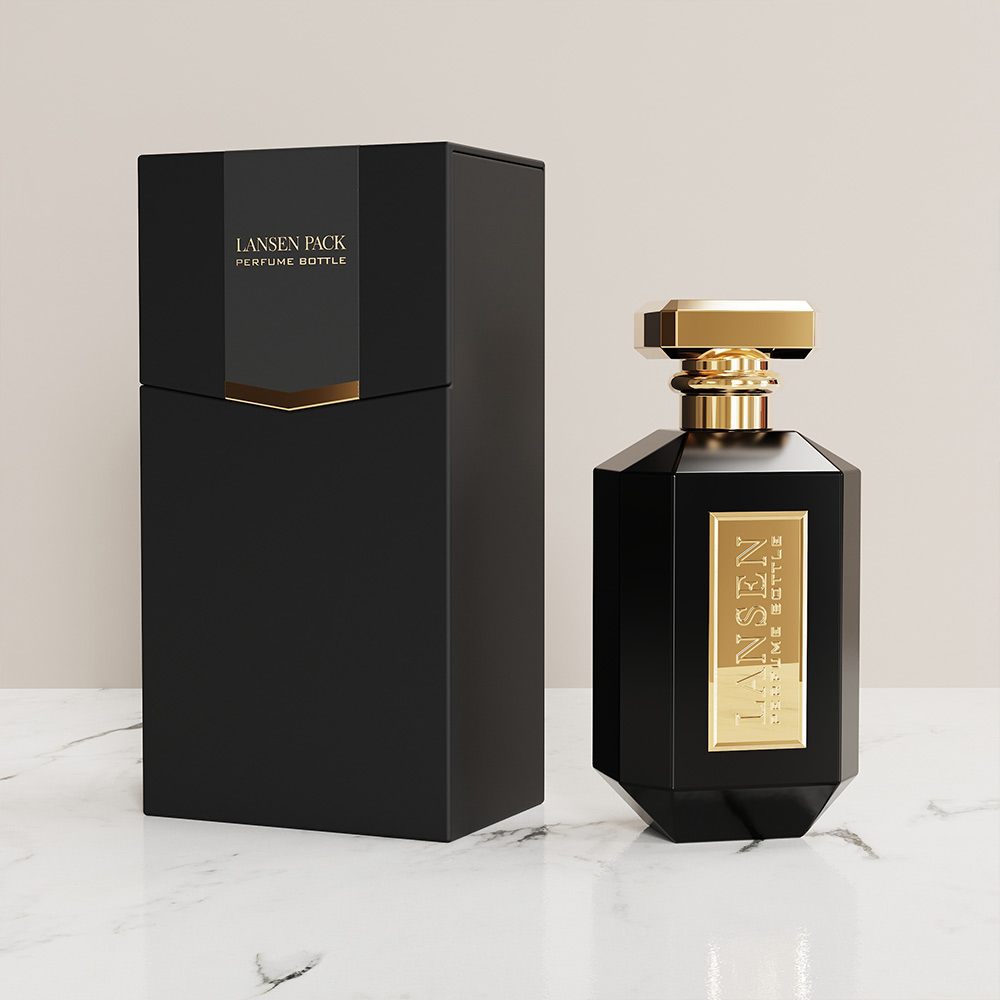
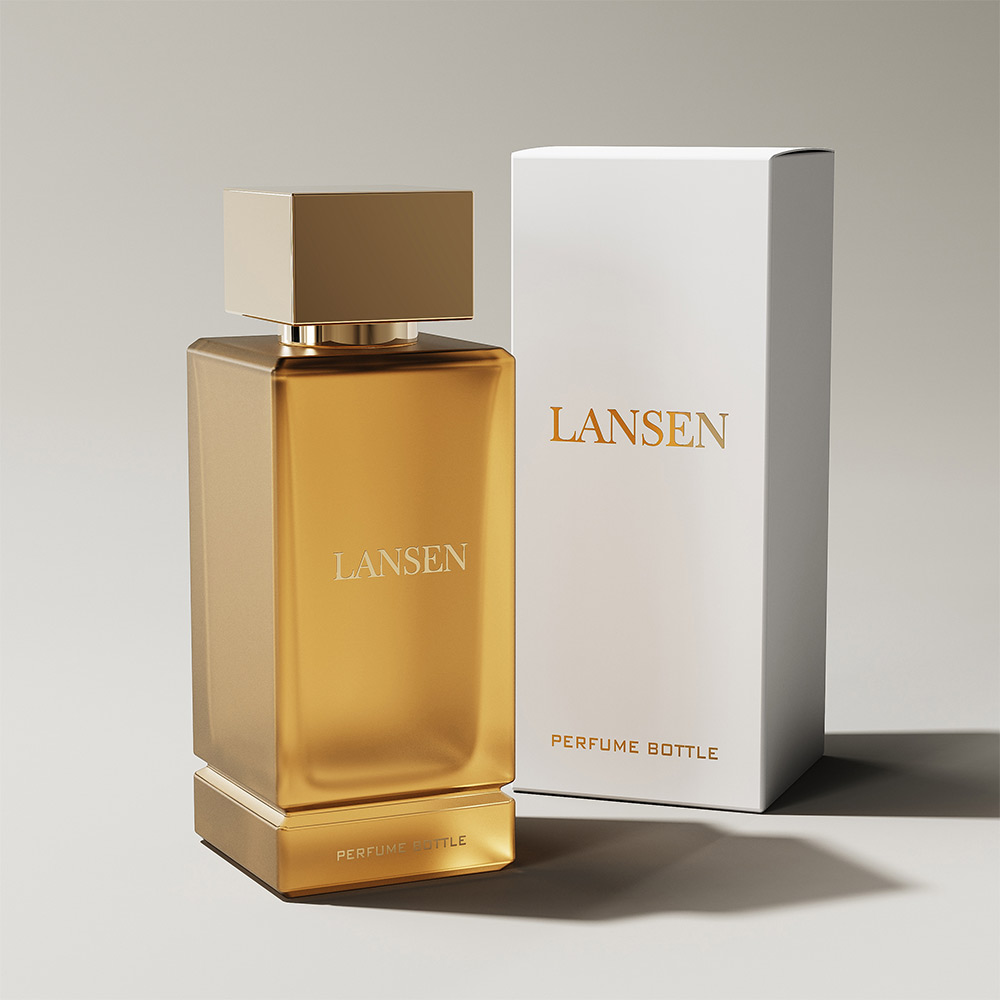
Good news for small brands: small-format bottles are the most MOQ-friendly category in glass packaging. Custom perfume bottles start around 2,000 pieces, while essential oil bottles and nail polish bottles typically ship in the 3,000–5,000 piece bracket as stock dropper bottles — well within reach of a first launch.
Stock Mold vs Custom Mold: Why Minimums Jump 10x
The single biggest driver of your custom glass bottle MOQ is whether the mold already exists. A stock mold is already owned by the manufacturer and rotated across many customers, so there is no tooling to build and minimums drop sharply — often to a single pallet or a few thousand units. You still control your brand through labeling, closures and decoration, and you skip the tooling cost entirely.
A private mold, by contrast, is engineered to your drawing and used exclusively for your orders. Because the manufacturer must recover the tooling investment and dedicate furnace time, minimums climb into the tens of thousands of units per color — commonly 30,000+ pieces per run on multi-cavity lines. That sounds steep, but the math often favors private molds at scale: spread the tooling across a full production year and the per-bottle premium becomes modest, while you gain a shape no competitor can copy.
The practical middle path is modified stock: start from a proven base shape and change the neck finish, shoulder or embossing. Modified-stock programs typically start around 10,000 pieces — far below a fully bespoke mold — while still giving you meaningful differentiation on the shelf.
Color is the hidden variable in any MOQ conversation. Flint (clear) and standard amber run frequently, so their minimums are friendliest. Specialty hues such as antique green or cobalt require a furnace color change and therefore larger batches. If your design needs a rarer shade, consider a clear bottle with a custom color coating or sleeve to hit the look at a lower threshold. Decoration stacks on top too: a frosted glass finish, electroplating or hot stamping each add their own setup threshold, and bundling decorations into a single setup keeps costs down.
5 Proven Ways to Lower Your Custom Glass Bottle MOQ
You do not have to choose between a tiny order and a fair unit price. These tactics keep both in reach — they are the standard playbook used by experienced packaging buyers:
- Start on a stock mold, migrate to private later. Validate demand first, then invest in tooling once your volume justifies it.
- Ride the color window. Ask what color is scheduled next. Ordering a color the furnace is already running can cut your minimum dramatically, because the factory avoids a color change.
- Consolidate SKUs into one container. Mixed loading (several models or sizes in one 20ft/40ft container) lets each item meet an adjusted minimum while the container ships full — the standard practice for range launches.
- Take the modified-stock route. A stock bottle with your embossed plate or custom cap typically starts around 10,000 pieces, far below a full custom mold.
- Accept a transparent small-run surcharge. Some programs genuinely need only 2,000 pieces. An honest supplier will quote the setup cost as a visible line instead of refusing — then you can decide whether the economics work for a market test.
One more thing buyers often miss: component MOQs. Closures, pumps and droppers each carry their own minimums, and custom-printed or custom-colored closures run higher. The binding constraint on a program is frequently the cap, not the glass — always ask for the assembly quote, not just the bottle quote.
MOQ Red Flags and Questions to Ask a Supplier
Knowing what should worry you is half the negotiation. Here are the classic red flags when a glass bottle supplier quotes a minimum:
- An MOQ quoted without asking your color or decoration. A serious supplier asks before quoting; a number given blind is a placeholder, not a plan.
- Comparing MOQs across different mold routes. “5,000 on stock” and “30,000 on custom” are not competing offers — they are different products.
- Forgetting component MOQs. The bottleneck is often the closure or pump, so compare full assemblies.
- Chasing the lowest MOQ at any cost. A 1,000-piece order at a painful unit price often costs more in total than 5,000 pieces priced rationally — do the total-cost math.
Quick answers to the questions buyers ask most:
• What is a realistic MOQ for a first glass bottle order? For stock molds, plan on 3,000–10,000 pieces per item depending on the family — perfume flacons from about 2,000.
• Can I order below the stated MOQ? Sometimes: ride a scheduled color window, batch with another buyer’s run of the same mold, or accept a transparent small-run surcharge.
• Do closures and pumps have their own MOQs? Yes — corks, ROPP caps, pumps and droppers each carry component minimums.
• Is a lower MOQ always better? No. Below the efficient batch, unit price rises steeply — evaluate total landed cost and sell-through timeline, not quantity alone.
Summary: Turn MOQ Into a Planning Tool
Your custom glass bottle MOQ is a planning tool, not a barrier. Choose stock molds to launch lean, move to modified stock for differentiation, and invest in a private mold once your volume supports it. Match your annual forecast against tooling, color and decoration thresholds — and the minimum stops being a blocker and becomes a roadmap.
The fastest way to a real number is to send your supplier your bottle family, capacity, color, closure direction and target quantity. A reliable glass bottle customization partner will respond with current production schedules, your actual minimum, and the container-consolidation options that lower your effective MOQ.