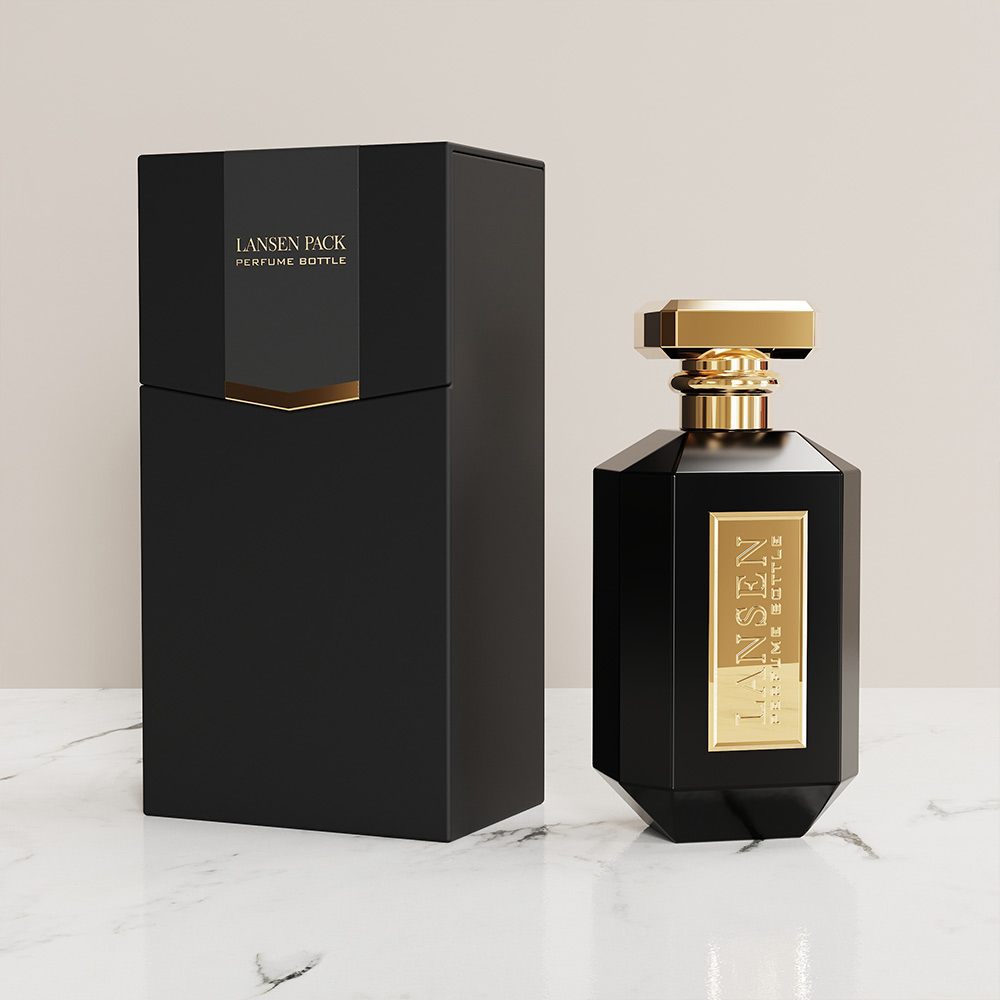
Choosing the right perfume bottle sizes is one of the first and most consequential decisions a fragrance brand makes. Get the capacity right and you balance shelf appeal, unit economics and customer expectations; get it wrong and you either overprice small formats or overstock large ones. The global perfume packaging market was valued at USD 3.72 billion in 2025 and is projected to reach USD 6.89 billion by 2034 (a 7.18% CAGR), according to Fortune Business Insights — and glass remains the dominant material at 53.32% of the market. This guide breaks down the standard sizes, the 30ml vs 50ml vs 100ml trade-off, and how to choose perfume bottle capacity for your product line, so you can brief your custom perfume bottle supplier with confidence.
What Are the Standard Perfume Bottle Sizes?
Perfume bottle capacity is measured in millilitres (ml) globally, or fluid ounces (fl oz) in the United States and UK. For quick reference, 1 fl oz ≈ 29.57 ml, so a 1.7 oz bottle is roughly 50ml and 3.4 oz equals about 100ml. Industry data from UKPACK’s 2026 perfume bottle size guide shows the most common commercial formats range from 5ml samples to 100ml full-size bottles, with the majority of global sales falling between 50ml and 150ml.
| Capacity | Equivalent | Approx. Sprays | Typical Use |
|---|---|---|---|
| 5ml | 0.17 oz | ~50 | Premium sample / gift insert |
| 10ml | 0.33 oz | ~100 | Pocket spray / travel mini |
| 15ml | 0.51 oz | ~150 | Travel tester |
| 30ml | 1 oz | ~300 | Starter size / gifting |
| 50ml | 1.7 oz | ~500 | Global standard / everyday use |
| 75ml | 2.5 oz | ~750 | Generous mid-size |
| 100ml | 3.4 oz | ~1000 | Standard full-size / best value |
30ml vs 50ml vs 100ml: How to Compare Perfume Bottle Capacity
Most brands launch a hero size plus one flanker, and the 30ml vs 50ml vs 100ml decision comes down to three factors: cost per ml, longevity and portability. Because one millilitre delivers roughly ten sprays, a 50ml bottle yields about 500 sprays (roughly 125 days at four sprays per day), while 100ml doubles that to about 1,000 sprays. Retail data also shows that larger bottles cost less per millilitre — smaller formats are premium-priced for accessibility, not economy.
| Size | Approx. Sprays | Days of Use* | Best For |
|---|---|---|---|
| 30ml | ~300 | ~75 days | New launches, gifting, light users |
| 50ml | ~500 | ~125 days | Signature scent, everyday wear |
| 100ml | ~1000 | ~250 days | Long-term value, collectors |
*At 4 sprays/day, per UKPACK’s 2026 perfume bottle sizes guide.
Three practical rules for perfume bottle capacity planning:
- Lead with 50ml. It is the global bestseller and the safest first size for a new fragrance line — enough product to feel premium, affordable enough to convert first-time buyers.
- Use 100ml as the value anchor. If your cost structure allows, position 100ml as the “best price per ml” option to push average order value.
- Keep 30ml for trials and gifting. A 30ml is the classic gift and discovery format; many brands also pair it with a 100ml refill to capture repeat buyers.
How to Choose the Right Perfume Bottle Size for Your Brand
There is no single “correct” perfume bottle size — the right capacity depends on your price point, distribution channel and audience. Fragrance houses are increasingly adding 10ml–15ml minis alongside full sizes, a trend driven by Gen Z and Millennial buyers who prefer travel-friendly formats, discovery sets and seasonal drops over one oversized bottle.
- Discovery sets and samples (5ml–15ml): ideal for e-commerce testing, gift boxes and event favours; low-risk for customers and a powerful acquisition tool.
- Travel-friendly (10ml–30ml): bottles under 100ml comply with TSA carry-on liquid rules, and 30ml hits the sweet spot between portability and substance.
- Everyday signature (50ml): the industry standard — balanced price, longevity and shelf presence.
- Collector / gifting (100ml+): best value per millilitre, strong gifting weight; popular for premium editions with decorative caps and boxes.
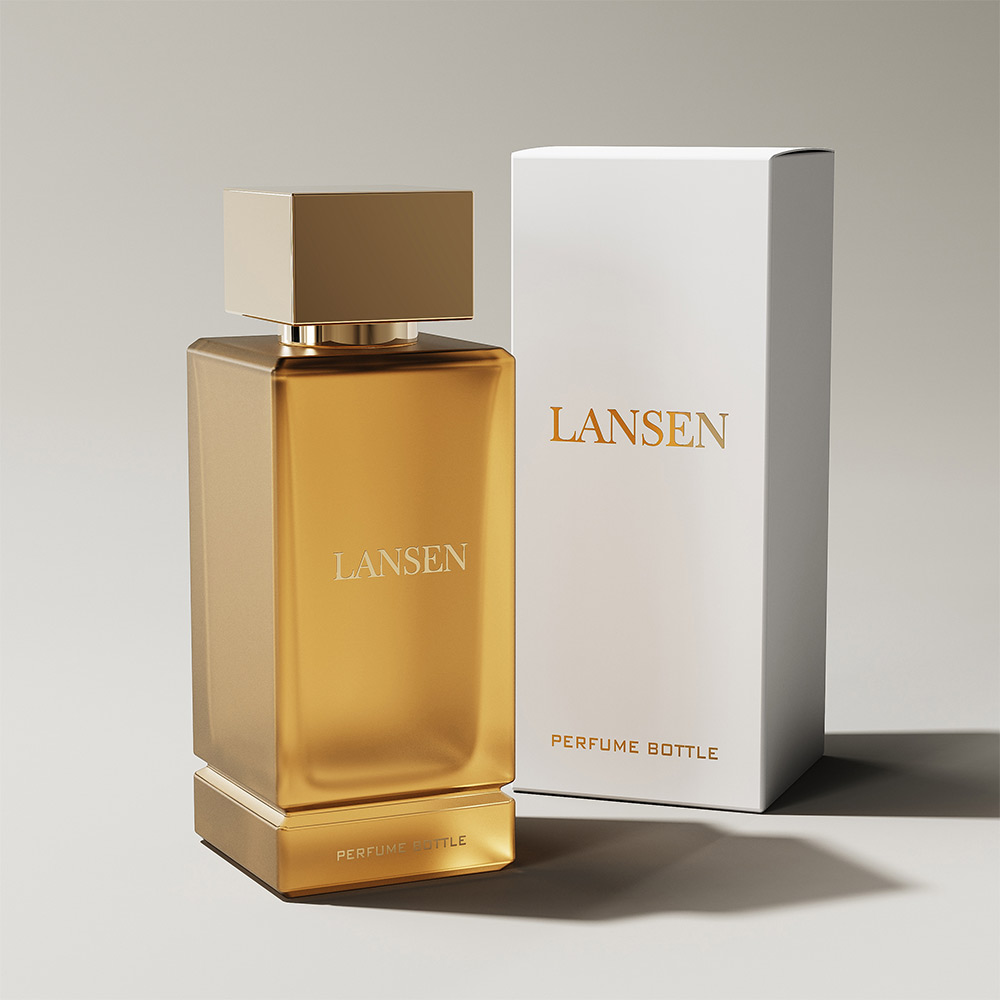
Whatever size you choose, remember that capacity is only half the story. The same 50ml bottle can feel mass-market or luxury depending on the glass finish, cap and decoration — which is why most brands customize their bottle colors and surface treatments before committing to a size.
Custom Perfume Bottles: Sizes, Finishes and MOQ
Once your size mix is set, the next step is sourcing. Custom perfume bottles are usually available in two ways: stock molds in standard sizes (30ml, 50ml, 100ml are the most common), and fully custom molds for exclusive silhouettes. Stock molds mean lower MOQ and faster lead times; custom molds require tooling investment but give you a trademarkable shape. Wholesale suppliers typically offer the same decoration options across all standard sizes, so your 30ml and 100ml bottles can share one design language.
The finishes that most influence perceived quality — and therefore which suppliers you should shortlist — include:
- Frosted glass bottles: matte, soft-touch surface that diffuses light; the default premium finish for niche fragrances.
- Electroplated caps and accents: mirror-metal effect in gold, silver or rose gold for a high-end unboxing moment.
- Hot stamping: metallic logo application on glass or caps — crisp, durable and cost-effective for small batches.
- Custom colors and sprays: brand-matched body colors that make the bottle instantly recognizable on shelf and in flatlays.
FAQ: Perfume Bottle Size Questions Buyers Ask
Is 1.7 oz or 3.4 oz better?
1.7 oz (≈50ml) is compact and travel-friendly; 3.4 oz (≈100ml) offers better value per millilitre for daily home use. Choose based on where and how often customers will wear the scent.
What is the most common perfume bottle size?
30ml to 100ml covers most commercial launches, with 50ml as the global standard and 100ml as the standard full-size for premium fragrances.
Can 100ml bottles go on a plane?
Yes — 100ml (3.4 oz) is exactly the TSA carry-on liquid limit. Anything above it must be checked luggage, so keep travel editions at or below 100ml.
What is the difference between perfume bottle capacity and size?
Capacity is the liquid volume in ml or fl oz; physical size (height, diameter, weight) varies by bottle shape and glass weight. Two 50ml bottles can look very different in hand depending on the silhouette.
Conclusion: Build Your Size Strategy Around Data
Start with a 50ml hero, add a 100ml value size and a 30ml or travel format for acquisition, then differentiate with premium finishes rather than exotic capacities. That combination matches how the market actually behaves: the under-100ml segment drives 64.69% of demand, glass dominates materials at 53.32%, and customization — color, frosting, stamping — is what separates your bottle from the shelf.
Ready to brief your supplier? Send us your target perfume bottle sizes, volumes and finish preferences, and our team will confirm pricing, MOQ and lead times for your project.
Sources: Fortune Business Insights — Perfume Packaging Market Size, Share & Industry Analysis 2026–2034; UKPACK — Perfume Bottle Sizes Guide & Chart (2026 Updated).