Hot stamping glass bottles is one of the fastest ways to give your product a premium, metallic brand identity — the process presses heated foil (typically gold or silver) onto the glass surface at around 200°C, transferring a thin metallic layer that reads as luxury on the shelf. For cosmetic brands, it is the standard finish for logos, monograms, and small decorative elements on perfume bottles, cream jars, and serum bottles. Demand for premium glass packaging is only growing: the global glass packaging for cosmetic market was valued at $5.2 billion in 2024 and is projected to reach $8.1 billion by 2033, a 5.1% CAGR, according to Strategic Packaging Insights.
Key takeaway: hot stamping suits small, high-impact branding — logos and fine text in gold or silver. It costs a little more per bottle than screen printing and needs a slightly longer lead time, but it delivers the metallic, luxury finish premium cosmetic brands pay for. Most glass bottle suppliers offer it on perfume, essential oil, and skincare bottles, with MOQs negotiated at the quoting stage.
What Is Hot Stamping on Glass Bottles?
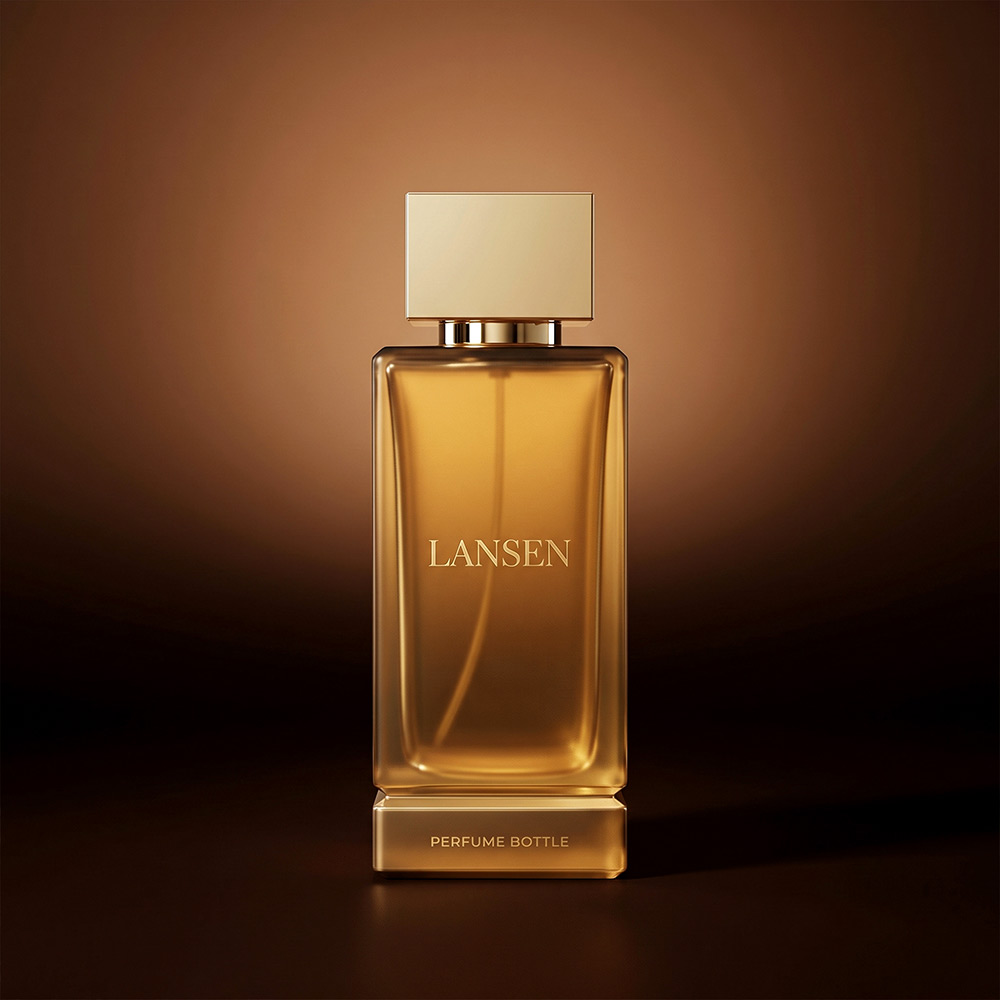
Hot stamping, also called hot foil stamping or foil stamping, is a dry decoration process: a heated metal die presses a roll of metallic foil against the glass, and heat plus pressure transfers the foil’s color layer only where the die’s raised design touches the surface. In production, the stamping machine typically applies 0.3–0.5 MPa of pressure while heating to around 200°C, according to process guides from custom glass bottle manufacturers. The result is a crisp, glossy, metallic logo with strong scratch and wear resistance — which is exactly why high-end skincare and fragrance brands use it for their most visible branding.
Typical applications include cream jars, serum bottles, foundation bottles, and perfume bottles. Gold and silver dominate the palette, accounting for over 80% of hot stamped finishes, because these two colors read as classic and premium across nearly every brand style. If you are planning a metallic logo for your next launch, hot stamping is the finishing technique to discuss with your hot stamping glass bottle supplier.
Hot stamping at a glance
- Transfer temperature: ~200°C; pressure: 0.3–0.5 MPa
- Dominant colors: gold and silver (>80% of jobs)
- Best for: small-area logos, monograms, fine text
- Finish: glossy metallic, scratch- and wear-resistant
Hot Stamping vs Screen Printing: Which Should You Choose?
Screen printing is the most common decoration for glass bottles — it handles multi-color artwork and irregular shapes well — while hot stamping adds the metallic dimension screen printing cannot produce. The two are often combined: screen print a colored base, then hot stamp the logo on top for a three-dimensional, layered look. Process comparisons published by OEM glass bottle manufacturers (for example, this screen printing vs hot stamping analysis) give useful benchmarks:
| Dimension | Screen Printing | Hot Stamping |
|---|---|---|
| Core advantage | Multi-color, irregular shapes, dimensional print | Metallic texture, high-end look, wear resistance |
| Colors | Full color range, custom Pantone matching | Mostly gold and silver; limited foil families |
| Unit cost (per bottle) | RMB 0.3–0.8 | RMB 0.5–1.5 |
| Mass-production cycle | 3–5 days | 5–7 days (foil must be pre-ordered) |
| Best fit | Mid-to-high-end skincare, complex designs | Luxury positioning, small logo and trademark areas |
The decision usually comes down to artwork size and brand positioning. Large, colorful artwork with many tones points to screen printing; a single metallic logo or monogram points to hot stamping. Your supplier should be able to recommend a combination — most experienced factories offer both as part of their glass bottle customization service.
Design Limits: Colors, Foils, and Combining Finishes
Hot stamping has a real constraint brands should know before approving artwork: you cannot match arbitrary colors the way screen printing does. The foil determines the color, and foil suppliers produce a finite family of shades — gold, silver, plus red, blue, green, black, and holographic options. Within each family there are variants (bright gold, matte gold, rose gold), but if your brand color is, say, a specific teal, hot stamping will not reproduce it; a screen-printed or color-sprayed base may be the better route. For full-color control, see how custom glass bottle colors are handled across finishes.
Two more design rules from real production experience:
- Keep logos small and strokes even. Hot stamping is at its best on small areas; extremely fine or ultra-thin strokes risk broken lines during transfer.
- Combine finishes for depth. Screen print or frosted glass finish first, then hot stamp the logo on top — the layered metallic look is a favorite of luxury perfume and skincare brands.
Hot Stamping Cost and MOQ for Custom Bottles
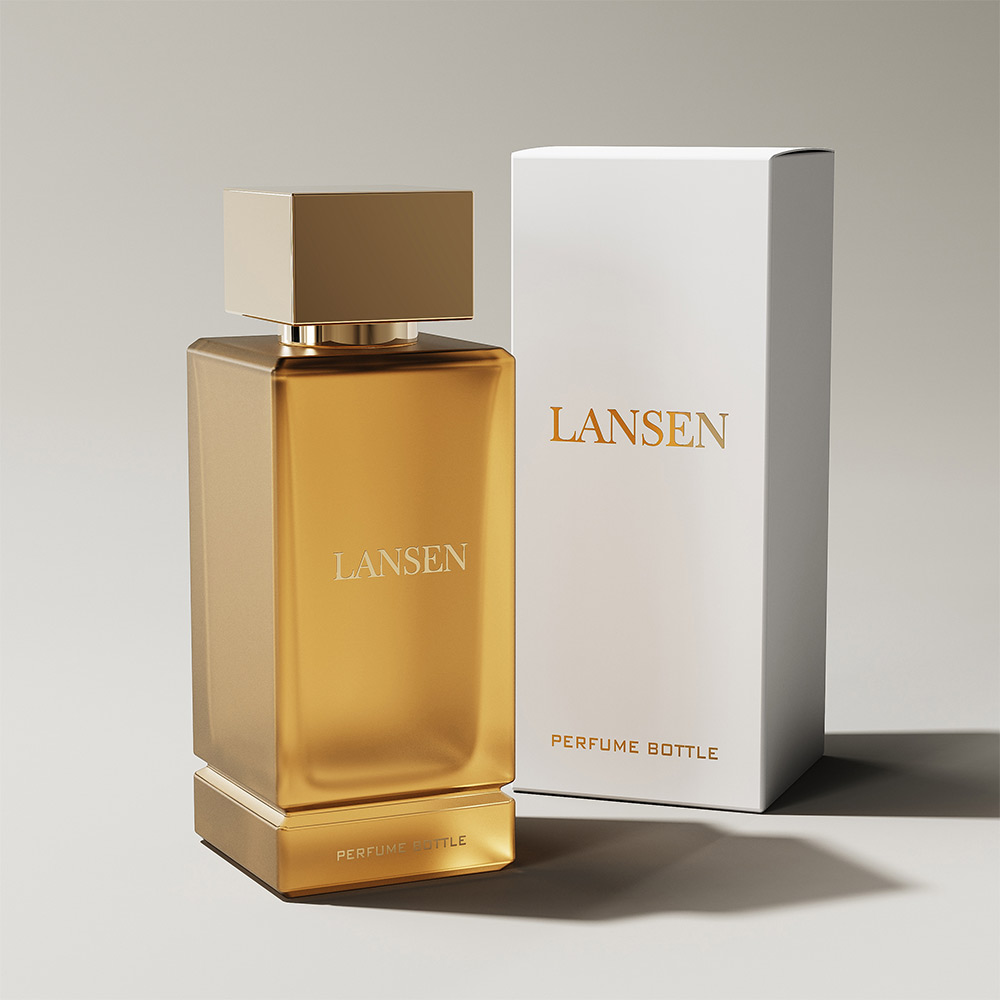
Cost depends mainly on stamped area and foil material. Industry data from OEM bottle factories puts hot stamping at roughly RMB 0.5–1.5 per bottle (about US$0.07–0.21) compared with RMB 0.3–0.8 for screen printing — a modest premium for the metallic effect, which is why even small gold-stamped logos are worth it on high-margin products like custom perfume bottles. Budget also for the longer cycle: mass production typically takes 5–7 days because the foil roll must be ordered to match the artwork, and a pre-production sample is strongly recommended before the full batch runs.
MOQ reality check: hot stamping rarely drives the MOQ on its own. The minimum order is normally set by the bottle mold, cap, and packaging combination, not the decoration. For custom molds, MOQs of a few thousand pieces are typical; for existing stock bottles, decoration-only orders can be much smaller. The exact number depends on your bottle type — ask your supplier for a per-item quote with and without stamping so you can compare.
Two questions worth asking every supplier before you commit: (1) is the sample fee credited toward the first order, and (2) what happens to the foil cost if you change the logo after approval. Clear answers on both prevent surprises at invoicing time.
How to Choose a Hot Stamping Glass Bottle Supplier
Because hot stamping is a precision process — a few degrees of temperature or a dirty surface can ruin a whole batch — supplier selection matters more than the technique itself. Use this checklist when evaluating factories:
- Ask for hot-stamped samples in your artwork size. A 2 mm logo and a 15 mm logo behave differently; test with your actual design.
- Check quality-control discipline. Good factories control workshop temperature and humidity, inspect the first pieces of each batch, and keep loss rates under ~2%.
- Confirm certifications early. For cosmetics destined for the EU and US markets, REACH and FDA-compliant materials matter; request the compliance documents with your quotation.
- Verify lead time in writing. Stamping adds 5–7 days on top of bottle production — make sure the total timeline fits your launch date.
- Look for combined-process capability. A factory that also handles screen printing, electroplating, and other finishes gives you one supplier for the whole shelf-ready look.
The same standards apply whether your product is a custom essential oil bottle, a nail polish bottle, or a skincare jar — the finish is what sells it, and the supplier is what makes the finish repeatable.
Wrap-Up: Make Your Bottle Look Priced Higher Than It Is
Hot stamping glass bottles remains one of the most cost-effective ways to move a product upmarket: a small gold logo transforms an ordinary bottle into a premium-looking one, and the technique’s scratch resistance keeps that first impression alive through shipping and shelf life. Plan for a 5–7 day stamping cycle, keep your logo small and metallic-toned, and pair the finish with frosted or custom-color bases when your budget allows.
Ready to hot stamp your next bottle? Send us your artwork and target volume — we will come back with a cost breakdown, sample plan, and MOQ for your bottle type.