Glass bottle mold ownership rests on itemized tooling fees, a written title clause and defined exit terms, so confirm every point before you pay in full. Invoices prove payment, not ownership — and an invoice is the weakest possible evidence that you own something you can take away.
Tooling is the smallest line on most custom bottle quotations and the largest hidden risk in the whole project. A custom shape is what lets a fragrance, serum or essential oil brand stop looking like everyone else’s catalogue, and the steel that produces it can cost anywhere from a few thousand to tens of thousands of dollars. Yet the ownership question — who holds title to that steel, and what happens if you want to move production — is usually left to a handshake. This guide covers what a glass bottle mold set contains, how ownership is won or lost, and the clauses to sign before any tooling money leaves your account.
What a Glass Bottle Mold Set Actually Contains
Glass bottle mold ownership is easy to misread because “the mold” is not one object. A working set is a matched group of steel components, and each one controls a different part of the finished container. Sourcing engineering guides describe a complete glass tooling set as blank molds, finish neck rings, blow molds, baffle plates and bottom pushups, all built to the same approved drawing.
| Tooling element | What it controls | Why re-cutting later hurts |
|---|---|---|
| Blank mold | The initial gob shape that becomes the parison | Wall distribution shifts, so the bottle weight changes |
| Neck ring / finish tooling | Thread profile, finish height, opening diameter | Pumps, droppers and sprayers no longer fit or seal |
| Blow mold | Silhouette, shoulder geometry, body panels, embossing | The entire brand shape has to be re-cut and re-sampled |
| Baffle plate & bottom pushup | Base thickness, punt depth, standing stability | Bottles wobble on the filling line or crack under load |
Costs scale with the set, not the design. A single-cavity prototype sampling set in China runs roughly $2,000–$4,500; commercial production on individual-section machines typically needs 6–12 mold sets at $12,000–$30,000. For a 100–500 ml cosmetic bottle, a standard blow mold lands at $2,500–$5,000, rising to $5,000–$25,000+ for complex geometry or multi-cavity layouts. That range is why the ownership clause matters more than the price: you are buying a matched asset only one factory can currently run.
Who Owns the Mold When You Pay for Tooling?
The legal position is simpler than the commercial one. Ownership is contractual. If the contract is silent, the party holding the physical asset — the factory — has practical control, and your invoice becomes evidence of a payment rather than proof of title. International manufacturing counsel at Harris Sliwoski describe what that gap looks like in practice:
“A manufacturer our law firm recently represented paid $200,000 to retrieve molds they had purchased for just $80,000 eight months earlier. The reason? A lack of a formal tooling agreement.”
The factory held five molds across three product lines and would not release them until payment was made; the buyer, facing a launch deadline, had no alternative source. The two-month shutdown cost an estimated $800,000 in lost revenue on top of the ransom. The glass was ordinary — the contract was not.
Tooling risk in three numbers
- $80,000 → $200,000 — cost to retrieve molds already paid for, after eight months.
- $800,000 — estimated revenue lost during a two-month production halt.
- $8,000 → ~$850,000 — one amortized mold, discovered on an invoice review fifteen years later.
How Bundled Tooling and Amortization Erase Your Claim
Most brands do not lose ownership through hostility. They lose it through convenience. When a factory offers to skip the upfront fee and add a small surcharge to the unit price, the buyer accepts — and the mold quietly becomes an operating cost instead of an asset.
The same law firm documents a case that started in 1995, when a buyer who could not raise the $8,000 quoted for a mold accepted a 25-cent-per-unit surcharge instead. A new hire found the arrangement during a contract review nearly fifteen years later, by which point roughly $850,000 had been paid in what were effectively undisclosed mold payments. Buying the mold outright afterwards still cost $25,000, and because the contract was silent on what happened once tooling was amortized, the buyer’s claim to the tool was legally ambiguous.
Amortization can be a legitimate cash-flow tool. It becomes a trap when three things are missing: an itemized tooling invoice, a clause stating ownership vests on first payment, and a defined point at which amortization ends. Watch also for exit fees attached to release of a tool — independent buyer guidance cites charges of 15% of the initial tooling price, and in some cases 30%, payable before the mold ships.
The Clauses That Decide Glass Bottle Mold Ownership
A glass bottle tooling agreement is short and unglamorous, and it is the only document that will matter if the relationship ends badly. Manufacturing counsel typically builds it from eight provisions:
| Provision | What to require in writing |
|---|---|
| Ownership vesting | Buyer holds unencumbered title immediately on payment, regardless of who cut the steel |
| IP assignment | All 2D drawings and 3D CAD files belong to you; the factory may not register or reuse them |
| Exclusivity | The mold may only run your products — no third-party runs, no derivative bottles |
| Marking & inventory | Permanent asset tag with your company name and ID, plus a maintained tooling inventory log |
| Access & return rights | Unilateral right to inspect or reclaim, with return inside a fixed number of days |
| Maintenance & liability | Supplier maintains the tool; liable for damage beyond normal wear |
| Breach damages | Defined penalties covering lost revenue and expedited retooling |
| Governing law | Named jurisdiction and enforcement mechanism, agreed before money moves |
Timing is the part buyers get wrong. Every provision above is negotiable before the tooling invoice is paid and effectively non-negotiable afterwards. Sign first, pay second — and keep the itemized invoice attached to the matching purchase order. If you are still at the specification stage, our guide to custom glass bottle mold cost and tooling amortization shows how the fee is structured, and the sampling and prototyping process covers what you should receive before approving a tool.
Can You Move a Glass Mold to Another Factory?
Owning a mold and being able to use it elsewhere are two different things, and glass is less portable than most buyers expect. Sourcing specialists note that molds built in China are often incompatible with machinery in other countries, and frequently incompatible with other Chinese factories too — so a falling-out with a supplier may not be solved by collecting the tool. Building a mold also takes 30 to 120 days depending on complexity, which is why a forced retool can wipe out a launch window.
Practical consequences for a custom bottle programme:
- Check transferability before you pay. Ask which machine family the tool runs on and whether the drawing can be re-cut elsewhere — get both answers in writing.
- Own the neck ring spec. Finish tooling is the most expensive element to change late, so insist on a standard finish multiple closure suppliers can match.
- Keep a second factory warm. Even without moving the mold, a validated alternative source protects you during a shutdown.
- Retain the data, not just the steel. Drawings, brimful capacity and tolerance sheets are the real transfer asset.
Tooling Is a Dutiable Assist — the Customs Side of Ownership
Ownership also has a border. Under U.S. customs rules, tooling a buyer provides free or at reduced cost to an overseas producer to make imported goods generally counts as a dutiable “assist” that must be declared and apportioned into the customs value of the shipment. When a factory folds the mold fee into the unit price and never itemizes it, the buyer pays duty on their own equipment — repeatedly.
The scale is not trivial: on a $500,000 order containing $15,000 of unsegregated tooling, avoidable duty can reach $7,500–$8,000 every time that product ships. Itemizing tooling is a record-keeping discipline, not a loophole — it lets you and your customs broker declare value correctly. Confirm the treatment with a licensed broker for your own programme.
Mold Exclusivity: Protect the Shape, Not Just the Steel
For most cosmetic brands the mold is worth more as a signature than as scrap metal. A molded silhouette or embossed logo is the part of the packaging a competitor cannot buy off the shelf — provided the contract stops the factory from reusing it.
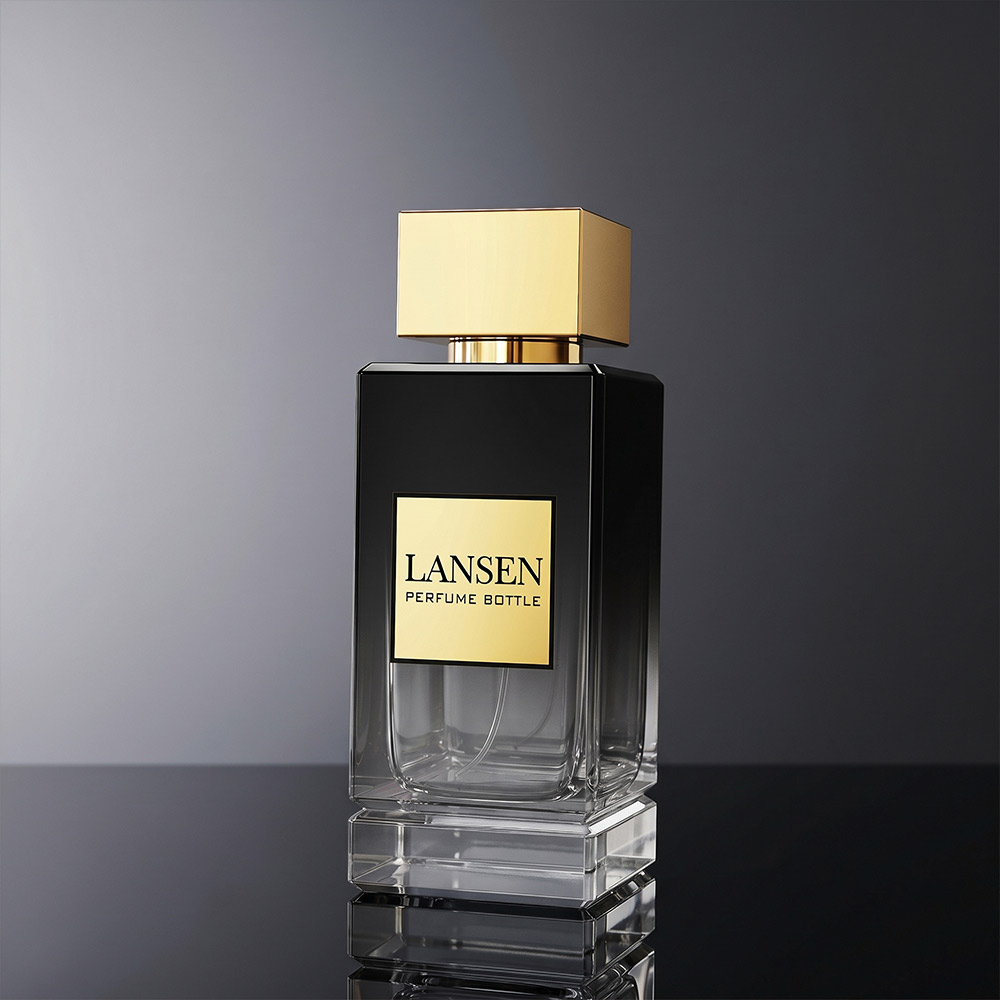
Without an exclusivity clause, a supplier that built the tool can legally sell the same shape to other buyers, including your direct competitors. That is the quiet failure mode: your custom perfume bottle appears under three other labels a season later. Two layers of protection are worth the effort — a written exclusivity clause banning third-party and derivative runs, and where the silhouette is distinctive, a registered design on the bottle shape. Where the shape is standard, spend the budget on bottle customization such as frosted finishing or custom color matching instead — far cheaper than cutting new steel.
FAQ: Glass Bottle Mold Ownership Questions
Do I own the mold if I only paid a per-unit tooling surcharge?
Usually not in an enforceable way. Amortized surcharges often leave title undefined, which is exactly how an $8,000 tool becomes a six-figure line item over fifteen years. If you accept amortization, add a clause stating that title passes at a named cumulative payment threshold.
Can a supplier refuse to return my mold?
Yes, and documented cases exist — including ransom demands, hidden exit fees and tools held over unrelated disputes. Prevention is structural: unilateral return rights, defined damages, named jurisdiction, an asset tag on the steel and an itemized invoice. Once a dispute is live, involve counsel rather than relying on the invoice.
What is there to own if we use a stock mold?
Nothing in tooling terms — and that is often the right answer. Stock shapes carry no mold fee, start at far lower quantities and ship in weeks rather than months. What you own is the decoration, the closure combination and the 3D printed prototype you validated, which is enough differentiation for a first production run.
How much does the paperwork cost?
Far less than the dispute. The law firm behind the $200,000 retrieval case charged $3,500 to draft the ownership agreement that removed a 25-cent surcharge from an existing supply relationship.
Next Step: Decide Ownership Before You Approve the Drawing
Before a custom bottle goes to tooling, settle four things in writing: who owns the mold at payment, who owns the drawings, whether the tool may ever run anyone else’s product, and how it leaves the building if the relationship ends. If a supplier hesitates on any of them, that hesitation is the answer.
At Lianxin Bottle we run custom programmes across perfume bottles, essential oil bottles and nail polish bottles, and we will tell you plainly when a stock mold plus decoration does the job better than new tooling. Send your drawing, target capacity and annual volume, and we will confirm tooling cost, ownership terms and lead time before you commit.
Sources: Harris Sliwoski, The Guide to Molds and Tooling in International Manufacturing; Plastics Technology Alliance, Mold Ownership and Tooling Agreements; Global Trade Specialists, Understanding Tooling in China’s Factories; glass container tooling cost analysis. Figures are quoted as published by each source.