Custom glass bottle mold cost typically runs $2,500–$5,000 for a standard blow mold on a 100 ml–500 ml cosmetic bottle. A fully bespoke glass bottle mold set with complex geometry, deep molded embossing or a multi-cavity layout can reach $5,000–$25,000+. The fee is paid once, covers a two-part steel tool, and is then amortized across your production volume: the same $3,000 mold adds $0.60 per unit at 5,000 units, but only $0.15 per unit at 20,000 units. Because tooling is a fixed cost, the real question is not “how much does the mold cost” but “how many units must I order before the tooling pays back”.
Key takeaways
- Standard glass bottle blow mold: $2,500–$5,000. Complex bespoke tooling: $5,000–$25,000+.
- Tooling is a one-time charge. At 5,000 units it adds $0.50–$1.00 per unit; at 20,000 units only $0.13–$0.25 per unit.
- Custom-mold MOQ generally starts around 10,000 units. Stock shapes start near 1,000 units.
- Suppliers using existing molds charge no tooling fee, which is why ODM unit prices often sit 20–40% below equivalent OEM prices.
What a Custom Glass Bottle Mold Cost Actually Covers
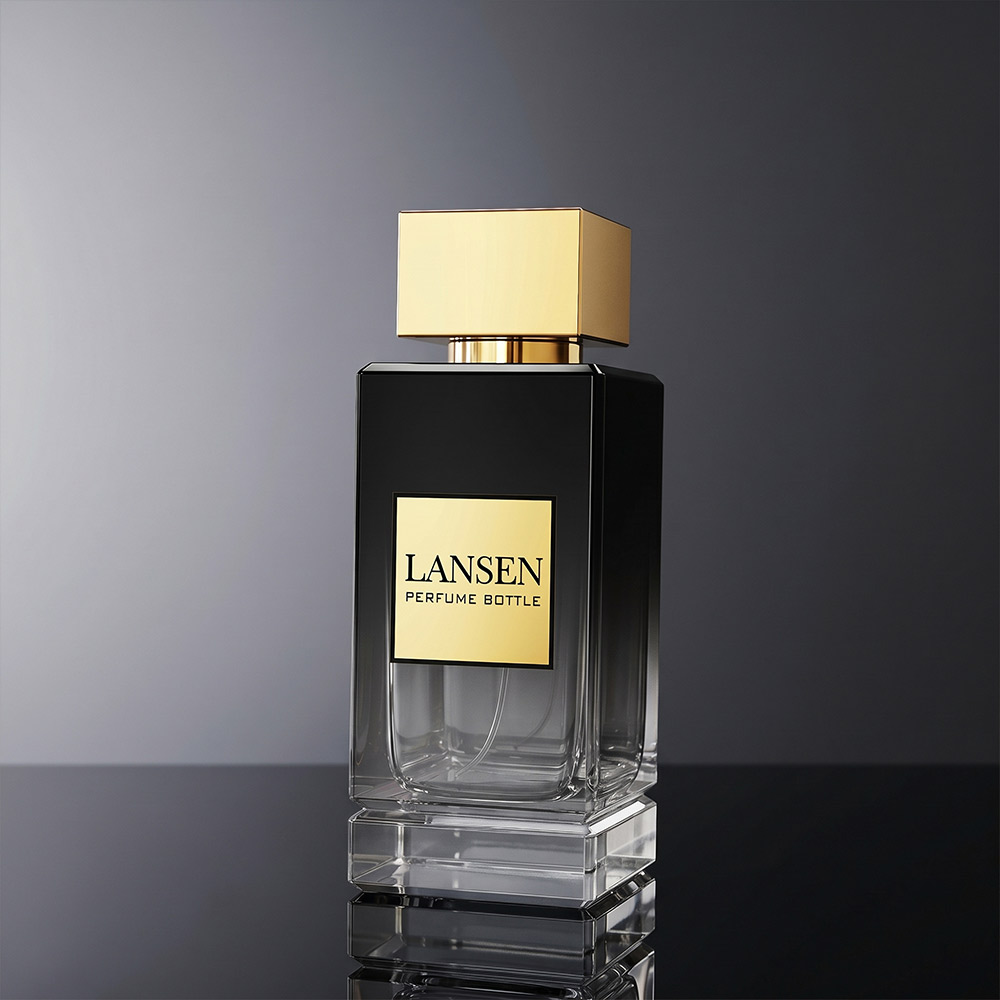
A glass bottle mold is not a single object. It is a matched set of steel components that together define every measurable feature of the finished container, which is why quoting “the mold” as one number hides most of the cost drivers.
- Body tooling — the blank and blow molds that create the silhouette, shoulder, body panels and base.
- Neck ring and finish tooling — the thread profile, finish height, opening diameter and sealing land. This is the most expensive area to change late.
- Base plate and plunger tooling — stability, contact area and bottom thickness.
- Embossing inserts — a molded logo, base mark or texture is cut into the mold surface, so it is structure, not artwork.
- Engineering and DFM review — the design-for-manufacture pass that removes features that cannot be produced consistently.
- Trial run and first-article sample — a new mold’s first trial run is measured against the approved drawing before mass production starts.
In a full packaging cost breakdown, manufacturing and tooling together account for roughly 20–35% of unit cost, and tooling is the part of that layer most brands under-budget, according to the cosmetic packaging cost breakdown published by Auber Packaging. Every element above is quoted separately by an experienced factory — and a vague single-line “mold fee” is the first sign that you should ask for an itemized version.
How Much Does a Custom Glass Bottle Mold Cost in 2026?
Published 2026 custom glass bottle mold cost benchmarks put a standard blow mold in the low thousands and a truly bespoke project an order of magnitude higher:
| Tooling scenario | Typical mold cost | What drives the number |
|---|---|---|
| Standard glass bottle blow mold (100–500 ml, single cavity) | $2,500–$5,000 | Simple silhouette, standard neck finish, no molded branding |
| Bespoke glass bottle mold set (complex geometry, embossing, multi-cavity) | $5,000–$25,000+ | Geometry, cavity count, emboss depth, number of trial iterations |
| Real-world bespoke project (100 ml fragrance bottle) | ~$10,000 | One Australian cosmetics startup quoted at this level for a single custom shape |
The low end comes from the blow-mold tooling reference table in the Auber Packaging cost breakdown. The upper range reflects mold costs quoted by Boyu Packaging, which lists $5,000–$25,000+ for a custom glass bottle mold set. The $10,000 data point comes from a manufacturer’s cosmetic packaging design guide, which reports the quote given to an Australian startup for a bespoke 100 ml bottle.
The number that usually decides the project
At a 5,000-unit order, a custom glass bottle mold cost of $5,000 adds $1.00 per unit. At 20,000 units the same mold adds $0.25 per unit. Tooling rarely kills a project — ordering too little volume against a custom mold does.
“Glass is a transformative packaging material… brand-building glass bottle designs use shape, size, color, and 3D embossing together.” — O-I Glass, glass bottle design capabilities
That is what tooling buys: ownership of a silhouette no competitor can duplicate. Where a stock shape is shared, glass from your own mold carries brand identity in the material itself, with 3D embossing doing work no label can replicate.
Stock Mold vs New Mold: The 1,000 / 5,000 / 10,000 Rule
Before accepting a custom glass bottle mold cost quote, check which “shelf” your project actually belongs on. Order quantity, not design ambition, decides whether a custom glass bottle mold is even available to you.
| Route | Order scale | Tooling | Design freedom |
|---|---|---|---|
| Stock mold | From about 1,000 units | None | Shared shape, plus your own decoration and label |
| Decorated stock | About 5,000 units (10,000 comfortable) | None | Silk screen, hot stamping, labels, spray coating, frosted finishes |
| Custom mold | Around 10,000 units | One-time fee, sometimes rebated at volume | Total freedom, including a proprietary silhouette |
This three-tier structure is documented in detail by glass manufacturers such as Daxin Glass Bottles: stock routes carry no tooling cost, decorated stock starts around 5,000 units, and custom molds sit in the ten-thousand range. The same guide notes that large glassworks hold pools of 5,000+ existing molds, which means many “custom” briefs never require new tooling at all — they require a better search of the mold library.
Practically, that is the cheapest way to look proprietary. Our own glass bottle customization program combines stock shapes with frosted finishes, custom Pantone colors and hot stamping, and the combination delivers a shelf presence that most buyers cannot distinguish from full tooling. Where a shape genuinely must be yours, 3D printed bottle prototypes let you test proportions and hand feel before a single dollar of tooling steel is cut.
Who Owns the Mold — and Is the Glass Bottle Mold Fee Refundable?
These two clauses decide whether your tooling is an asset or an expense, and both must be in writing before you pay.
- Ownership. Confirm the custom glass bottle mold cost you pay grants you ownership rights. A mold you own can be transferred to another factory; a mold you paid for but do not own is a sunk cost that creates permanent supplier dependency.
- Rebates. Some factories credit the mold fee back once your cumulative volume passes an agreed threshold. Always ask — it changes the payback math completely.
- Mold life. A production mold typically delivers 500,000–1,000,000 shots before refurbishment, which is far beyond the volume most cosmetic brands will ever order.
- Modification fees. Design changes requested after mold sign-off typically cost $200–$800 per revision, per the cost benchmarks above.
- Recurring charges. A custom glass bottle mold cost is a one-time charge. It is not recharged on repeat orders unless you modify the tool.
One caution that is easy to underprice: the neck finish. A new bottle body can almost always be paired with an established closure interface — a standard lotion pump, fine-mist sprayer or screw cap — which keeps tooling simpler and closure sourcing straightforward. Freeze the neck drawing and the closure code together, because approving a beautiful bottle that cannot accept the intended closure is the most expensive mistake in custom perfume bottle and skincare development.
Custom Glass Bottle MOQ and Lead Time: What Tooling Adds to Your Timeline
Tooling changes both the minimum order quantity and the calendar. Suppliers typically quote custom-mold MOQs at 10,000–30,000 units to amortize the tool, and mold development commonly runs 6–8 weeks on top of production, according to a perfume bottle manufacturing and quality guide. A design guide from Daxin Glass Bottles puts the concept-to-sample stage at roughly 3 weeks, followed by 4–6 weeks of production before shipping.
| Stage | Typical duration | What you must approve |
|---|---|---|
| Design freeze and DFM review | 1–2 weeks | Drawings, fill capacity, neck finish, decoration area |
| Mold making | 3–6 weeks | Final drawing and tooling revision number |
| Trial sample and first-article approval | 1–2 weeks | Bottle + closure + formula tested as one system |
| Bulk production | 4–8 weeks | AQL inspection and pre-shipment sample |
| Ocean freight | 4–5 weeks to North America or Europe | Shipping marks and carton approval |
For planning, treat a custom glass bottle mold as a 3–5 month commitment from concept to warehouse — not a 6-week purchase order. Brands on a fixed launch season should either start tooling two quarters ahead or ship the first run on a stock shape of the same capacity, then switch to their own silhouette on reorder. For oil-based formulas the same applies to essential oil bottle tooling, where neck finish and dropper insert should be decided together.
How to Amortize Tooling: Does a Custom Mold Pay Back?
The custom glass bottle mold cost payback calculation is simple arithmetic on a fixed cost. This table shows what tooling adds to each unit at increasing order volumes:
| Order volume | $3,000 mold adds | $5,000 mold adds | $10,000 mold adds |
|---|---|---|---|
| 5,000 units | $0.60/unit | $1.00/unit | $2.00/unit |
| 10,000 units | $0.30/unit | $0.50/unit | $1.00/unit |
| 20,000 units | $0.15/unit | $0.25/unit | $0.50/unit |
| 50,000 units | $0.06/unit | $0.10/unit | $0.20/unit |
Industry benchmarks sit in the same range: at 500 units, tooling amortization can add $0.80–$2.00 per unit, falling to $0.02–$0.05 per unit at 50,000 units. The cost curve falls steeply between 500 and 5,000 units and flattens after 10,000, which is why 3,000–10,000 units is widely treated as the sweet spot for a first tooled order.
There is also a second saving most buyers miss. Using a factory’s existing mold removes the tooling fee entirely, and ODM unit prices are commonly 20–40% lower than equivalent OEM prices at the same volume, precisely because that fixed cost is already amortized. This is the basis of the standard sequencing advice: launch on ODM, and fund the custom mold from proven sales revenue rather than launch capital. Tooling is expansion capital, not launch capital.
5 Questions to Ask Before You Pay a Glass Bottle Mold Fee
- Is the custom glass bottle mold cost quote itemized? Ask what it covers: body tooling, neck ring, base plate, embossing inserts, trial samples and engineering hours. A single lump-sum figure is not a quote you can compare.
- Do I own the mold, and can I transfer it? Get the answer in writing on the order form, not in an email.
- Is the fee rebated at a volume threshold? Some factories credit tooling back after cumulative volume targets. It changes the payback math.
- What happens if the neck finish changes after sign-off? Expect a modification fee in the $200–$800 range plus a new trial sample, and budget the delay.
- Are the MOQ tiers quoted separately? Stock, decorated stock and custom-mold minimums should each appear as their own line, so you can see which route your volume actually supports.
A supplier who answers all five in one email is worth tooling with. One who cannot is not a supplier you should send mold money to.
Next Step: Price Your Tooling Before You Commit
The right sequence is straightforward: validate demand on a stock shape, confirm the closure and formula work together, then commission a custom glass bottle mold once a SKU has proven it can carry a proprietary silhouette. Done in that order, tooling pays back inside a few production runs.
Send your bottle drawing, target capacity and annual volume — we will return an itemized custom glass bottle mold cost quote, the custom-mold MOQ, and the fastest realistic lead time. You can also review our full customization services.