Quick answer: Most Chinese glass bottle factories quote glass bottle payment terms as 30% T/T deposit and 70% balance before shipment, with custom mould fees paid in full at order confirmation. On a first custom order you should expect to release tooling of US$2,000–$8,000 plus 30% of the glass value before production starts — and you should negotiate to move that 70% balance from “before shipment” to “after pre-shipment inspection passes.” That single change is worth more than any discount on the unit price.
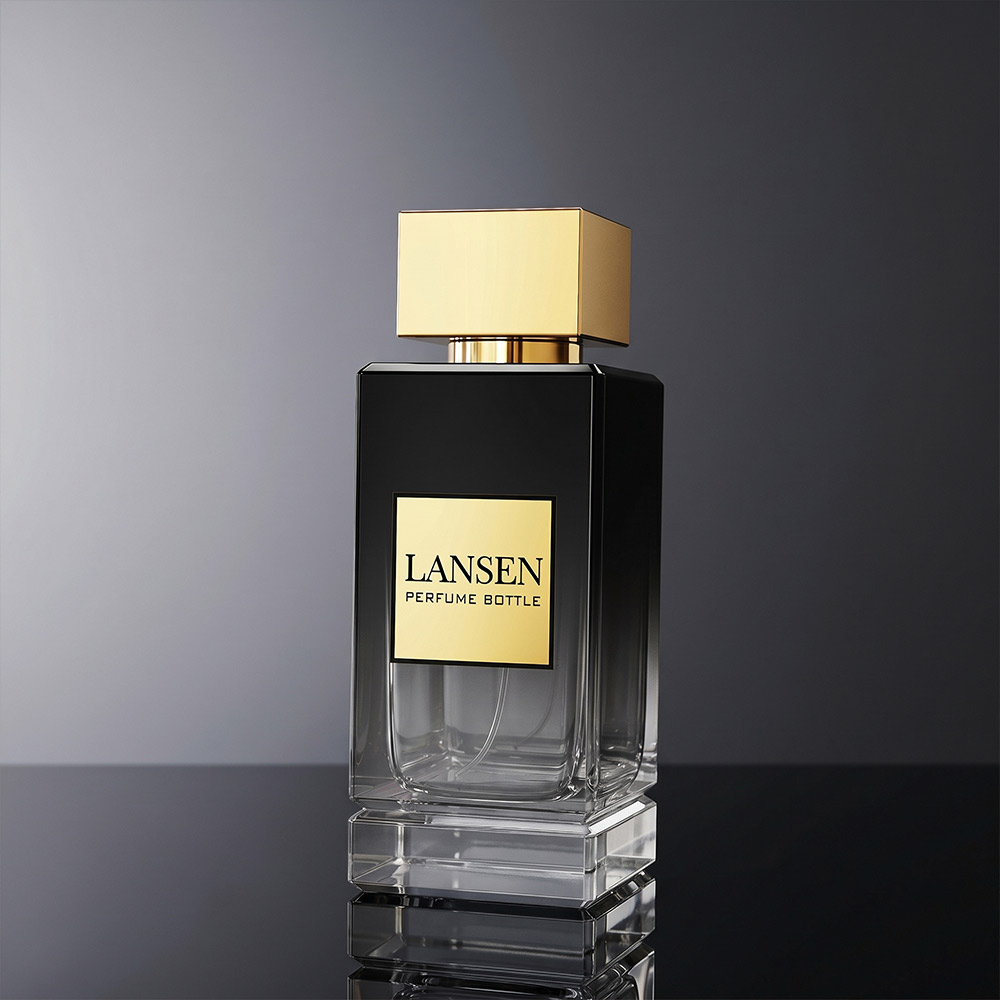
Glass packaging is a US$82.02 billion global market in 2025, forecast to reach US$102.31 billion by 2030 at a 4.5% CAGR, according to Grand View Research. Every one of those bottles is paid for before it ships, and the payment structure behind it decides who absorbs the loss when something goes wrong: a colour drift, a chipped neck, a late vessel.
This guide sets out the glass bottle payment terms factories actually ask for, what each one really costs, and how to negotiate a structure that puts your money behind verified quality instead of a promise.
What a first custom glass bottle order ties up
- 30% — typical T/T deposit before production begins
- US$2,000+ — mould set-up, normally invoiced with the deposit
- US$1.20–US$2.50 — per 30 ml bottle at a 1,000-unit MOQ
- US$2,360–US$8,750 — cash out the door before a single bottle ships (mould plus 30% of a 1,000-piece order)
Unit prices and set-up fees: Alibaba.com SmartBuy, wholesale perfume bottle buyer’s guide, December 2025. Mould ranges: Glass Bottle Mold Costs Explained.
What Payment Terms Do Glass Bottle Suppliers Usually Quote?
The default glass bottle payment terms quote is telegraphic transfer in two instalments. A 30% deposit unlocks raw material and production slot booking; the 70% balance is released around shipment. It is a starting offer, not an industry law — and it is the single most negotiable line on a factory quotation. Direct factory quotes commonly sit anywhere between 30% and 50% upfront with the balance due before shipment, and sourcing partners that consolidate several factories often standardise on 30/70 for new clients before moving to 20/80 for repeat buyers — see a published China sourcing payment schedule for the deposit-to-AQL milestone structure.
| Term | How it works | Commonly seen when | Who carries the risk |
|---|---|---|---|
| 30/70 T/T | Deposit to start production, balance before shipment | First orders, new moulds, custom colours | Buyer carries most of it |
| Reduced-deposit T/T | Smaller deposit, larger balance at the same trigger | Repeat orders with a clean payment record | Buyer, slightly reduced |
| Milestone T/T | Deposit, progress payment, balance after inspection | Large or heavily decorated orders | Shared, stage by stage |
| L/C at sight | Bank pays against complying documents | Large first orders, bank-financed buyers | Shared, via the banks |
| D/P (documents against payment) | You pay to collect the shipping documents | Established relationships | Buyer, moderate |
| Open account | Pay 30–60 days after shipment | Long-term, high-volume partners | Factory carries most of it |
Two glass-specific factors push glass bottle payment terms towards bigger deposits compared with plastic packaging. First, a custom bottle cannot be resold to someone else: the mould is yours, the colour is yours, the embossed logo is yours. Second, glass is heavy and breakable, so freight and packing costs are committed early. Factories therefore ask for larger deposits on new moulds, custom colour spraying and frosted finishes, and are far more flexible on stock shapes in clear glass.
How Much Deposit Should a Custom Glass Bottle Order Tie Up?
Run the numbers on a realistic first order: 1,000 pieces of a 30 ml bottle with a new mould and a sprayed colour.
| Line item | Market range | When it is due |
|---|---|---|
| Mould / tooling | US$2,000–US$8,000 (US$5,000–US$12,000+ for complex luxury shapes) | With the deposit, before mould cutting starts |
| Glass, 1,000 units at 30 ml | US$1.20–US$2.50 per unit = US$1,200–US$2,500 | 30% deposit, 70% balance |
| Premium 50 ml with metal cap | US$3.00–US$6.00 per unit | Same split, larger amount at risk |
| Custom-mould bottle, per unit | US$8.00+/unit with US$2,000+ set-up | Set-up paid up front |
So the deposit on the glass is modest — US$360 to US$750 on that 1,000-piece run — but the tooling sitting alongside it is five to twenty times larger. Treat mould payment as a separate, milestone-based decision: pay a share at drawing approval, the balance on sample approval, never 100% before you have seen a mould drawing.
Watch the per-transfer cost as well. Each international bank transfer typically carries US$25–US$50 in fees, so splitting one order into three separate payments to three suppliers quietly adds up — consolidate where you can, and never split payments just to feel safer without checking what the split costs.
Also ask which cavity count you are paying for. A single-cavity mould runs roughly 12–20 bottles per minute, while a double cavity costs about 1.6× the mould but doubles output — the quote should break out per-unit production cost for both so the tooling premium is a calculated choice rather than a line you accept.
Is a Letter of Credit Worth It for a Glass Bottle Order?
A documentary credit makes the bank pay on documents rather than on trust, which sounds ideal for a first order with an unfamiliar factory. The catch is that the fees are largely fixed, so they only make sense above a certain order value.
| Charge | Published rate (one bank’s tariff) |
|---|---|
| Advising an L/C | US$250 flat |
| Payment / negotiation fee | 0.15%, minimum US$500 |
| Document pre-check | US$50 per set of documents |
| Discrepant documents | US$200 on top of standard charges |
| SWIFT transmission / courier | US$200 / US$50 per set |
| Clean collection (import) | 0.15%, minimum US$250, maximum US$500 |
Source: FIMBank Standard Tariff of Charges. Indicative only — your own bank’s schedule and minimum charges will differ.
Do the arithmetic before committing. On a 1,000-piece order worth US$2,500, an advising fee of US$250 plus a US$500 minimum negotiation fee costs more than the risk you are trying to cover. On a 20-foot container order in the tens of thousands of dollars, the same fixed charges are noise, and the bank-backed guarantee is genuinely useful.
“UCP 600 sub-article 14 (b) … limits the examination period to a maximum of five banking days following the day of presentation.”
— ICC Academy, Documentary credits: rules, guidelines & terminology
If you do use a credit, the documents decide whether you get paid. Documentary credits are governed by the ICC’s UCP 600, and the bank only honours a complying presentation — documents that match the credit’s terms exactly. Banks have a maximum of five banking days to examine a presentation, a misspelt port name or a one-day date slip becomes a discrepancy, and discrepancies attract fees and delay. Read the ICC Academy’s UCP 600 terminology guide before you draft the credit, and keep the document list to the invoice and transport document wherever possible.
Which Payment Method Is Safest for a First Glass Bottle Order?
For most cosmetic and fragrance brands ordering custom glass for the first time, the practical answer is T/T with an inspection-linked balance. It costs nothing in bank fees and it fixes the real problem with a deposit: paying the bulk of the money before you can see the bulk.
- Stage 1 — deposit on a signed proforma invoice. Small enough that cancelling hurts but does not sink you.
- Stage 2 — tooling on sample approval. Split the mould fee across drawing approval and physical sample approval.
- Stage 3 — balance after pre-shipment inspection passes. A third-party inspection report at AQL 2.5 for critical defects and AQL 4.0 for minor ones becomes the trigger. Glass is a defect-prone material, and an agreed defect tolerance is what makes “inspection passed” measurable rather than a matter of opinion.
- Stage 4 — a small retention until arrival. This covers what inspection cannot: carton counts, concealed breakage, and colour drift only visible in daylight.
Middle-ground options fill the gap for mid-size orders. Third-party escrow or a platform trade-assurance facility holds funds and releases them on shipment or inspection milestones; D/P lets you pay once the goods exist and are on the water, but before you can inspect them. Open account is earned, not requested — factories effectively finance your purchase, and they may quietly price that financing into your unit cost.
How to Negotiate Better Glass Bottle Payment Terms
Negotiate glass bottle payment terms in this order. Factories concede these sequence by sequence, and each step buys you a checkpoint before more money moves.
- Move the balance trigger to post-inspection. The highest-value change, and usually granted. Ask for “70% after pre-shipment inspection passes” instead of “70% before shipment.”
- Ask for tooling to be credited against the first bulk order. Many suppliers will apply part or all of a mould fee to the first production invoice once volume is committed.
- Reduce the deposit on repeat orders. A clean payment record is the strongest argument you have; a second order at 20/80 is a normal ask.
- Split large orders into three milestones. Deposit, mid-production, balance after inspection. Each payment gets smaller and each one buys a checkpoint.
- Hold a retention until arrival. Small, specific, and easier to win on a repeat order than a first one.
- State who pays bank charges. Shared charges, buyer’s account or factory’s account is negotiable — and a classic source of friction after the money has moved.
What Must Be Written on the Proforma Invoice?
Verbal glass bottle payment terms evaporate the moment a shipment goes wrong. Every agreed condition belongs on the proforma invoice and the sales contract, in the same document as your bottle specification.
- Exact percentages and amounts for each payment, with the currency stated
- The trigger for each payment, and what counts as proof — inspection report, bill of lading copy, arrival confirmation
- Who pays bank charges on each transfer
- Remedies for late shipment and late payment, even if modest
- What happens to the deposit if you cancel versus if the factory fails to deliver
- Defect tolerance and inspection standard — the AQL level that makes “inspection passed” objective
- Mould ownership and storage, if tooling is involved
Custom bottles concentrate risk because nothing about them can be redirected to another buyer. A colour-sprayed, frosted or hot-stamped bottle is only valuable to you, so the contract — not the relationship — is what protects the deposit.
Get a Quote With the Terms in Writing
Lianxin Bottle quotes custom glass bottles with the tooling route, sample timeline, MOQ and glass bottle payment terms all stated on the proforma invoice, so there is nothing to negotiate later from memory.
Start with the range that suits your formula: custom perfume bottles, essential oil bottles or nail polish bottles. If you already have a shape in mind, the custom glass bottle options page shows which decorations can be combined on a single bottle — useful to know before you ask for a deposit structure.
Send your capacity, closure, decoration and target volume, and you will get back a quotation with unit price, tooling, MOQ and glass bottle payment terms laid out line by line — before you release a single deposit.