Short answer: custom perfume bottle caps are specified by two things — material (zamac, aluminium, acrylic, wood, resin or plastic) and neck fit (FEA15 for 10–50 ml bottles, FEA18 for 75–125 ml). Published cap-supplier terms put the MOQ at 5,000 pieces per existing profile and 10,000 pieces for a fully custom shape, with 30–45 days of production after sample approval and 2–4 weeks extra when new tooling is required.
The global cosmetic and perfumery glass bottle packaging market is worth USD 2.73 billion in 2026 and is growing at a 4.61% CAGR to USD 3.42 billion, according to Mordor Intelligence, while the wider cosmetic packaging market is projected to grow from $59.88 billion in 2026 to $89.72 billion by 2034 at a 5.19% CAGR (Fortune Business Insights). A growing share of that value sits in the closure, not the glass: the cap is the part customers touch first, and the part that decides whether the pack feels like a €20 drugstore launch or a €150 extrait.
Custom perfume bottle caps are also the component that most often delays a launch: brands choose the bottle first, order the cap last, then find that the cap cavity, the pump collar and the finish build-up do not agree. On a stock bottle that costs a re-order; on a tooled cap it can cost the mould.
This guide covers how custom perfume bottle caps are specified in 2026 — material, neck sizing, MOQ and lead time, finishes and branding, and the fit checks to run before approving a sample.
What Are Custom Perfume Bottle Caps Made From?
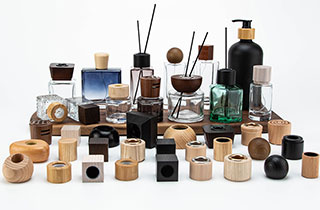
Standard cap sourcing is organised around four material families — wood, zamac alloy, plastic (ABS/PMMA/Surlyn) and aluminium — with glass, resin and acrylic used for specific looks. Each family differs in weight, surface treatment and cost, so the material decision usually follows the retail price point.
| Cap material | Weight & feel | Finishes available | Where it wins |
|---|---|---|---|
| Zamac (zinc alloy) | Heaviest; weighted, cool-touch | Electroplating, matte or gloss lacquer, laser engraving | Prestige fragrance, gift sets, refillable packs |
| Aluminium (6061 / 6063) | Light, slim, cool metal | Anodizing, plating, coloured paint, engraving | Modern travel sizes, minimal lines, printing-free branding |
| Surlyn / acrylic / PMMA | Medium; transparent, glass-like | Vacuum plating, tinted or clear moulding | Caps that show the pump, “water cube” and ice looks |
| ABS / PP plastic | Lightest | Painting, plating-style coatings | Colour-matched ranges, mass-market, multicategory lines |
| Wood (beech, walnut) | Medium; warm and natural | Natural oil, wax, lacquer, laser engraving | Natural, apothecary and home-fragrance ranges |
| Resin, stone, glass | Heavy and sculptural | Polishing, inlay, frosting, screen printing | Limited editions and designer caps |
Two constructions cut across the material choice. A magnetic cap is a metal or plated shell with a magnet inside — a soft, deliberate close for gift packs, at extra weight. A lined cap, the standard for anything crimped, carries an aluminium or PP inner cap press-fitted into the shell: the visible cap and the functional seal are two parts, and the inner fitment is what has to hold tolerances.
Most brands pair a decorated shell with a stock custom perfume bottle, which keeps tooling out of the project. Where the cap must match a shaped shoulder, single-source the bottle, pump, collar and cap so the assembly is quoted as one pack — see our custom bottle and cap customization options.
How to Size a Cap: FEA15, FEA18 and Screw Necks
Perfume caps are not sized by bottle volume; they are sized by the bottle neck. The fragrance industry uses the FEA system — Flacon Embout Atome — which defines the neck diameter and the matching pump collar, so that pumps from one supplier fit bottles from another.
“FEA15 (15 mm) is the standard for most small and medium fragrance bottles — typically 10 ml to 50 ml. FEA18 (18 mm) is used for larger bottles, usually 75 ml and above. The number determines which spray pumps, overcaps and crimping tools will fit your bottle.” — Packamor, FEA15 vs FEA18 neck sizes
| Neck standard | Neck diameter | Typical bottle volume | Common use |
|---|---|---|---|
| FEA12 | 12 mm | 1–5 ml | Miniatures, travel atomizers, sample vials |
| FEA15 | 15 mm | 10–50 ml | Standard fine fragrance bottles — the most widely used size |
| FEA18 | 18 mm | 75–125 ml | Full-size fragrance; higher pump output per spray |
| FEA20 | 20 mm | 150 ml and above | Large bottles, body and hair mists |
The neck also fixes the pump, and the pump fixes the cap. An FEA15 crimp pump typically doses 0.065–0.10 ml per actuation, while FEA18 pumps dose 0.10–0.15 ml — relevant if you are formulating a concentrated extrait and want a tight, dry spray. Dip tubes come in standard lengths of roughly 55 mm, 75 mm and 100 mm and must match the bottle’s internal height, or the pack stops drawing with liquid still inside.
Crimp necks are the fine-fragrance default: the collar is compressed onto the neck and the seal is permanent. Screw necks use GPI or GL thread standards and are the norm on essential oil bottles, serums and body-care packs, where the closure is a dropper, disc-top or lotion pump. Decide crimp or screw first, then build the cap around it.
The cap is not chosen by neck size alone. A nominal diameter is a shortlist filter, not a fit guarantee. What decides assembly in production is engagement depth, pull-off force, rotational play, clearance to the collar and permitted height variation across the finished pack.
Write those numbers into the brief and two suppliers quoting “the same cap” will quote the same component — the point made by cap-sourcing resource Perfume Bottle Hub: “nominal diameter is only the first filter.”
What Is the MOQ for Custom Perfume Bottle Caps?
Cap minimums are set by tooling and surface treatment, not by the material itself. For custom perfume bottle caps, published supplier terms are 5,000 pieces per style for an existing cap profile and 10,000 pieces for a fully custom shape, across wood, zamac, plastic or aluminium. First runs usually start on an existing profile and move to a bespoke mould once the fragrance is proven.
Custom perfume cap MOQ and lead time at a glance
- 5,000 pieces — MOQ per style when using an existing cap profile
- 10,000 pieces — MOQ for a fully custom shape in wood, zamac, plastic or aluminium
- 30–45 days — production after sample approval for an existing design
- +2–4 weeks — additional tooling time for a custom cap project
- Sample route — free stock samples, then low-cost pre-production samples once the drawing is confirmed
Figures as published by cap manufacturer GP Bottles (2026). Your own quotation will move with shape complexity, plating and order volume.
Cap cost sits on top of bottle cost rather than beside it. Published wholesale guides for personal-care glass put a standard clear bottle at $0.30–$0.80 per unit, a premium frosted bottle at $0.65–$1.50 and an electroplated bottle at $1.20–$2.80, with MOQs from 500 to 10,000 units (Suneco Glass). Since the cap is a small share of that total, spending extra per piece on the shell the customer actually holds usually pays: a heavy plated cap reads as more expensive than the glass beneath it. If your volume falls below the cap minimum, start on an existing profile with decoration, or a stock perfume bottle with a stock closure, and move to a bespoke cap on the second order.
Finishes and Branding: Plating, Anodizing, Foil and Engraving
Once the shell is chosen, the visible finish is specified separately from the substrate — and it should be, because two suppliers describing “a gold cap” may be quoting different surfaces. The standard finish set for perfume caps is natural oil or wax on wood; matte, gloss or painted lacquer on plastic and metal; electroplating for mirror gold, silver, gunmetal and rose-gold looks; and anodizing for aluminium (aluminum in US sourcing listings), which creates durable coloured metal rather than a coating.
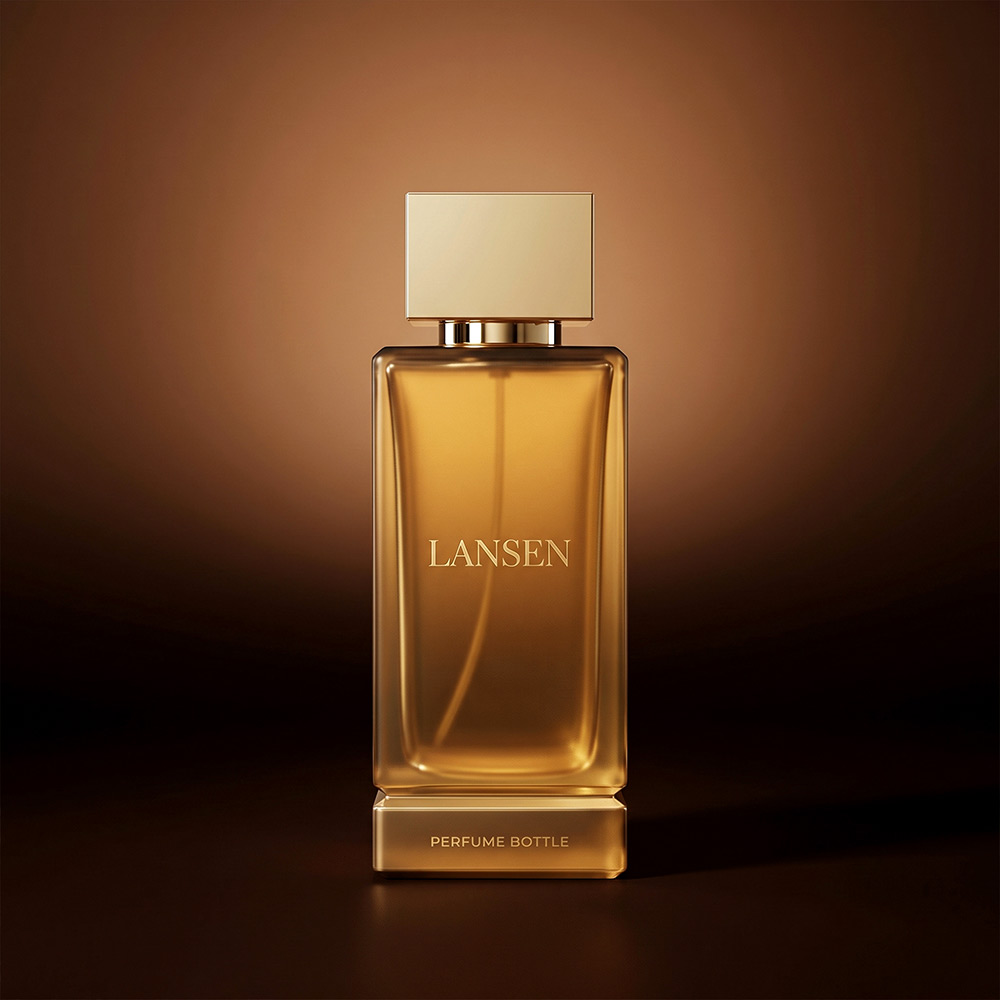
Branding methods follow the surface. Laser engraving cuts a mark into wood, aluminium or a lacquered shell and cannot peel; hot foil stamping applies a metallic logo where the shape allows a flat or gently curved panel; screen printing carries solid-colour artwork including text and lot codes; and an embossed metal plaque gives a heavier, more architectural logo on premium packs. For the glass body underneath the same logic applies — compare our electroplated glass bottle finishes, hot stamping and custom colour matching to keep the cap and bottle reading as one design.
Decoration is priced per operation, which is the number to watch when you add finishes. Published decoration rates for glass packaging, for example, run $0.20–$0.80 per unit for electroplating, $0.10–$0.40 for hot stamping and $0.05–$0.20 for frosting, with tooling of $200–$600 for plating and $100–$300 per hot-stamping die (Daystar Glassware). Cap finishing follows the same logic: each additional operation adds a per-piece charge and a set-up cost that is amortised over the run.
One technical warning sits between finish and fit. Plating, painting and printing all add thickness, and build-up near the cap cavity or collar can close a clearance that was fine on the bare sample. Fit checks must therefore be repeated on the finished cap, not the untreated shell.
How Do You Approve a Cap Sample? Six Fit Checks
Cap approval fails most often when the sample is inspected visually and dry-fitted only: an untreated cap on a pump-less bottle tells you nothing about the finished pack. Run these six checks on the decorated cap, fitted to the real bottle, pump and collar, with the bottle filled:
- Engagement depth — the cap seats to the drawing dimension, with no rocking on the shoulder
- Pull-off force — within the agreed range: firm enough to survive transit, light enough for retail handling
- Rotational play — no free spin that would misalign a front-facing logo
- Collar clearance — the cap clears the crimped or screwed collar without contact
- Height variation — measured across a sample of finished packs, not one unit
- Filled-pack transit test — leakage, retention and actuator access checked in the export carton
Two details decide whether the pack survives its first season. A heavy zamac or resin cap changes drop behaviour and stresses the bottle shoulder, so wall thickness there matters as much as the cap. And a front-facing logo needs a written orientation rule, because cap-to-collar play that is fine on a plain cap becomes a crooked logo on a branded one.
Ask for the physical sample, not a rendering: when the plated sample and the plated production run check against the same approved piece, colour, engagement and logo position hold across batches. Export packing, moisture and temperature swings are covered in our customization process.
How to Brief a Custom Perfume Bottle Cap Supplier
The brief that wins an accurate quotation first time carries six things: the bottle neck standard (FEA15, FEA18 or a GPI/GL thread), the pump model and collar dimension, the cap material and inner-fitment construction, the finish with a colour reference, the branding method with artwork, and the target and sample quantities. Add the four fit numbers — engagement depth, pull-off force, rotational play and permitted height variation — and a visual request becomes a component you can inspect against.
Get those right and custom perfume bottle caps stop delaying launches and start carrying the brand. Lianxin supplies perfume bottles with matched caps — zamac, aluminium (aluminum), wood and plastic constructions, with electroplated or frosted finishes on the glass — as an assembly rather than as loose components.
Need a cap that fits the first time? Send your bottle neck standard, target volumes and quantity — we will come back with a material and finish recommendation, a sample plan and a quotation for the complete pack.