Choosing among custom glass bottle shapes is one of the first decisions that locks in your tooling cost, filling-line speed and shelf presence. The short answer: round bottles are the most economical and the fastest to fill, square and rectangular bottles give you the largest front-facing label panel and the strongest premium shelf image, while oval, tapered and figural shapes deliver the highest differentiation — at the cost of a dedicated mold. This guide compares the silhouettes brands order most, what each one signals to shoppers, and how shape complexity moves mold cost, MOQ and lead time in 2026.
Quick answer — the seven shapes buyers ask for most
- Round / cylindrical — lowest unit cost, most even wall thickness, best filling-line speed.
- Square — maximum label area, premium “apothecary” look, slightly higher annealing risk at the corners.
- Rectangular — shelf-efficient for travel sizes and gift sets.
- Oval / flat oval — ergonomic in the hand, ideal for serum and lotion.
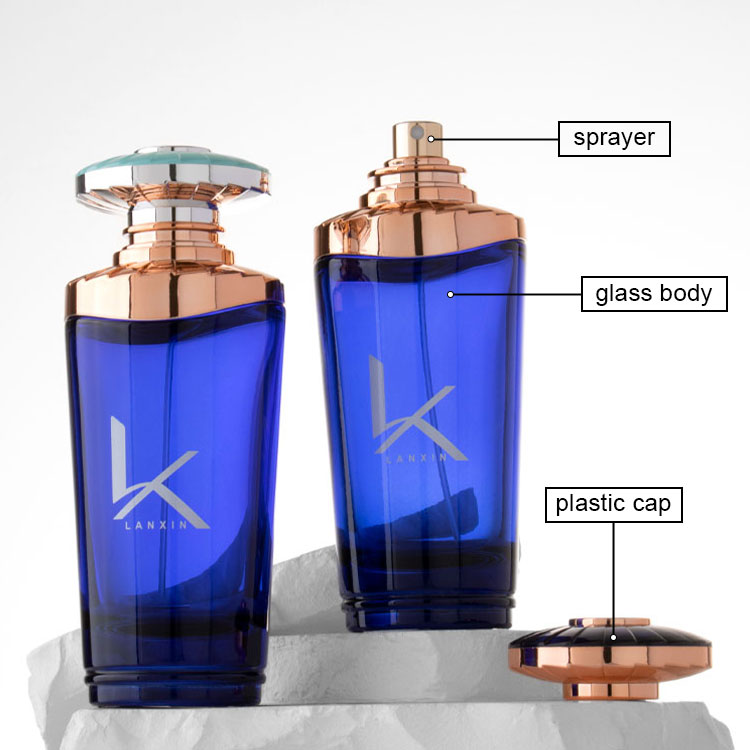
- Tapered / teardrop — sculptural, strong in perfume.
- Shouldered — classic fragrance silhouette, hides the pump collar.
- Figural / sculptural — maximum brand storytelling, highest tooling investment.
What Are the Most Common Custom Glass Bottle Shapes?
Almost every custom glass bottle shape on the market descends from seven mould families. When buyers ask us to develop a new silhouette, we frame the choice around three practical constraints rather than aesthetics alone: what goes inside, how it will be filled and capped, and how much flat surface the label needs.
- Round and cylindrical bottles — the workhorse format for essential oil bottles and dropper packaging. A circular cross-section distributes internal pressure evenly, so wall thickness stays consistent through the whole part and the mould runs faster.
- Square bottles — the classic custom perfume bottle format. Four flat panels give designers a much larger printable and labelable area, and the flat base sits solidly on a retail shelf.
- Rectangular bottles — the go-to choice for 10–30 ml travel and sample sizes, because they pack more units per shipper carton than round glass.
- Oval and flat-oval bottles — a slimmer profile that fits the hand comfortably; very common for serum, lotion and nail polish bottles in 10–15 ml.
- Tapered and teardrop bottles — the body narrows toward the base or shoulder, creating a sculptural silhouette that reads as high-end in photographs.
- Shouldered bottles — a rounded shoulder that flows into a narrow neck; it visually conceals the pump or crimp collar and is a signature of traditional fragrance design.
- Polygon and figural shapes — hexagonal bodies, faceted panels, or completely bespoke sculptural forms developed for a single brand.
One rule of thumb from the factory floor: the further a shape moves from a circle, the more the corners become stress points during forming and annealing. Square and figural bodies therefore need slightly thicker corner walls and more careful cooling control than round ones — a cost that shows up in tooling and unit price rather than on the drawing.
Round vs Square vs Oval Glass Bottles: What Each Shape Says to Shoppers
Shape is positioning. Square bottles are consistently read as modern, stable and gender-neutral; round bottles as classic, soft and often feminine; oval and tapered profiles as precise and clinical. Industry suppliers make the same point about glass as a category — Samantha Juna, insights and enablement director at TricorBraun, says in Beverage Industry’s April 2026 glass packaging report:
“Its weight, clarity and customizable shapes give it a sense of high quality that plastic or cans can’t match.”
— Samantha Juna, Insights & Enablement Director, TricorBraun (April 2026)
| Shape | Perceived positioning | Best-fit categories | Tooling complexity |
|---|---|---|---|
| Round / cylindrical | Classic, natural, trustworthy | Essential oil, serum, lotion | Low |
| Square | Modern, premium, architectural | Perfume, skincare sets, nail polish | Medium |
| Rectangular | Efficient, travel-ready | Travel perfume, sample vials | Medium |
| Oval / flat oval | Ergonomic, approachable | Lotion, serum, gel polish | Medium |
| Tapered / teardrop | Sculptural, luxurious | Fragrance, premium gift sets | High |
| Figural / sculptural | Distinctive, collectible | Limited editions, hero SKUs | Very high |
Why glass shapes keep winning shelf space — the numbers
- 92% of consumers say they like companies that offer glass packaging because of its lower environmental impact (EcoFocus survey, reported by the Glass Packaging Institute).
- 73% view glass food and beverage packaging as good for the environment — a 20-point lead over flexible pouches.
- The global glass packaging market is valued at USD 78.45 billion in 2026 and is forecast to reach USD 106.76 billion by 2033, a 4.5% CAGR (Coherent Market Insights).
How Does Bottle Shape Affect Mold Cost, MOQ and Lead Time?
This is the question that decides most projects. A custom glass bottle shape does not have to mean a custom mould — many brands start on an existing mould and differentiate through colour, finish and decoration. That distinction is exactly what drives the MOQ gap below.
| Development path | MOQ | Tooling | Typical lead time |
|---|---|---|---|
| Existing / stock mould | From 3,000 pcs (1,000–3,000 on selected models) | None — decoration only | Fastest, decoration-dependent |
| Modified stock mould (new neck, shoulder, base) | Mid-volume | Partial modification | Mould change + production |
| Fully custom shape (new mould) | From 10,000 pcs | Dedicated mould required | 3D hand-made mould in 7–10 days, clear-glass production 30–35 days |
What actually raises the cost inside a custom shape:
- Sharp corners and tight radii — the glass thins at corners, so the mould must be engineered for extra corner wall and slower annealing.
- Undercuts and heavy embossing — they add mould parts and increase the risk of visible parting lines.
- Very thin or very tall profiles — harder to keep verticality and wall-thickness tolerance, and more prone to breakage in transit.
- Non-standard neck finishes — standard screw and crimp finishes (FEA13/15 for fragrance) let you use off-the-shelf pumps and caps. A custom neck means a custom closure too.
Our 3D printing and rapid prototyping service exists precisely to de-risk this step: you approve a physical prototype before committing to a production mould.
Which Shape Fits Perfume, Essential Oil and Skincare Best?
Category physics usually narrows the shortlist before design does. Fragrance needs a narrow neck for a crimp pump; essential oil needs an orifice small enough for a dropper and dark glass to block UV; lotion needs a wide mouth for a pump tube.
| Category | Recommended shapes | Common capacities | Closure |
|---|---|---|---|
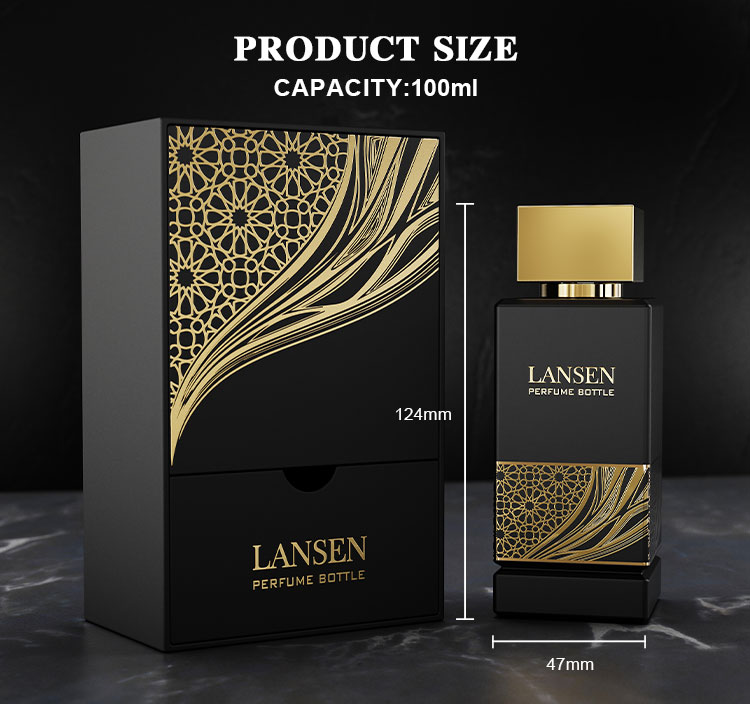
| Perfume / fragrance | Square, rectangular, shouldered, tapered | 30 / 50 / 100 ml | Crimp or screw, FEA13/15 |
| Essential oil / serum | Round, straight-sided, oval | 5 / 10 / 15 / 30 ml | Dropper / pipette |
| Lotion / skincare | Round, oval, square, rectangular | 40 / 100 / 120 ml | Lotion pump |
| Nail polish | Square, round, oval | 10 / 15 ml | Brush cap |
| Reed diffuser | Cylinder, polygon, rounded square | 100 / 200 ml | Wooden or metal cap |
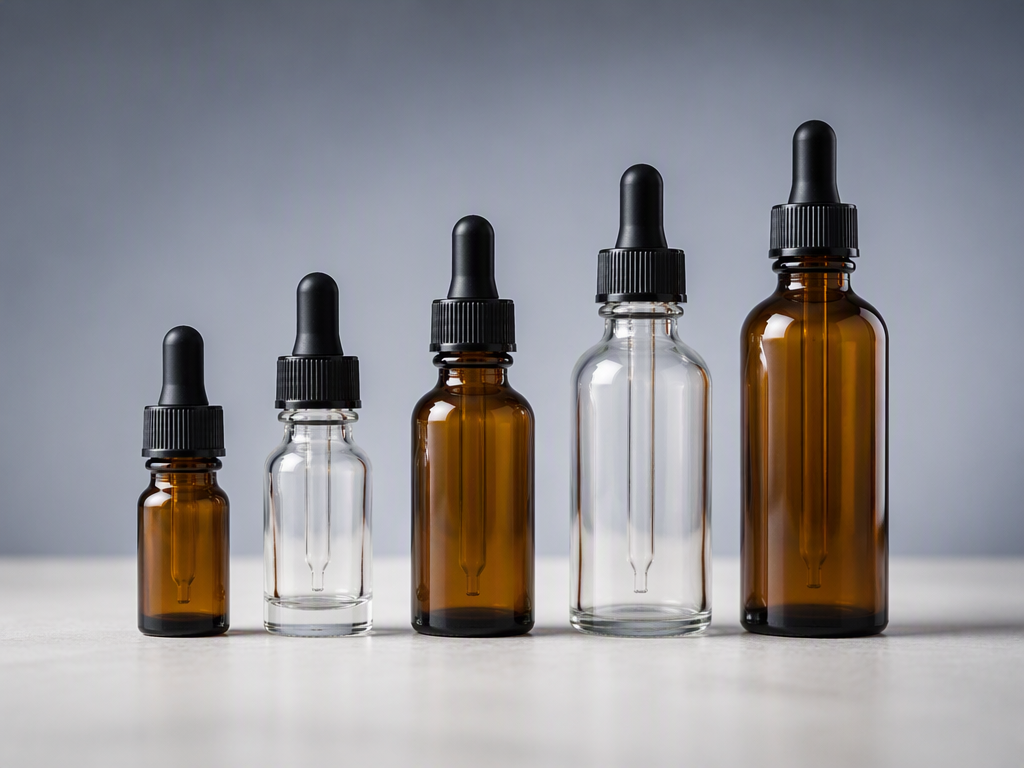
The demand behind these formats is still expanding. The cosmetics and perfume glass bottle segment is projected to grow from USD 4.01 billion in 2025 to USD 5.35 billion by 2031 (4.92% CAGR), while the essential oil bottle market is expected to climb from USD 1.2 billion in 2024 to USD 2.5 billion by 2033 at an 8.5% CAGR, according to glass industry analysis published in 2026. Amber and dark-glass dropper bottles continue to outperform because essential oils are reactive with plastic and degrade under light.
How Do You Brief a Manufacturer on a Custom Bottle Shape?
A shape only becomes a real bottle after five controlled steps. Skipping any one of them is the most common cause of a delayed launch.
- Send drawings or reference samples. A dimensioned drawing, a CAD file or even a photo of a bottle you like is enough to start.
- Receive a 3D model. Your manufacturer builds the shape digitally so capacity, neck finish and shoulder angles can be reviewed before any metal is cut.
- Confirm the neck finish and closure. Decide crimp versus screw and lock the finish so pump, dropper or cap tooling can be aligned.
- Approve a 3D hand-made mould. A physical sample of the shape is produced within 7–10 days for you to hold, weigh and fill.
- Approve and produce. Once the sample is signed off, clear-glass production typically runs 30–35 days, after which surface treatment — frosting, colour spraying, electroplating or hot stamping — is applied.
Custom Glass Bottle Design Trends to Watch in 2026
Three shape trends showing up in real purchase orders
- Lightweighting without losing presence. Chanel’s redeveloped 100 ml “Chance Eau Splendide” bottle cut its total weight by 20% and reached over 95% recyclability — proof that a premium silhouette can get lighter without looking cheaper.
- Reusing existing moulds, changing the surface. K-beauty brands now launch on quarterly cycles instead of 18-month cycles, so they differentiate through colour and finish on stock moulds rather than paying for new tooling every season.
- Figural shapes as storytelling. A book-shaped bottle with a spine label won the 2026 “Best of Show” award from the National Association of Container Distributors — evidence that silhouette alone can carry a brand story.
Practical takeaway for brands planning a 2027 range: lock the custom glass bottle shape first, then use finish, colour and decoration to create variants. That sequence keeps you on an existing mould and lets you test the market before committing to a dedicated one. If your design needs to move faster, our custom glass bottle customisation service combines mould selection, custom colour matching and decoration under one roof, with full inspection before shipment.
Ready to Choose Your Custom Glass Bottle Shape?
Still comparing custom glass bottle shapes? Send us a sketch, a reference photo or a dimensioned drawing and we will confirm the closest existing mould, the realistic MOQ for your volume, and whether a custom shape is worth the tooling. Most projects get a shape recommendation and a quotation within two working days.