Cosmetic packaging label requirements are one of the quietest reasons a container shipment gets rejected: artwork approved in a design file can still be non-compliant once it lands on a 50 ml glass bottle, because the regulations control which statements must appear, which panel they must sit on, and how tall the letters must be. The workable answer for brand owners is to lock four things before printing or tooling starts: the mandatory copy list per target market, the panel that copy must sit on, the minimum type size for that panel, and a decoration method that can physically carry it.
Quick answer: In the EU, Article 19 of Regulation (EC) No 1223/2009 requires a Responsible Person name and address, nominal content, batch number, ingredient list (INCI), any mandatory warnings, the product function, and — for imports — the country of origin. In the US, the FDA requires product identity and net quantity on the principal display panel (PDP), plus the manufacturer or distributor name and address and the ingredient declaration on an information panel. Type size is driven by PDP area, not by brand preference.
Practical consequence: a 30–100 ml glass bottle rarely has room for both a full brand story and the full regulatory block. Plan the back panel first, then design the front.
What Are the EU Cosmetic Label Requirements Under Article 19?
EU rules are the most prescriptive of the major markets, and they apply in all member states. The mandatory items must be in indelible characters that are easily legible and visible to the consumer at the point of purchase, and individual countries may require translation into their national language. Article 19 of Regulation (EC) No 1223/2009 is the control document, and it reads as a list, which makes it easy to audit a label artwork against. These are the cosmetic packaging label requirements most often copied from an old template without checking the current wording.
| Mandatory item | What the label must show | Buyer check |
|---|---|---|
| Responsible Person | Name or company name and EU address of the Responsible Person; if several EU addresses are listed, the one holding the product information file must be highlighted | Confirm the RP is appointed before artwork sign-off; UK sellers need a UK-domiciled RP |
| Country of origin | Required for products imported into the EU | China-made glass filled in the EU still needs origin stated |
| Nominal content | Mass or volume; not required below 5 g or 5 ml, for free samples, or for single-use products | Declare the fill volume, not the bottle’s brim capacity |
| Durability date or PAO | Minimum durability date if 30 months or less; above 30 months the period-after-opening symbol is required instead | PAO is not mandatory for single-use items, sealed aerosols or products not at risk of deterioration such as perfume |
| Batch number | Traceability code for cosmetovigilance | Reserve a clear 4–6 mm strip; do not bury it under a wrap label |
| Warnings and precautions | At minimum the statements required by Annexes III–VI plus assessor-recommended warnings | These often decide the back-panel size |
| Function of the product | Must be clear unless evident from presentation | “Eau de parfum” or “serum” counts as function wording |
| Ingredient list (INCI) | Preceded by “INGREDIENTS”, descending order by weight, with ingredients under 1% allowed in any order | This single block is usually the longest text on the pack |
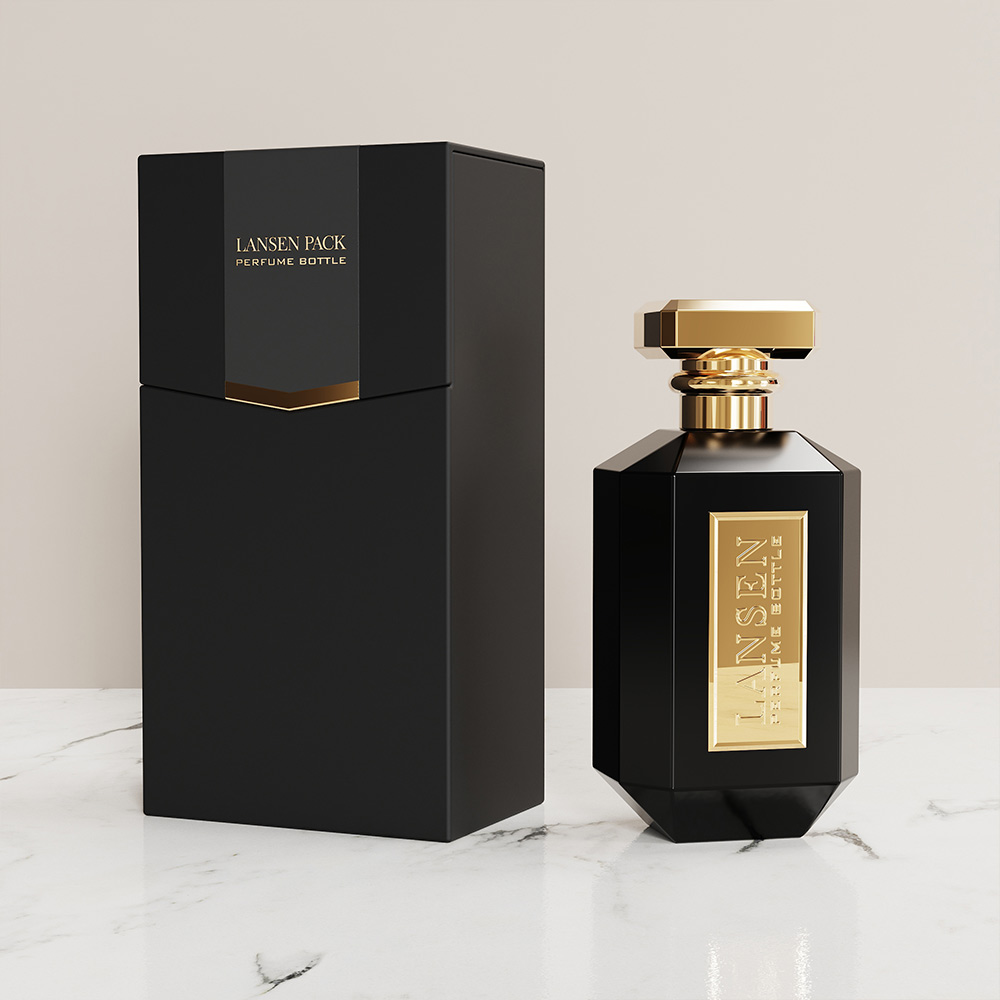
Two escape hatches matter for small glass formats. First, the ingredient list and warning statements may appear only on the outer packaging, so a boxed perfume bottle can keep its bottle label short. Second, where it is impractical to print on the container itself, mandatory information may be carried on a leaflet, label, strip or card attached to the product, marked with the “open book” symbol. Both options are decided at packaging-design stage — not after the labels are printed. The full legal text sits in Regulation (EC) No 1223/2009, and a clause-by-clause summary is published by regulatory consultancy Clear.
FDA Cosmetic Labeling Requirements: PDP, Information Panel and Type Size
US rules are organised around panels rather than around a numbered list, and that is where the cosmetic packaging label requirements diverge most sharply from the EU approach. The principal display panel is the part of the label most likely to be examined at retail; it must carry the product identity and the net quantity of contents. Everything else — manufacturer, packer or distributor name and address, ingredient declaration, warnings, directions for safe use — belongs on an information panel. FDA’s Cosmetics Labeling Guide also requires that the PDP be large enough to accommodate the required information with clarity and conspicuousness.
FDA numbers that decide your label size
- PDP surface for a cylindrical bottle = 40% of height × circumference
- Net-quantity letter height: 1/16″ if PDP is 5 sq in, 1/8″ for 5–25 sq in, 3/16″ for 25–100 sq in, 1/4″ above 100 sq in
- Ingredient declaration letters: not less than 1/16″, may drop to 1/32″ when the labelling surface is under 12 sq in
- Net contents must sit within the bottom 30% of the PDP and run parallel to the base (waived for PDPs of 5 sq in or less)
For a glass bottle programme the practical takeaway is that a short, wide bottle gains PDP area from circumference, while a tall slim bottle gains it from height. That is why a squat 50 ml fragrance flacon can carry a legally sized net-quantity statement at 1/8″ while a slender 30 ml essential oil bottle of the same capacity drops into the 1/16″ class and the associated small-panel relief. Note also the exemption logic differs from the EU: US rules exempt packages under 1/4 av. oz. or 1/8 fl. oz. from the net-quantity declaration only when the product is affixed to a properly labelled display card or sold in a properly labelled outer container — a 10 ml mini is not automatically exempt, but a 4 ml sample usually is.
How Do You Size a Label for a Cosmetic Bottle?
Sizing is the part of cosmetic packaging label requirements that most brands skip, and label sizing is arithmetic. Work in millimetres, then convert to square inches for the FDA type-size table.
Formula
Circumference (mm) = π × body diameter (mm)
PDP area (mm²) = 0.40 × body height (mm) × circumference (mm)
PDP area (sq in) = PDP area (mm²) ÷ 645.16
Full-wrap label length = circumference + 3–5 mm overlap
| Worked example | 50 ml cylinder, Ø35 × 80 mm body | 10 ml roll-on, Ø20 × 55 mm body |
|---|---|---|
| Circumference | 110 mm | 63 mm |
| PDP area | 3,519 mm² = 5.5 sq in | 1,382 mm² = 2.1 sq in |
| Minimum net-quantity letter height | 1/8″ (3.2 mm) | 1/16″ (1.6 mm) |
| Full-wrap label length | 113–115 mm | 66–68 mm |
| Practical front spot label | ≈44 × 45 mm | ≈25 × 30 mm |
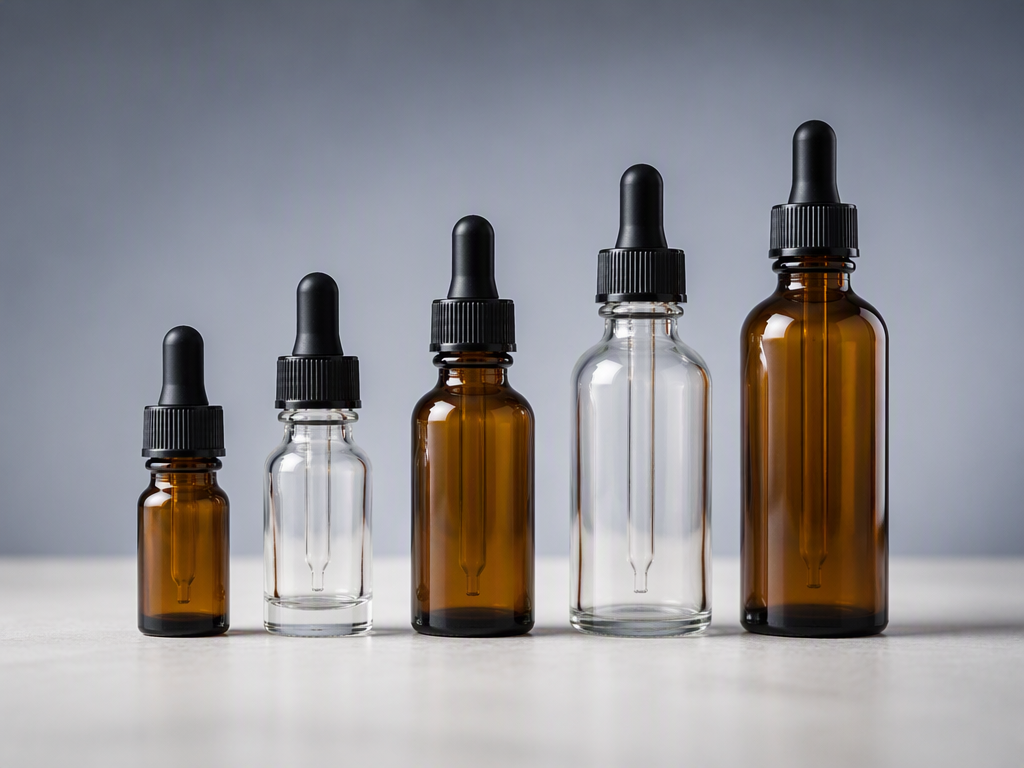
Two layout rules follow from the math. Keep a clear zone for the batch code and any embossed logo relief, because the FDA excludes decorative or sculptured surfaces from “available labelling surface” — relief that eats into the panel shrinks the area you can legally print on. And keep spot labels off the shoulder radius: a spot label wider than roughly 40% of the circumference will not lie flat on a tapered body, which is the single most common cause of edge lift on a curved nail polish bottle. For a 15 ml nail polish format, the flat front panel is often the only truly usable area, so mandatory copy migrates to the carton.
Which Label Material Works on Perfume, Essential Oil and Nail Polish Bottles?
Once the copy fits, the material has to survive the fill. Three failure modes dominate in glass packaging: alcohol attack on perfume bottles, oil creep on essential oil bottles, and solvent splashes on nail polish bottles. Standard paper stock with a permanent acrylic adhesive is fine for a boxed product that never leaves its carton; it is the wrong choice for a bottle that sits on a wet bathroom shelf.
- Perfume and eau de parfum (high alcohol): specify waterproof labels for perfume bottles — a film face stock such as white or clear BOPP — with a solvent-resistant adhesive, plus lamination if the artwork is dark. Clear “no-label look” film works well on a frosted bottle only if the decoration is printed rather than labelled.
- Essential oils and serums: oils wick under unsealed paper edges. Use laminated film or a varnish over-laminate and leave 1–2 mm of clearance from the base radius, where residue collects.
- Nail polish: solvent contact is unavoidable at the neck. Keep the label low on the body, away from the neck, and test adhesion after 24 hours of contact with the formula.
When Labels Are the Wrong Choice: Print, Hot Stamping and Frosted Finishes
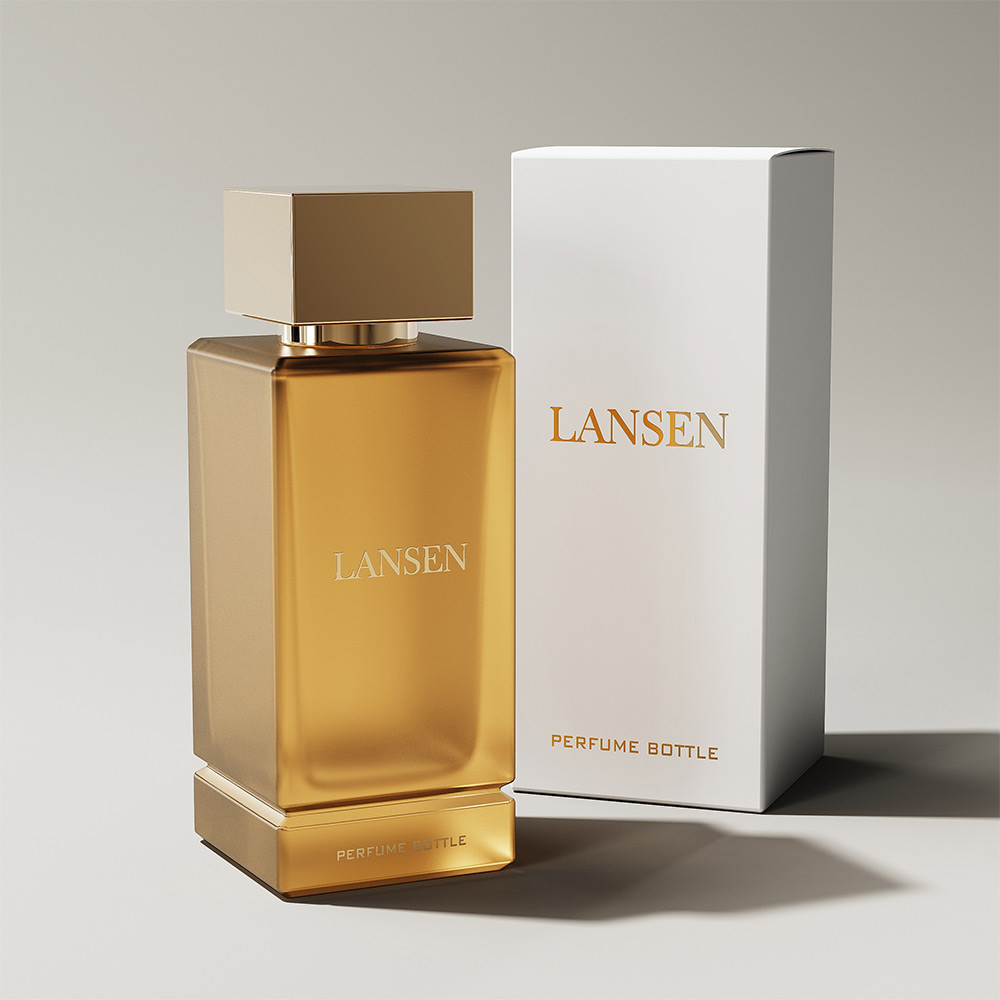
Labels are one of five ways to get information onto a glass bottle, and they are usually chosen for the wrong reason — because they are the cheapest per unit at 3,000 pieces. If the pack needs only a logo, a capacity and a short brand line, decoration applied directly to the glass will outlast any adhesive and remove a whole QC variable. Hot stamping delivers metallic brand marks that cannot peel; screen or UV printing carries small type and regulatory copy directly on the body; custom color spraying changes the bottle, not the label, which matters when the design brief is “premium without extra decoration”.
The defensible pattern for regulated cosmetics is hybrid: decoration for the brand layer, a label for the compliance layer. Long INCI lists, warnings and multilingual copy belong on a label or a carton panel that can be reprinted quickly when a formula or regulation changes — reprinting a printed bottle means scrapping the whole run. This is the decision usually taken during the customization review, once the fill volume, market list and artwork are fixed.
Five Labeling Mistakes That Only Show Up at Production
These are the defects that pass design review and fail at the filling line or the customs inspection:
- Type size below the minimum for the panel. A 1/8″ statement designed at 2.5 mm looks enormous in a PDF and is non-compliant on the bottle.
- Net quantity outside the bottom 30% band. Centring the volume statement on the PDP breaks the FDA location rule unless the PDP is 5 sq in or less.
- No reserved batch-code area. Inkjet codes printed over a varnished label edge smear; codes printed on the wrap seam disappear.
- Responsible Person missing or unhighlighted. When several EU addresses appear, the PID-holding address must be distinguished.
- Artwork flattened onto a shoulder radius. Copy that curves around a taper distorts, lifts, or becomes illegible at exactly the spot where consumers look first.
Each of these is cheaper to fix in the spec sheet than in a reprint. Cosmetic packaging label requirements become a design constraint only when the bottle dimensions and the fill volume are already fixed — so send the market list, fill volume and label dimensions together with the RFQ, and the sizing work is finished before a single plate is made.
Get your label panel sized before you print
Tell us the bottle, the fill volume and the target markets — we will return the exact body dimensions, decoration options and a label panel that the artwork can be built around.
Sources: FDA Cosmetics Labeling Guide; Regulation (EC) No 1223/2009, Article 19; Clear — The labeling of a cosmetic product. This article is a practical sourcing overview, not legal advice; have your Responsible Person or regulatory consultant approve final artwork.