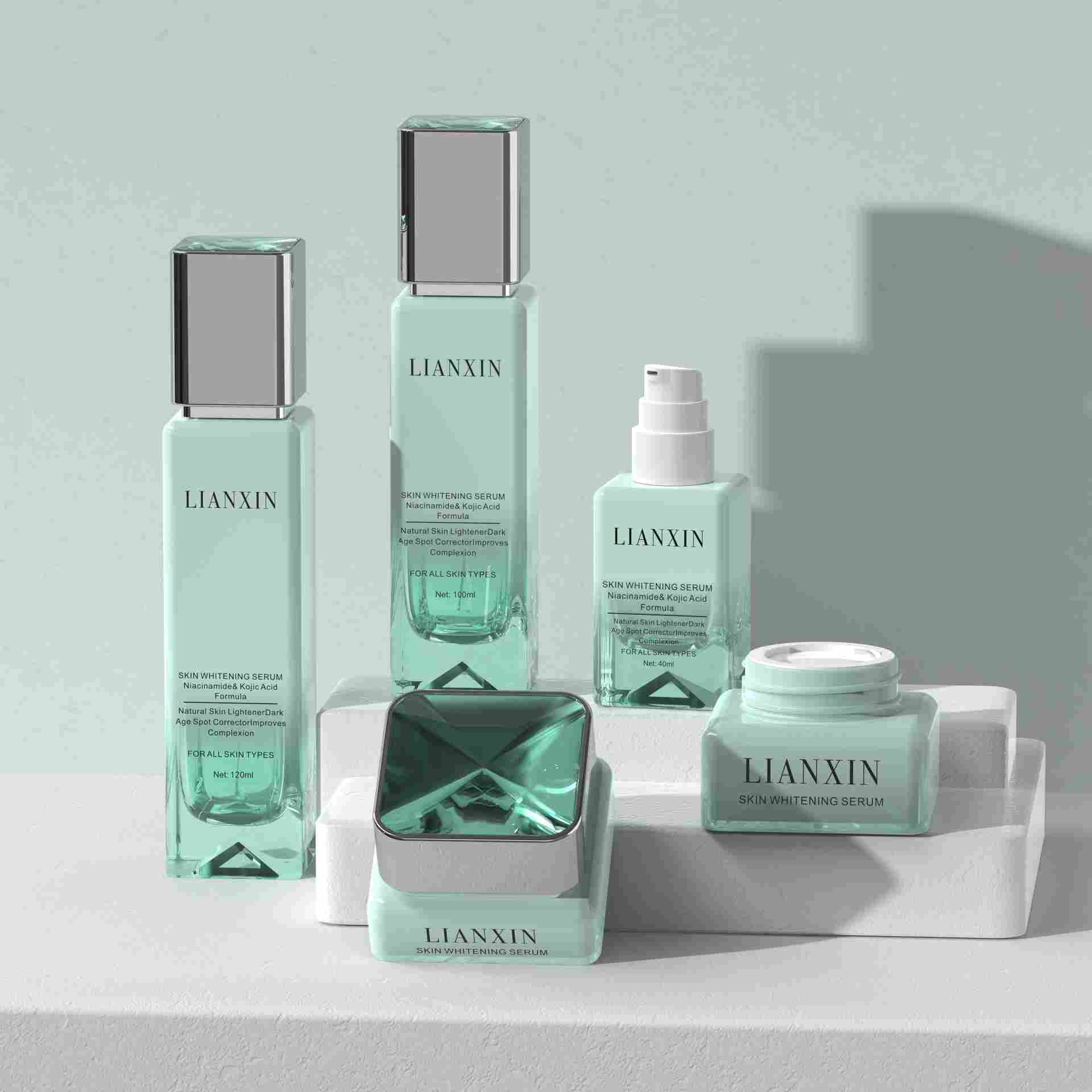
Glass lotion pump bottles are the default primary package for lotions, body milks, toners, gel cleansers and treatment serums — and they are the fastest way to make a skincare line read as premium on shelf. For most brands the practical answer is a 100 ml or 120 ml clear or frosted bottle with a 24/410 neck and a 1.0 cc lotion pump; 30 ml and 50 ml formats cover travel, sample and subscription SKUs. This guide breaks down capacities, neck finishes, pump choices, decoration, MOQ and lead times so you can brief a supplier with confidence and avoid the two most expensive mistakes in skincare packaging: the wrong neck finish and the wrong pump dosage.
Quick answer: choose your glass lotion pump bottle by formula viscosity first, capacity second.
- 30–50 ml — serums, eye gels, essences, travel sizes
- 100–120 ml — lotions, body milks, cleansers (the volume sweet spot for retail)
- 150–200 ml — toners, micellar water, body care
- Neck finish — 20/410 for slim 30–50 ml bottles, 24/410 for 100 ml and above
- Pump — 1.0 cc output for thin lotions, 2.0 cc for viscous creams and body milks
Skincare packaging by the numbers
- The global personal care packaging market is forecast to grow from USD 41.30 billion in 2026 to USD 71.57 billion by 2035, a CAGR of 6.3%, with skincare alone representing about 40% of market value (Towards Packaging, June 2026).
- Demand for glass cosmetic bottles in South Korea alone is projected to rise from USD 107.6 million in 2026 to USD 149.3 million by 2036 (CAGR 3.3%), with skincare taking a 42.8% share of that demand (Future Market Insights, January 2026).
- Industry analysts also flag rising demand for precision dispensers such as airless pumps and droppers for active-rich, preservative-light formulations — which is exactly why pump selection now drives bottle selection.
What Are Glass Lotion Pump Bottles Used For?
A glass lotion pump bottle is a rigid glass container paired with a mechanical dispensing pump that moves product from the bottle to the skin without dipping fingers into the formula. That single functional difference is why skincare brands migrate from jars and droppers as they scale: a pump meters a consistent dose, limits air and bacterial exposure, and looks more clinical and premium at the same time.
Typical applications for glass lotion pump bottles include facial lotions and emulsions, body milks, cleansing milks, toners and micellar waters, hair and scalp treatments, hand and cuticle creams, and professional/backbar sizes. Glass is usually specified when the formula contains actives that must not interact with plastic, when the brand wants visible product colour through clear or translucent glass, or when premium shelf presence matters more than the weight penalty.
It is important to match the format to the job. If your product needs a fine mist rather than a metered dose, a perfume bottle with a sprayer is the better chassis; for oils and aromatherapy blends, an essential oil bottle with a dropper or orifice reducer is standard. Lotion pumps win specifically for aqueous, emulsified and gel formulas.
Glass Lotion Pump Bottle Sizes: 30 ml to 200 ml
Sizing is driven by dose frequency and retail positioning, not by round numbers alone. The table below summarises the glass lotion pump bottle sizes buyers request most often from a glass lotion bottle supplier, together with the neck finish that keeps closure sourcing simple.
| Capacity | Approx. oz | Typical neck finish | Best-fit formula |
|---|---|---|---|
| 30 ml | 1.0 oz | 20/410 | Serum, essence, eye gel |
| 50 ml | 1.7 oz | 20/410 or 24/410 | Fluid lotion, treatment |
| 100 ml | 3.4 oz | 24/410 | Facial lotion, cleanser |
| 120 ml | 4.0 oz | 24/410 | Body milk, emulsion |
| 150 ml | 5.0 oz | 24/410 or 28/410 | Toner, cleansing milk |
| 200 ml | 6.8 oz | 28/410 | Micellar water, body care |
Two practical notes. First, always specify capacity at the fill line rather than the brim — a bottle described as 100 ml usually fills to roughly 90–95 ml in production once headspace for the pump dip tube is allowed. Second, keep the neck finish consistent across a range so that one pump SKU fits every size; mismatched finishes are the single most common cause of late-stage closure redesign.
For a wider view of body and shoulder options, see our guide to custom glass bottle shapes and tooling before committing to a mould.
How to Choose a Lotion Pump: Neck Finish, Dosage and Closure
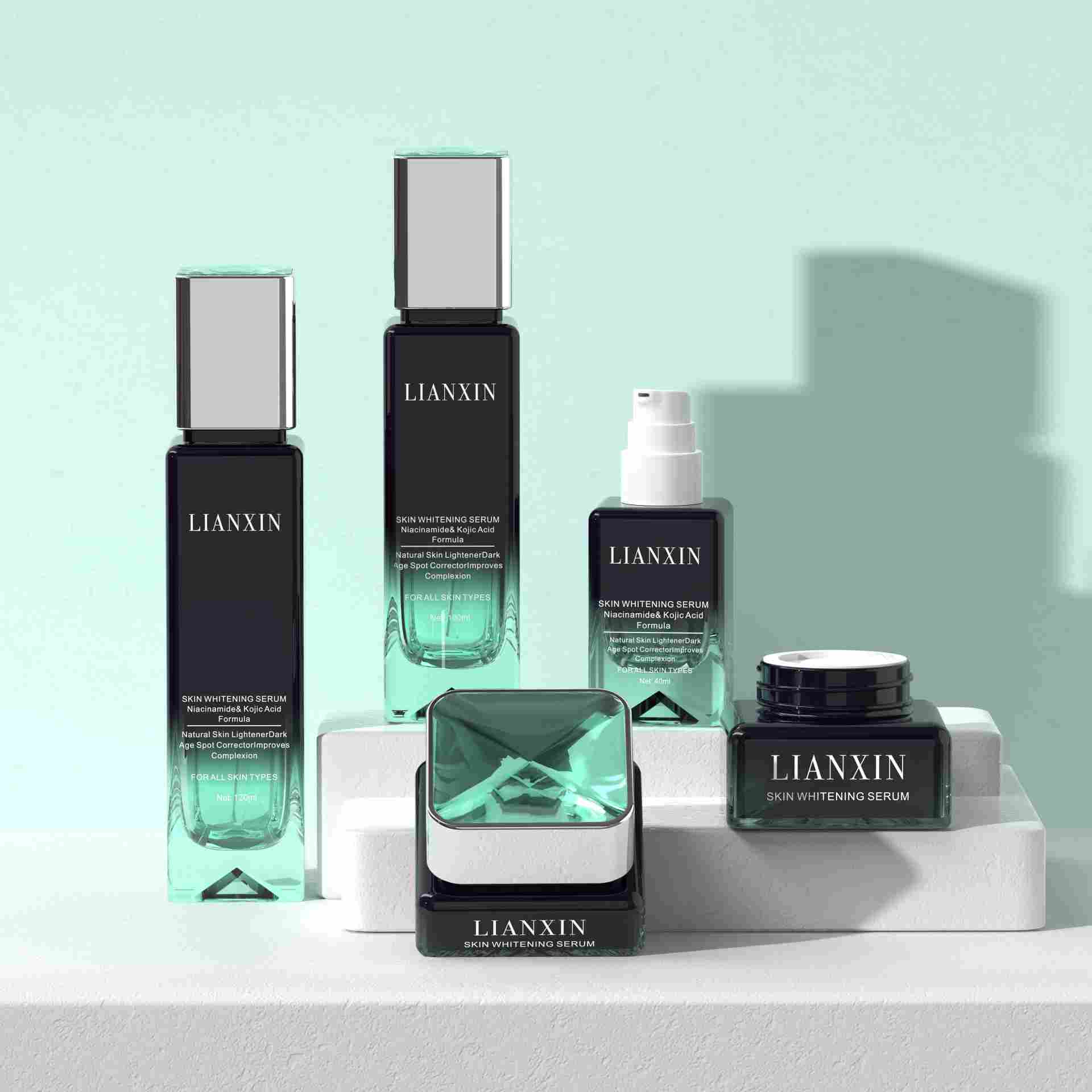
Once capacity is settled, the pump becomes the technical decision. For glass lotion pump bottles, three variables control the outcome.
- Neck finish (GPI code). The first number is the neck diameter in millimetres, the second is the thread profile. 20/410 suits slim 30–50 ml bottles; 24/410 is the workhorse for 100–120 ml; 28/410 handles 150–200 ml. Confirm the code against a physical drawing, not a photo.
- Dosage per stroke. Standard lotion pumps deliver 0.5 cc, 1.0 cc, 2.0 cc or 4.0 cc. Thin fluids such as toners and essences want 0.5–1.0 cc; body milks and creams want 2.0 cc or more. Over-dosing a costly active is the fastest way to destroy unit economics.
- Closure and closure finish. Lotion pumps are available with a smooth or ribbed collar, in plastic, aluminium or with a metallised finish, and with an optional overcap for e-commerce shipping.
| Dispenser type | Dose control | Best for | Watch out for |
|---|---|---|---|
| Lotion pump | Fixed cc per stroke | Lotions, milks, gels, cleansers | Dip tube length must match bottle height |
| Airless pump | Very high, no air ingress | Retinol, vitamin C, preservative-free actives | Higher unit cost; usually plastic-bodied |
| Dropper | User controlled | Serums, oils, concentrates | Slower application; glass breakage risk |
| Disc-top / flip cap | Low | Toners, travel sizes, low-cost lines | No metering, messy with thin fluids |
Industry analysts highlight growing demand for airless pumps, droppers and precision dispensers as skincare moves toward active-rich and preservative-light formulations — dispenser choice is now a formulation decision, not a finishing detail. Source: Towards Packaging, Personal Care Packaging Market, June 2026.
Decoration Options That Justify a Premium Price
Glass is the canvas; decoration is where margin is made. On glass lotion pump bottles, four finishes do most of the commercial work.
- Frosted glass bottle finishing — an acid-etched matte surface that softens the product inside and reads as clean and clinical. The most cost-efficient premium upgrade for skincare.
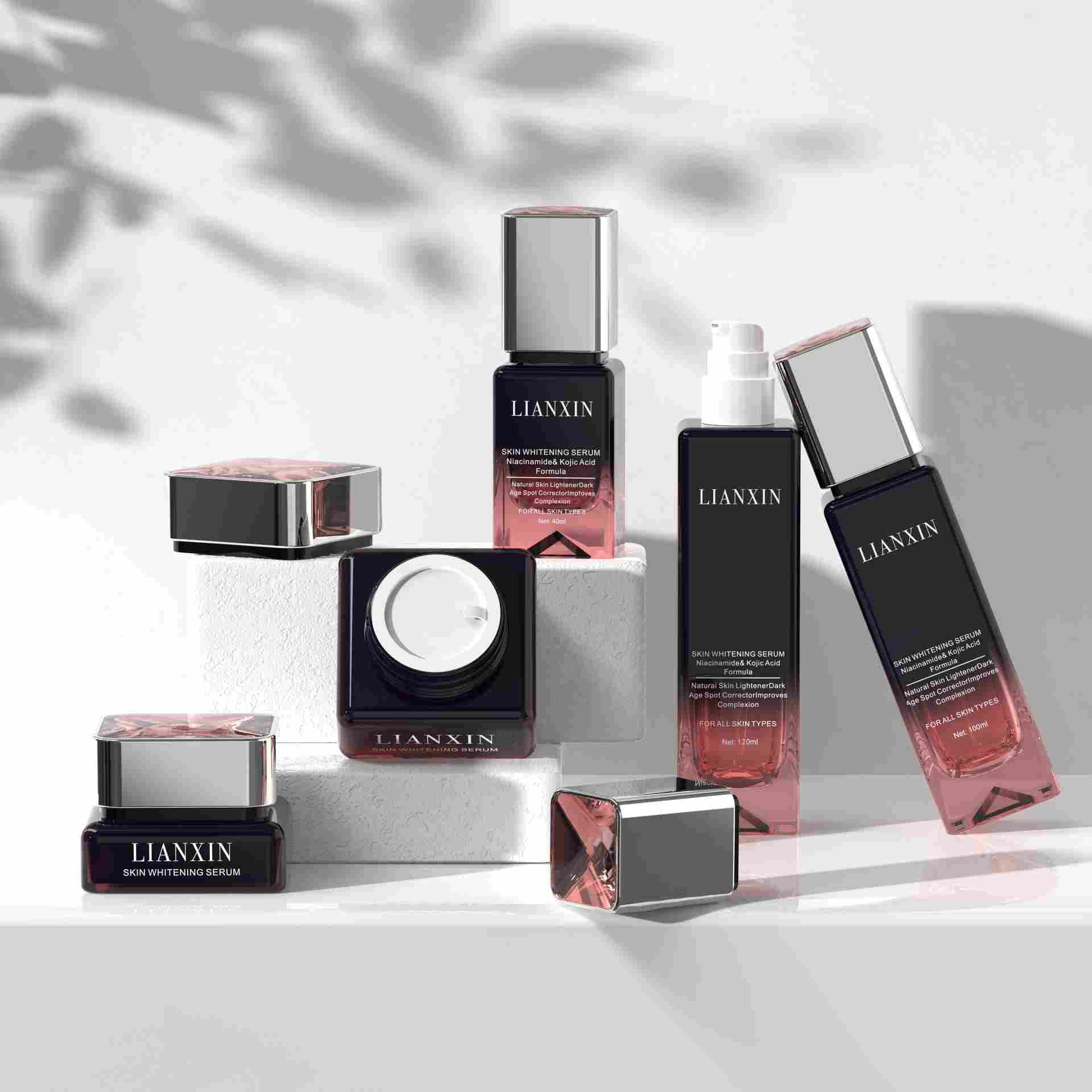
- Color spraying for glass bottles — opaque or gradient (ombre) coatings, from soft nude gradients to deep emerald. Gradient spraying hides fill-line inconsistency while giving ranges a family look.
- Electroplated glass bottle finishes — mirror-metallic gold, rose gold or chrome effects for limited editions and gift sets.
- Hot stamping glass bottles — foil logos and line names that catch light on a dark or transparent wall without a label.
Decoration interacts with the pump too: if you specify a metallised collar, order the pump and bottle as a matched set. Ordering them separately is a frequent cause of shade mismatch that only becomes visible under retail lighting.
MOQ, Sampling and Lead Time for Custom Glass Lotion Bottles
Minimum order quantity in glass packaging is driven almost entirely by tooling. If you select an existing mould, MOQ is set by the minimum economic production run; if you need a new shape, the mould cost and its amortisation set the MOQ instead. That is why the smartest first question to a supplier is not “what is your MOQ” but “which of my target shapes already exist in your mould library”.
Sampling follows the same logic. Stock-mould samples can usually be supplied quickly with your chosen decoration, while custom shapes require a mould, a first-article sample and an approval round before mass production. Budget for at least one revision cycle in the timeline — decoration colours rarely match a Pantone reference on the first attempt, and it is much cheaper to adjust a sample than a production lot.
For a detailed breakdown of what drives tooling and per-unit cost, see our custom glass bottle customization overview, and plan decoration choices before you freeze the shape.
How to Evaluate a Glass Lotion Bottle Manufacturer
Five checks separate a reliable partner from a broker with a catalogue.
- Neck finish control. Ask for measured neck dimensions on the sample report, not just an image. A 0.3 mm deviation causes leakage claims.
- Pump–bottle compatibility testing. Request a filled, assembled unit for drop and leak testing before approving artwork.
- Inspection standard. Confirm the AQL level, defect definitions and who performs the final inspection.
- Decoration consistency. Ask how colour is verified batch to batch — a spectrophotometer reading against a Delta E tolerance is a real answer; “it looks the same” is not.
- Documentation. Certifications, material declarations and a written spec sheet protect you at customs and with retail compliance teams.
Run these checks once and you can scale a skincare range across glass lotion pump bottle sizes without repeating the exercise for every SKU.
Planning a skincare launch or a range refresh?
Send us your capacity, neck finish and decoration brief — we will come back with mould availability, a sample plan and indicative MOQ for glass lotion pump bottles.
Frequently Asked Questions
What is the most common size for a glass lotion pump bottle?
100 ml and 120 ml, both built on a 24/410 neck finish. They suit facial lotions, cleansers and body milks and are the easiest formats to source from stock moulds.
Can I use a 24/410 pump on a 20/410 bottle?
No. The neck finish must match the pump exactly. If you want one pump across a range, standardise every bottle in the range on the same GPI code from the start.
Is glass or plastic better for a lotion pump bottle?
Glass is preferred for premium positioning, visible colour and inertness with sensitive actives; plastic and airless formats win where weight, shipping cost or full oxidation protection dominate. Many brands use both across a range.
How long does a custom glass lotion bottle order take?
Expect sampling to be the variable step, particularly for a new mould or a new decoration colour. Approve the sample before mass production and confirm the production window in writing.