Quick answer: Child-resistant glass bottles are not a special bottle mould — they are a tested package system: an ordinary glass bottle plus a specific child-resistant (CR) closure that has passed the US protocol in 16 CFR 1700.20. For essential oil and serum brands, the standard build is an 18/415 or 20/400 neck finish with a push-and-turn or squeeze-and-turn CR dropper cap, plus a tamper-evident band.
The rule that catches most buyers: child resistance is certified for the closure and the bottle together, at the same application torque used on your filling line. Swapping the bottle without re-testing invalidates the certificate.
What Is a Child-Resistant Glass Bottle?
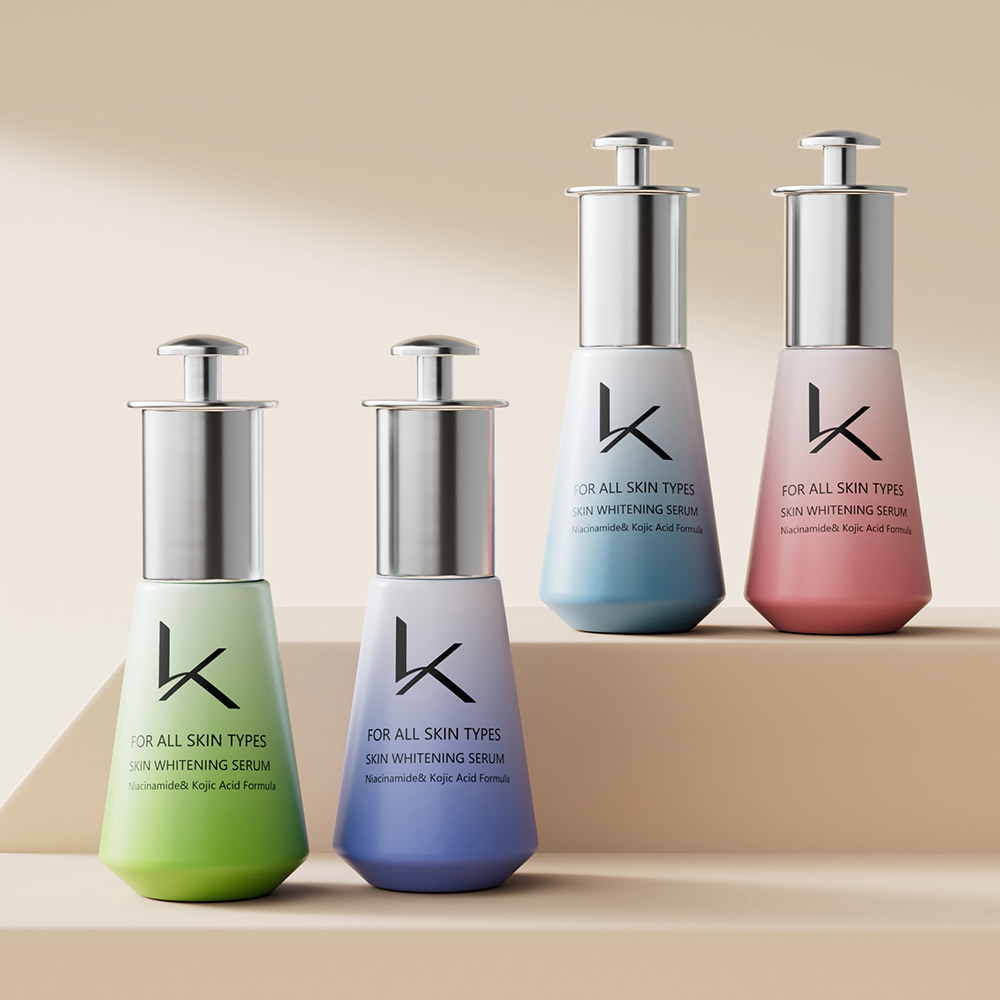
A child-resistant glass bottle is a glass container paired with a closure that children under five are unlikely to open in a set time, while adults can still use it normally. The glass itself does nothing to create that resistance. The mechanism lives in the closure: most CR caps for glass bottles use a push-and-turn action (press down, then twist) or a squeeze-and-turn action (pinch the skirt, then twist).
For cosmetic and wellness brands, this matters because essential oils, tinctures and CBD products are frequently packaged in small glass bottles that are attractive, easy to grip and easy to remove a cap from. Retail buyers, marketplace listings and increasingly EU distributors expect a CR option on anything that could be harmful if swallowed. A CR cap also changes the unboxing feel of a product: it signals responsibility, and it justifies a small premium on a product line. That is why child-resistant glass bottles now appear in skincare, aromatherapy and supplement catalogues that never needed them five years ago.
Practically, child-resistant glass bottles arrive in two forms:
- CR closure on a standard bottle — a stock 18/415 or 20/400 CR dropper cap on a standard essential oil bottle. Fastest route, lowest tooling, MOQ driven by the bottle.
- Fully custom CR system — a custom-moulded cap and a matching custom bottle, tested together. Higher tooling, but you control the silhouette, colour and finish (for example a frosted glass finish or a spray-painted glass colour).
Why brands are specifying CR closures now
- The global cosmetic packaging materials market was valued at $26.8 billion in 2025 and is projected to reach $38.2 billion by 2033, a 4.6% CAGR. — Dataintelo, Cosmetic Packaging Materials Market, updated May 2026
- Glass holds 28.3% of that market, second only to plastic at 42.5% — and glass is concentrated in premium skincare, fragrance and wellness lines.
- Premium and luxury segments are growing at 6.2% CAGR versus 3.1% for mass market — exactly the segment that pays for CR hardware and safety seals.
- Global online beauty retail reached $12.3 billion in 2025, and e-commerce shipping puts more small glass bottles into households with young children.
Child-Resistant Packaging Requirements: What 16 CFR 1700.20 Actually Tests
In the United States, child-resistant packaging is governed by the Poison Prevention Packaging Act of 1970 and the CPSC regulations in 16 CFR Part 1700. Two sections matter to a packaging buyer: §1700.15 sets the effectiveness standards, and §1700.20 sets the test procedure. Both are published in full on govinfo.gov.
“Child-resistant effectiveness of not less than 85 percent without a demonstration and not less than 80 percent after a demonstration of the proper means of opening such special packaging.” — 16 CFR 1700.15(b)(1)
Translated into buyer language: in a panel of 50 children aged 42 to 51 months, at least 85% of them must fail to open the package before anyone shows them how, and at least 80% must still fail after a demonstration. Separately, a senior-adult panel must be able to open and reclose the package with an effectiveness of not less than 90% — that is the requirement brands forget, and it is why CR caps cannot be so stiff that a 65-year-old with arthritis cannot manage them.
| Test requirement (16 CFR 1700.15 / 1700.20) | Threshold | What it means for your bottle |
|---|---|---|
| Child resistance — before demonstration | ≥ 85% | At least 43 of 50 children must fail to open the package unaided |
| Child resistance — after demonstration | ≥ 80% | The push-and-turn action must not be guessable after one showing |
| Senior-adult use effectiveness (SAUE) | ≥ 90% | Adults must still open and reclose it — caps cannot be over-tightened |
| Child panel composition | 1–4 groups of 50 children | 30% aged 42–44 months, 40% aged 45–48 months, 30% aged 49–51 months |
| Restricted flow | ≤ 2 mL per activation | Applies where liquid flow is restricted: no more than 2 mL from one squeeze of an inverted, opened container |
| Tamper-resistant feature | Removed before testing | A shrink band does not make a package child-resistant unless it is part of the CR design |
| Application torque | Matched to production line | Closures must be secured at the same on-torque used on your filling line and recorded in the test report |
| Reuse | Not permitted | Special packaging for these substances must not be refilled and resold |
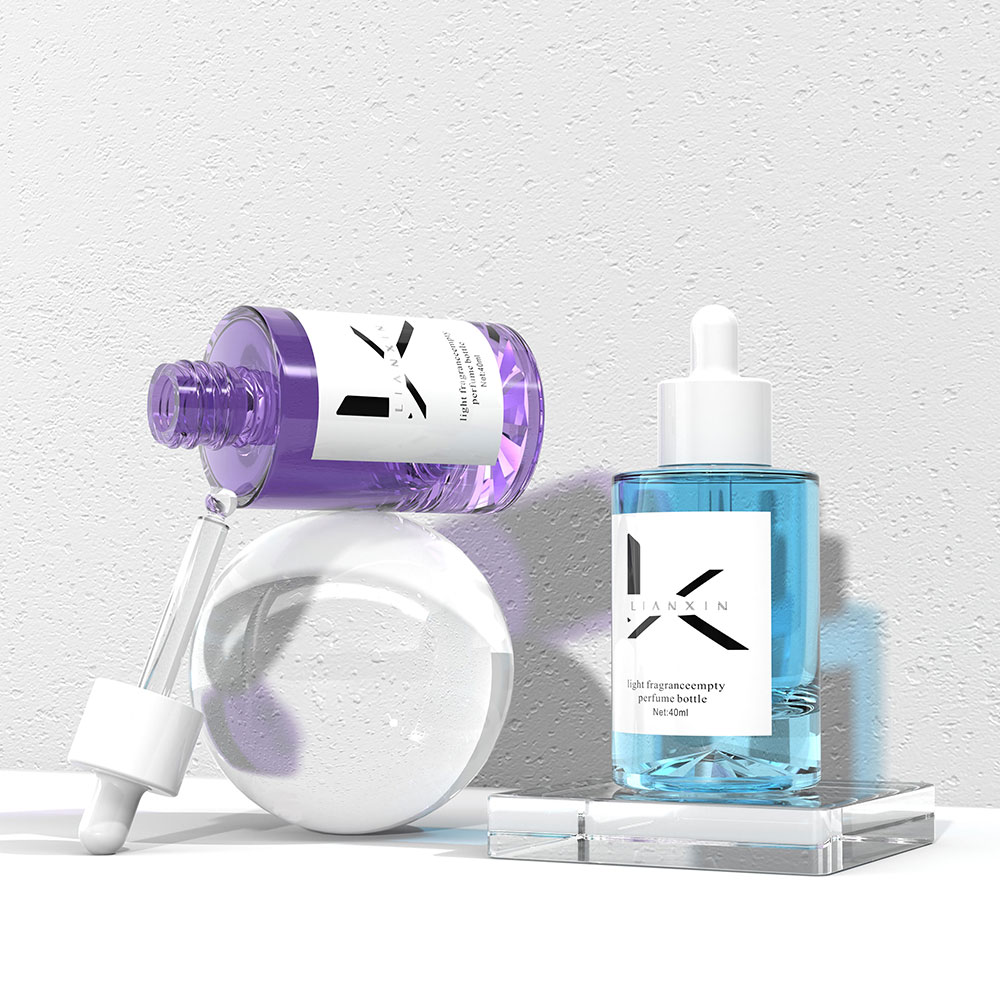
Note what §1700.14 lists: specific substances such as liquid preparations containing more than 5 percent methyl salicylate, controlled drugs, and certain prescription drugs. Many brands that sell child-resistant glass bottles of essential oil or CBD adopt CR closures anyway — for regulatory safety across several markets and because their retail channel asks for it. Whatever your reason, the certification logic is identical: test the system, keep the report, and re-test if the bottle or cap geometry changes.
Child-Resistant Closures for Essential Oil and Serum Bottles
The closures used on child-resistant glass bottles cluster into a small number of formats. Choose by product viscosity, dose size and how the consumer uses the bottle — the same logic that applies when you choose an essential oil bottle in the first place:
| CR closure format | Typical neck finish | Best for | Tamper-evident option |
|---|---|---|---|
| Push-and-turn CR cap + glass dropper | 18/415, 20/400 | Essential oils, 10–30 ml | TE ring on the cap skirt |
| Squeeze-and-turn (pinch-grip) CR cap | 18/415, 20/400 | Tinctures and CBD, 30–100 ml | TE band, or shrink band over cap |
| CR dropper assembly (cap + bulb + pipette) | 18/415 | Serum and oil droppers, 30 ml | TE collar between cap and neck |
| CR cap with liner for wider jars | Mould-specific jar thread | Balms, waxes, solid actives | Induction-style inner seal or TE band |
Three practical notes that come up in almost every project:
- Neck finish first, cap second. A CR cap that does not match the neck thread will either leak or fail its torque window. Confirm 18/415 versus 20/400 before artwork, because the cap diameter drives your label width — and because most child resistant dropper bottles on the market are built around those two finishes only.
- Pipette length is coupled to bottle height. A 58 mm pipette that reaches the bottom of a 30 ml bottle will not work in a 50 ml bottle. Specify fill volume and bottle height together.
- Colour and finish choices are independent of CR function. You can pair a CR cap with a perfume-grade glass bottle body or a matte, frosted body without touching the child-resistance test, as long as bottle dimensions and neck geometry stay identical.
Rule of thumb: the closure, not the glass, carries the certification. Two child-resistant glass bottles that look identical can have completely different test status if the cap supplier differs.
Tamper-Evident Glass Bottles: Bands, Rings and Seals
Tamper evidence and child resistance solve different problems, and the regulation is explicit about it. Under §1700.20, any tamper-resistant feature is removed before the child test unless it forms part of the package’s child-resistant design. In other words, a shrink band gives you tamper evidence, not child resistance — a distinction that trips up many first-time buyers of tamper evident glass bottles.
The tamper-evident options that work on child-resistant glass bottles without disturbing the CR mechanism:
- Drop-ring (TE ring) caps — the cap skirt separates on first opening and stays on the bottle neck. This is the most common choice on 18/415 and 20/400 dropper assemblies.
- Shrink bands — a PVC or PET band over the cap and neck. Low cost, high visual signal, works with nearly any closure, and does not interfere with the CR mechanism.
- Inner seals and liners — foam or PE liners give an additional seal for oils; they matter for leakage control as much as for tamper evidence.
Combine them thoughtfully. A customer opening a 30 ml oil bottle should meet one obvious seal, not three layers of plastic; too much packaging also pushes your unit cost and shipping weight in the wrong direction.
MOQ, Testing and Lead Time for CR Glass Bottles
Child-resistant glass bottles change three commercial parameters compared with a plain screw-cap bottle, and buyers should price all three before comparing quotes:
- Tooling. A stock CR cap needs no injection mould of your own; a custom CR cap does. Because certification attaches to the exact closure-and-container system, a new cap geometry normally means a new test — so it pays to prototype before committing to a full run of child-resistant glass bottles.
- Validation. Budget for a third-party test report on the specific bottle plus cap combination, at your production torque. Ask your supplier for the report before you approve artwork.
- Assembly. CR caps have a directional action, so capping heads need setting to the tested torque. Over-tightening a push-and-turn cap is the most common cause of an adult-use failure at line start-up.
How to Specify Child-Resistant Packaging in Your RFQ
Child resistant packaging requirements are easiest to satisfy when the brief is complete on day one. Send these nine items to any supplier and you will get comparable quotes for child-resistant glass bottles instead of vague ranges:
- Fill volume and dose — 15 ml, 30 ml, 50 ml, and drops versus pipette fulls
- Neck finish — 18/415, 20/400 or custom, stated explicitly
- Closure type — push-and-turn, squeeze-and-turn, CR dropper assembly
- Tamper evidence — TE ring, shrink band, both or none
- Glass colour and finish — amber, clear, frosted, spray-painted, electroplated
- Decoration — label, screen print, hot stamp or none
- Target markets — this determines which CR test report you need
- Application torque on your filling line, if already known
- Annual volume and first-order quantity, so the supplier can quote tooling separately from units
If you are still at concept stage, start from the bottle rather than the cap: pick the body and capacity, then choose the CR closure that fits that neck. Our custom glass bottle service handles both sides of that decision — mould, closure sourcing and decoration — with samples before mass production, so you never commit tooling to child-resistant glass bottles that fail an adult-use test.
One final check before you approve anything: ask for the test report naming the bottle, the closure and the application torque. If any of the three is missing, the certificate does not cover the package you are about to sell.
Building an essential oil or serum line with CR closures?
Send us your target volume, capacity and market. We will confirm the neck finish, CR cap options, decoration and the test documentation your listing needs.