Cosmetic packaging is in the middle of a glass renaissance — and laser engraved glass bottles are one of the fastest ways to give your brand a premium, permanent identity. In short: laser engraving uses a focused laser beam to etch your logo directly into the glass surface, leaving a frosted-white mark that never peels, fades or washes off. It needs no mould, no ink and no extra tooling, which makes it one of the most cost-effective decoration routes for perfume, essential oil and skincare brands launching custom glass bottles at realistic MOQs.
Why Cosmetic Brands Are Moving to Laser Engraving on Glass
The numbers explain the shift. Mordor Intelligence values the global cosmetic packaging market at USD 30.19 billion in 2025, growing to an estimated USD 40.33 billion by 2031 at a 4.95% CAGR — and it singles out glass as the fastest-growing material at an 8.32% CAGR, driven by the heft, scratch resistance and infinite recyclability that prestige brands want. Fortune Business Insights puts the wider glass packaging market at USD 69.83 billion in 2025, on track to reach USD 102.62 billion by 2034.
Market evidence at a glance
- USD 30.19B — global cosmetic packaging market in 2025 (Mordor Intelligence)
- 8.32% CAGR — glass is the fastest-growing cosmetic packaging material through 2031 (Mordor Intelligence)
- USD 69.83B → USD 102.62B — global glass packaging market, 2025 to 2034 (Fortune Business Insights)
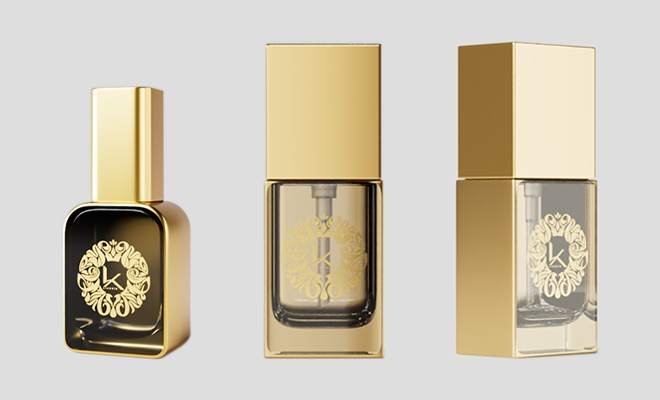
More glass on the shelf means more brands competing for shelf attention — and that is exactly where laser etching glass bottles wins. A clear flacon with a precision-engraved logo looks engineered, not labelled. It signals “small-batch luxury” even when your order is a first run of a few hundred units.
How Does Laser Engraving on Glass Bottles Work?
Laser engraving (also called laser etching) works by directing a focused laser beam onto the bottle surface. The beam’s energy causes localized heating that micro-fractures the top layer of glass, producing the signature frosted-white mark. Because the mark is created inside the surface rather than printed on top of it, the result is permanent — no ink to chip, no label to peel, and no chemicals in the process. Machine manufacturers such as Gravotech describe the finish as a “sandblasted” or frosted effect with high contrast, which is why engraved logos stay legible even on small 10–30 ml bottles.
Two laser types dominate production: fiber lasers (the workhorse for glass and most cosmetics decoration) and CO₂ lasers for fine detail work. Cylindrical bottles are mounted on a rotary fixture so the beam marks evenly around the curve — the same principle used for wine bottles, vials and our custom perfume glass bottles. The frosted result can be left as a single logo or combined with other finishes such as a frosted glass bottle finish for a fully matte, tactile presentation.
Laser Engraving vs. Hot Stamping vs. Screen Printing on Glass
Brands usually compare three logo routes when decorating glass bottles. The right choice depends on whether you prioritise permanence, colour range or per-piece speed. Here is how they stack up:
| Factor | Laser engraving | Hot stamping | Screen printing |
|---|---|---|---|
| How the mark is made | Laser beam micro-fractures the glass surface (no ink) | Heated metal die presses foil onto the glass | Ink is pushed through a mesh stencil onto the surface |
| Colour range | Single-tone frosted white (monochrome logos, text, line art) | Metallic foils — gold, silver, copper, holographic | Full Pantone colour range |
| Durability | Permanent — etched into the surface, cannot peel or fade | Durable but foil can wear with heavy handling | Good, but ink can scratch or fade over time |
| Tooling / MOQ impact | No mould or die — flexible for low MOQs and logo changes | Requires a custom brass die per logo | Requires a screen per colour per logo |
| Best for | Logos, monograms, serial numbers, minimalist luxury | Gold-accented premium and gift packaging | Multi-colour artwork and large production runs |
Many brands combine routes rather than choosing one: a hot stamping glass bottle finish for the gold brand strip, with a laser-engraved logo or batch code on the base. For limited editions and low-to-mid volume launches, laser engraving is usually the fastest route to a finished, premium look.
Engraved Perfume Bottles, Nail Polish and Skincare: Where It Fits
Laser-engraved decoration is spreading fastest in fragrance and premium skincare. Engraved perfume bottles appear in gift sets, anniversary editions and monogram services, where a name engraved on a perfume glass bottle turns a standard stock bottle into a personalised keepsake. The same technique personalises nail polish and lip-oil vials for independent colour brands that want a clean, minimal look without a big print run.
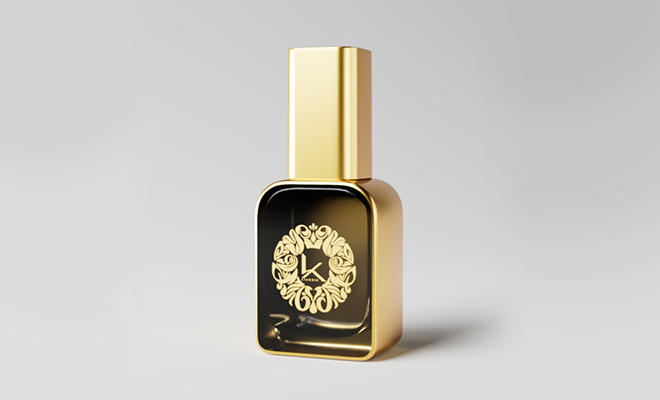
Skincare and haircare brands use laser engraving on lotion and serum bottles to keep a “clean label” aesthetic — no paper label, no plastic film, just the brand mark etched on glass. It also plays well with coloured bottles: engraving through a custom color glass bottle coating exposes a crisp frosted contrast, which is why the finish is popular on amber, black and gradient containers.
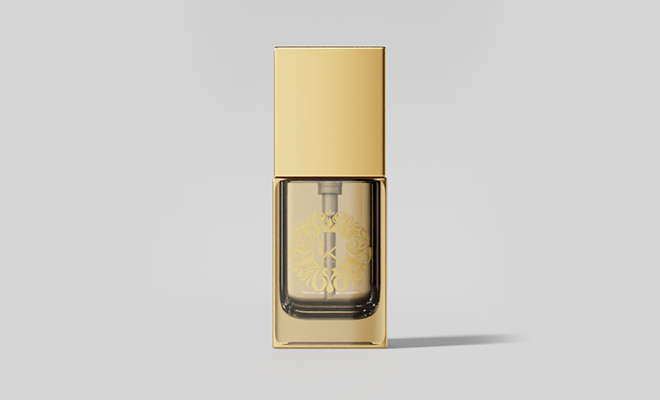
Three application patterns we see most often from buyers:
- Gift and travel editions — monograms or initials on 30–100 ml flacons for hotel amenities and holiday sets.
- Brand launch runs — a first production order where tooling budgets do not yet justify moulds or stamping dies.
- Batch codes and anti-counterfeit marks — permanent etching on the bottle base that cannot be scraped off.
What Is the MOQ for Custom Glass Bottle Laser Engraving?
Because laser decoration needs no mould, no die and no screen, the MOQ for glass bottle logo engraving is typically driven by the stock bottle and closure you choose — not by engraving tooling. That makes it one of the lowest-barrier ways to put your brand on custom nail polish bottles, dropper bottles or vials, and it is a practical answer for buyers who find embossed-mould MOQs too high for a first launch. Exact minimums depend on the bottle model and supplier, so confirm the number with your factory before sampling — most manufacturers will engrave your logo on pre-production samples first so you can approve the depth, contrast and placement.
Three factors shape cost and lead time on laser-engraved orders:
- Artwork quality — vector files (AI, PDF, CDR) engrave sharply; low-resolution images produce blurry marks. Curved bottles also need artwork adjusted to the bottle’s circumference.
- Area and depth — a small logo takes seconds per bottle; large, deep engravings slow the line and cost more per piece.
- Surface condition — frosted or coated bottles can need different power settings than clear flint glass, so production teams test each combination.
Send your logo file and target bottle to a factory that runs its own glass bottle customization line — you will get a straight answer on MOQ, engraving cost per piece and lead time in one inquiry.
How to Start Your Laser Engraved Glass Bottle Project
The path from idea to engraved stock is short:
- Pick your bottle — flint, amber, frosted or coloured glass in your target capacity (typical cosmetic sizes run from 10 ml vials to 250 ml lotion bottles).
- Prepare vector artwork — a clean AI, PDF or CDR file of your logo at 1:1 scale.
- Request engraved samples — approve the frosted depth, contrast and position on an actual bottle.
- Confirm MOQ, price and lead time — lock the specification, then move to bulk production.
If you are weighing decoration routes for a new launch, combine this guide with our comparison of frosted vs. clear finishes and the wider custom glass bottle options we offer — then ask for engraved samples to see the finish on your own bottle.
Ready to add laser engraving to your custom glass bottles?
Tell us your bottle model, target capacity and logo file — our team will reply with MOQ, per-piece engraving cost and lead time, plus a free pre-production sample quote.